What Is Neocloud Due Diligence and Why It Matters Now
Neocloud due diligence is the specialized financial, operational, and commercial underwriting framework used by private equity funds, growth equity investors, and private credit teams to evaluate specialized GPU cloud providers and AI data center platforms. Unlike traditional enterprise software due diligence, which focuses on recurring software licensing, high gross margins, and low capital intensity, neocloud underwriting evaluates physical asset utilization, power availability, high-density cooling infrastructure, debt-financed chip hardware, and customer concentration. Investment teams must determine whether exponential top-line revenue growth reflects durable enterprise compute demand or a temporary arbitrage opportunity driven by hyperscaler capacity shortfalls. Conducting thorough AI infrastructure exposure due diligence requires analyzing how target platforms manage capital expenditure intensity while navigating rapid hardware obsolescence.
The rapid expansion of artificial intelligence workloads has shifted private market underwriting standards across digital infrastructure. While software assets scale linearly with minimal marginal delivery costs, neocloud platforms function as capital-intensive utilities. Deal teams evaluating these targets cannot rely solely on standard SaaS metrics like net revenue retention or rule of 40. Instead, investors must audit physical deployment contracts, power purchase agreements, and GPU depreciation schedules. Evaluating an asset's position in the value chain involves conducting AI impact due diligence to assess whether high gross margins can persist when hardware supply chains normalize. Furthermore, specialized workloads require examining AI router due diligence dynamics, where model routing platforms influence how underlying compute is bought and allocated across multiple infrastructure suppliers.
The scale of capital required to construct and refresh GPU clusters has fundamentally reshaped transaction structures across private markets. Baseline estimates from Goldman Sachs Global Institute anticipate roughly $7.6 trillion of cumulative AI infrastructure capital expenditure between 2026 and 2031, with the assumed useful life of AI silicon the single most influential variable in that total. Specialized legal analysis of these deals describes two linked off-balance-sheet patterns: data centre SPVs whose future lease receivables are aggregated, securitized and placed with institutional investors as asset-backed securities, and a newer trend of GPU SPVs that acquire the accelerators and lease them back to the AI operator while title stays with the vehicle, alongside structures in which GPU inventories serve as direct collateral for loans. The same analysis warns that rapid technological advancement can accelerate depreciation to the point of under-collateralization, and that simultaneous enforcement sales would flood the secondary market.
- Capital Model Shift: SaaS models rely on light operational expense models, whereas neocloud platforms require massive upfront hardware capex and debt financing.
- Infrastructure Dependency: Revenue durability depends directly on physical grid access, high-density power delivery, and specialized liquid cooling.
- Asset Life Cycle Risk: Software intellectual property retains value over decades, while specialized AI accelerator chips face physical wear and rapid generational obsolescence.
Evaluating Compute Capex, GPUs, and Margins
Underwriting neocloud capital expenditure demands a rigorous assessment of hardware shelf-life and performance decay. Modern GPU clusters face dual pressures: physical degradation under 24/7 continuous training loads and economic obsolescence caused by next-generation chip architecture launches. Investment teams must review purchase orders, vendor allocation rights, and replacement schedules to determine if the platform's capital structure can absorb rapid hardware turnover without diluting equity returns.
Depreciation schedules directly dictate profitability and cash flow durability. While legacy data center infrastructure relies on 7-to-10-year depreciation cycles for real estate and core electrical assets, advanced AI compute chips depreciate over far shorter horizons: Goldman Sachs notes that AI accelerators are typically assigned a useful life of four to six years, against roughly 20 years for the buildings that house them. Unit-economics analysis of the H100 rental market reached a similar conclusion from the revenue side, finding that once hourly H100 rental rates fall below about $1.65 per GPU-hour, revenues no longer recoup the original hardware investment. Deal teams must audit amortization methods and ensure target platforms do not artificially inflate near-term margins by stretching hardware depreciation beyond realistic operational lifespans.
Bridging gross margin to EBITDA requires unbundling co-location hosting costs, electricity tariffs, liquid cooling overhead, and chip financing fees. Deal teams should utilize a structured financial due diligence checklist to isolate true infrastructure delivery costs from temporary operational subsidies, ensuring that unit economics remain sustainable under varying cluster utilization rates.
- Hourly Breakeven Thresholds: Benchmarking hourly cluster rental revenue against hardware debt amortization, power costs, and maintenance expense.
- Useful Life Realism: Validating chip depreciation periods against model training requirements and market rental decay curves.
- True Delivery COGS: Separating pure power and facility lease costs from networking, software orchestration, and engineering overhead.
Data Center Power Constraints and Operations
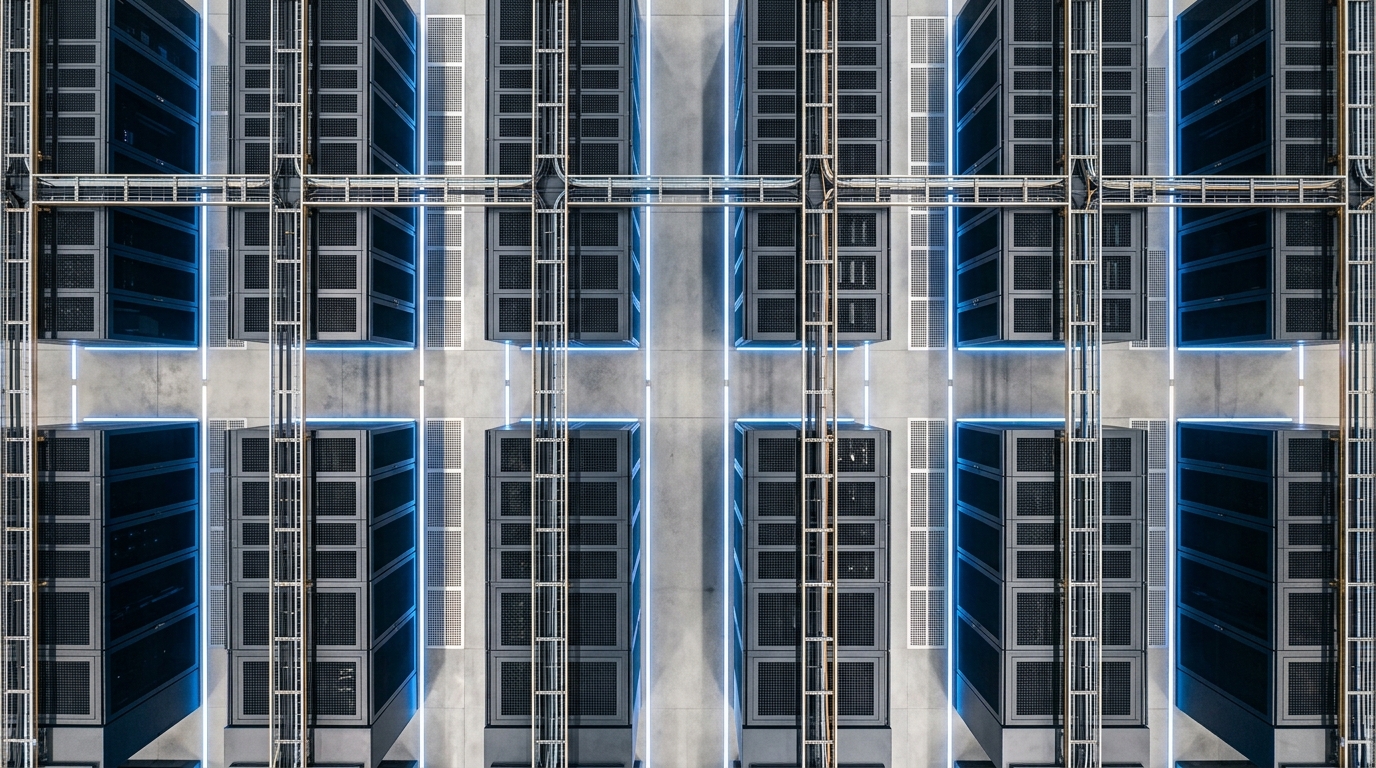
Power availability has replaced real estate as the primary bottleneck for AI data center expansion. Modern high-density compute racks require up to 50 to 150 kilowatts per rack, compared to 10 to 15 kilowatts in traditional enterprise data centers. Analysis by RAND estimates that hosting the projected global supply of AI chips would require roughly 68 gigawatts of AI data center capacity by 2027, rising to about 327 gigawatts by 2030. Deal teams must evaluate whether a target neocloud has secured firm grid interconnection agreements or faces multi-year power queue delays that cap top-line growth.
To overcome utility grid congestion, major infrastructure operators and hyperscalers are increasingly contracting for dedicated power generation, including renewable power purchase agreements and nuclear off-take structures. IEA analysis reports that the pipeline of conditional off-take agreements between data centre operators and small modular reactor (SMR) nuclear projects has grown from 25 gigawatts at the end of 2024 to 45 gigawatts. Investors must evaluate how target platforms manage long-term energy contracts to hedge against regional power tariff spikes.
Operational resilience in high-density facilities hinges on thermal management and power redundancy. Liquid cooling infrastructure, closed-loop fluid systems, and back-up battery energy storage systems are essential to maintain strict service-level agreements (SLAs). Investors must evaluate warranty coverage, mean time between failures (MTBF), and contractual outage penalties across all active compute campuses.
- Power Interconnection Status: Verifying firm utility interconnect agreements versus unconfirmed queue applications.
- Cooling Architecture: Auditing direct-to-chip liquid cooling deployments and heat rejection capacity for ultra-dense clusters.
- Energy Tariff Hedging: Analyzing long-term power purchase agreements to protect gross margins against wholesale electricity volatility.
Commercial Diligence: Utilization and Leases
Evaluating commercial durability requires analyzing customer contracts, cohort retention, and market concentration. Many neocloud platforms report high contracted revenue backlog, but a significant portion of this backlog often relies on a small number of AI foundation model builders or hyperscalers. Investors must determine whether customer contracts represent long-term take-or-pay commitments or short-term, cancellable spot capacity leases.
Neocloud platforms heavily leverage equipment financing, sale-leaseback transactions, and debt facilities to acquire expensive hardware assets. Investment teams should deploy a comprehensive commercial due diligence checklist to audit customer contract enforceability, lease debt covenants, and cross-collateralization risks across the fleet.
Cluster utilization rates directly impact operating leverage. Fixed data center lease payments, power capacity reservation fees, and debt service obligations must be met regardless of GPU occupancy. Industry analyses put break-even for a debt-financed GPU cluster at roughly 70% utilization, with gross margins before depreciation leaving little room for idle capacity. Once occupancy slips toward that break-even line, fixed operating costs rapidly erode EBITDA margins and create significant liquidity strain for highly leveraged platforms.
| Contract Structure | Customer Type | Risk & Underwriting Focus |
|---|---|---|
| Multi-Year Take-or-Pay | Hyperscalers & AI Labs | Counterparty credit rating, strict SLA penalties, and early termination clauses. |
| Reserved Annual Instances | Enterprise AI Developers | Churn risk, usage ramp commitments, and seasonal compute fluctuations. |
| Spot & On-Demand Rental | Startups & Researchers | Utilization volatility, price competition, and zero revenue visibility. |
Diligence Signals, Operator Evidence, and Checklists
During technical and financial due diligence, institutional investors look past surface-level revenue growth to test the underlying stability of the platform. Key diligence signals include contract duration, power queue certainty, chip allocation tiers, and unencumbered asset balance sheet ratios. Investors must verify whether top-line expansion stems from proprietary software differentiation or simple hardware resale.
Founders and management teams are expected to provide verifiable artefacts during data room reviews. Incorporating an AI due diligence checklist for private equity allows deal teams to systematically index operator records across corporate, technical, and operational categories.
The following 8-item Data Room Evidence Checklist outlines the essential documentation required to perform comprehensive underwriting on a neocloud target.
- GPU Procurement & Vendor Allocation Master Agreements: Original purchase orders and tier-1 vendor delivery schedules.
- Power Interconnection & Grid Utility Contracts: Executed interconnect agreements, substation capacity allocations, and utility approval notices.
- Master Service Agreements (MSAs) & SLAs: Executed customer contracts detailing take-or-pay terms, termination rights, and outage penalty structures.
- Data Center Facility Leases & Co-location Agreements: Long-term lease documents specifying power density guarantees, PUE targets, and expansion options.
- Hardware Debt & Equipment Lease Schedules: Amortization tables, interest rates, debt covenants, and cross-collateralization terms across all hardware clusters.
- Electricity Tariff & Power Purchase Agreements (PPAs): Fixed-rate or indexed power contracts, renewable energy certificates, and fuel pass-through clauses.
- Firmware, Orchestration & Software IP Documentation: Technical architecture records covering cluster management, auto-scaling, and telemetry software.
- Historical Cluster Utilization & Downtime Logs: Granular audit logs showing hourly GPU utilization, hardware failure rates, and incident resolution times.
Neocloud Red Flags and Exit Strategy Implications
Identifying structural red flags early prevents capital misallocation in neocloud transactions. Deal teams benefit from adopting risk register automation to capture, categorize, and track operational vulnerabilities throughout the deal lifecycle.
| Diligence Signal | Why It Matters | Recommended Deal Action |
|---|---|---|
| Aggressive 6-Year GPU Depreciation | Overstates operating income by underestimating chip obsolescence. | Adjust EBITDA model to 3-year or 4-year straight-line depreciation. |
| Unfunded Power Queue Commitments | Ramping capital without confirmed grid access delays revenue generation. | Condition closing on verified utility interconnect approval. |
| High Concentration in Spot Contracts | Exposes platform to severe revenue drops during compute oversupply. | Apply haircut to uncontracted revenue projections in valuation. |
| Mismatched Debt & Contract Tenors | 5-year hardware debt backed by 1-year customer contracts creates refinancing risk. | Structure cash sweep mechanism or debt reserve account. |
| Single-Vendor Liquid Cooling Dependency | Custom cooling component failures can shut down entire server racks. | Audit secondary component suppliers and spare parts inventory. |
| Opaque Co-location Sub-Leases | Master landlord termination rights could wipe out data center access. | Obtain landlord estoppel certificates and non-disturbance agreements. |
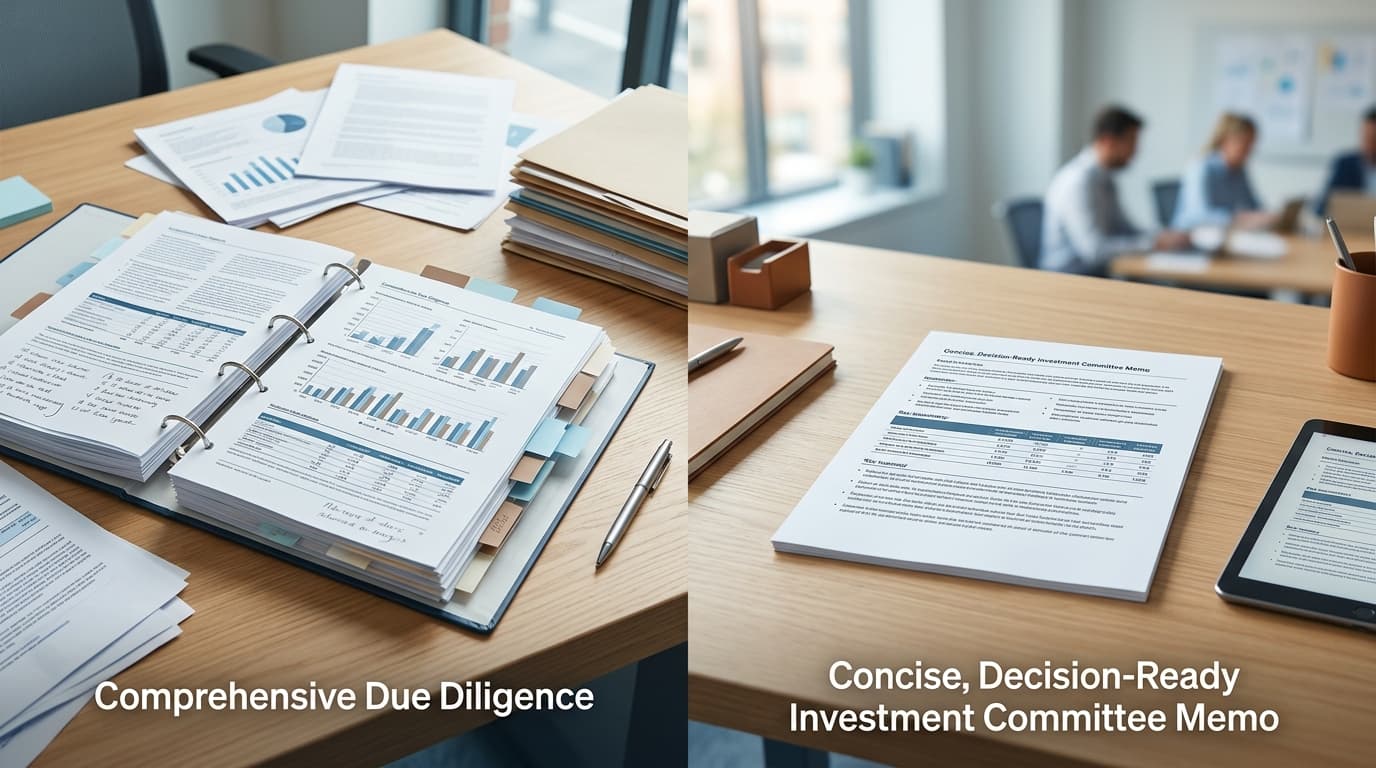
Evaluating exit scenarios requires mapping the prospective buyer universe across strategic and financial acquirers. Strategic buyers include hyperscalers, global telecom carriers, and sovereign wealth funds seeking turn-key compute capacity. Financial acquirers include infrastructure debt funds and secondary private equity buyers. Investment committees relying on IC memo automation can synthesize these complex exit dynamics and risk matrices into clear investment recommendations.
For private credit lenders, underwriting neoclouds requires strict debt service coverage ratios (DSCR) tied to long-term contracted take-or-pay cash flows rather than uncontracted spot capacity. For operators, maintaining clear financial records and verifiable power interconnections ensures seamless diligence processes and protects equity valuations during recapitalizations or exits.
Data Room Checklist and Practical Implications
Deal teams evaluating a neocloud target should assemble evidence that goes beyond a standard SaaS review, since AI infrastructure carries capex, power, and hardware-lifecycle layers that traditional software diligence does not test.
- GPU inventory, procurement schedule, and depreciation policy under multiple useful-life assumptions
- Firm grid interconnection agreements and any pending utility queue positions
- Customer contract book with take-or-pay, spot, and reserved capacity split
- Customer concentration analysis, including hyperscaler and foundation-model dependency
- Debt, lease, and take-or-pay obligation schedule tied to specific facilities
- Contribution to broader AI infrastructure exposure due diligence and evidence supporting AI impact due diligence at the customer level
- Financial statements supporting the EBITDA bridge, aligned with a financial due diligence checklist
- Commercial evidence per a commercial due diligence checklist, including sales pipeline and win/loss data
In practice, investors and lenders evaluating multiple neocloud opportunities benefit from tooling built for findings and risk intelligence, combined with AI-powered diligence analysis, to cross-reference contracts, capex schedules, and utility documentation at speed. Surfacing these risks systematically through risk register automation helps deal teams avoid crediting a valuation with capex that has not been contracted or with utilization that has not been proven.
How to use this in your next diligence workflow
Deal teams can apply this framework directly during a live process: use the checklist above to build an independent view of contracted revenue versus committed capex, map every take-or-pay obligation to a specific facility and customer, and stress-test utilization under scenarios where GPU pricing drops sharply.
Use Plausity to structure documents, surface red flags and turn diligence findings into investment-ready outputs, and prepare consistent IC memo automation materials so neocloud comparisons stay consistent across an investment committee's full pipeline.