Defining AI Infrastructure Exposure in Modern Tech M&A
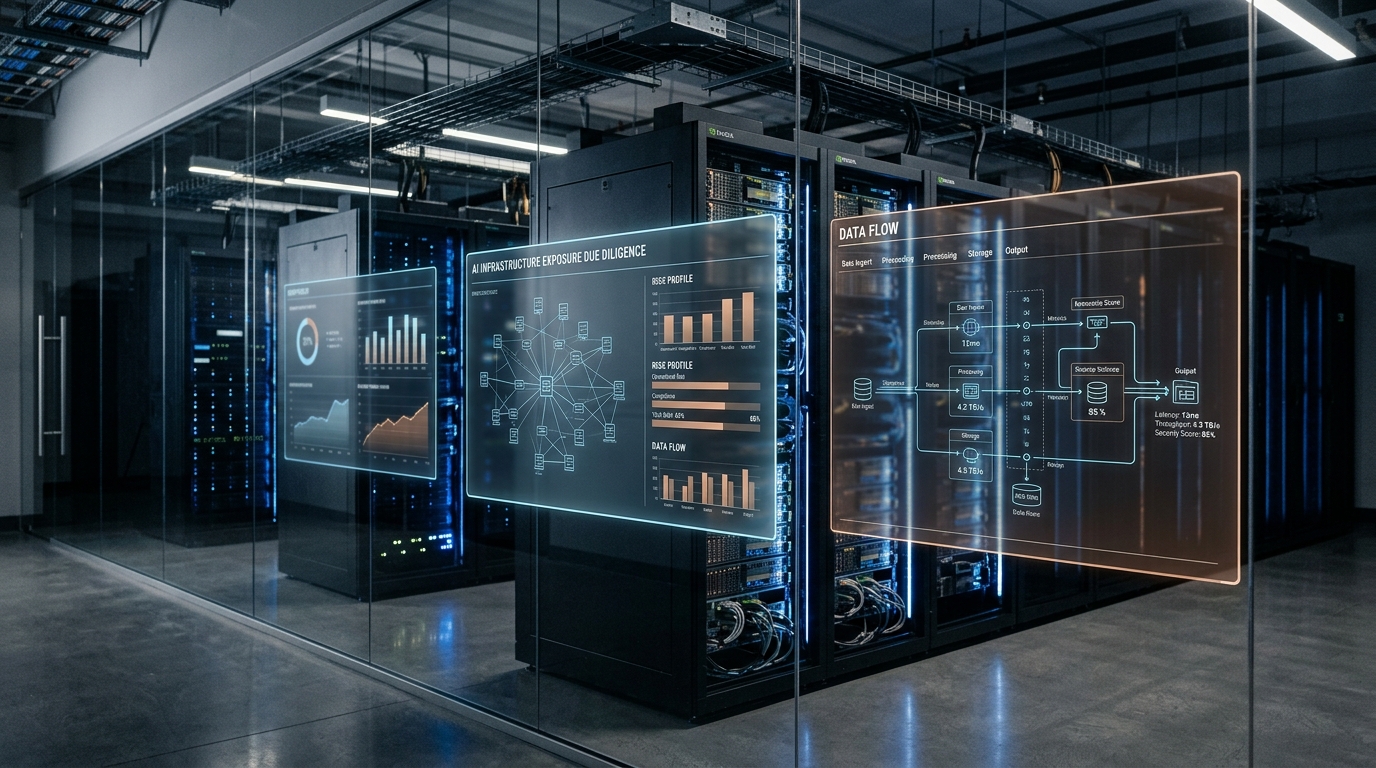
AI infrastructure exposure due diligence is a specialized risk-assessment framework used by private equity and corporate development teams to evaluate a target company's operational dependence and concentration risk across cloud, GPU compute, and third-party AI model ecosystems. Unlike standard audits that analyze compute cost economics or immediate margin impacts, this diligence discipline investigates structural vulnerabilities: specifically, how a target company would survive a critical vendor relationship breakdown, sudden pricing hikes, or GPU capacity constraints. By mapping these systemic exposures, investors can identify single points of failure that threaten business continuity and post-acquisition valuation before signing a transaction.
To evaluate these structural vulnerabilities, investors typically categorize infrastructure exposure into three main risk dimensions:
- Cloud vendor concentration: Evaluating reliance on a single hyperscaler's specialized AI tools and data pipelines, which increases migration costs.
- Compute and GPU capacity limits: Verifying whether the target has guaranteed hardware allocations or relies on volatile spot-market instances.
- Model API lock-in: Assessing the operational impact if a proprietary model provider deprecates a core API, alters its licensing, or changes pricing structures.
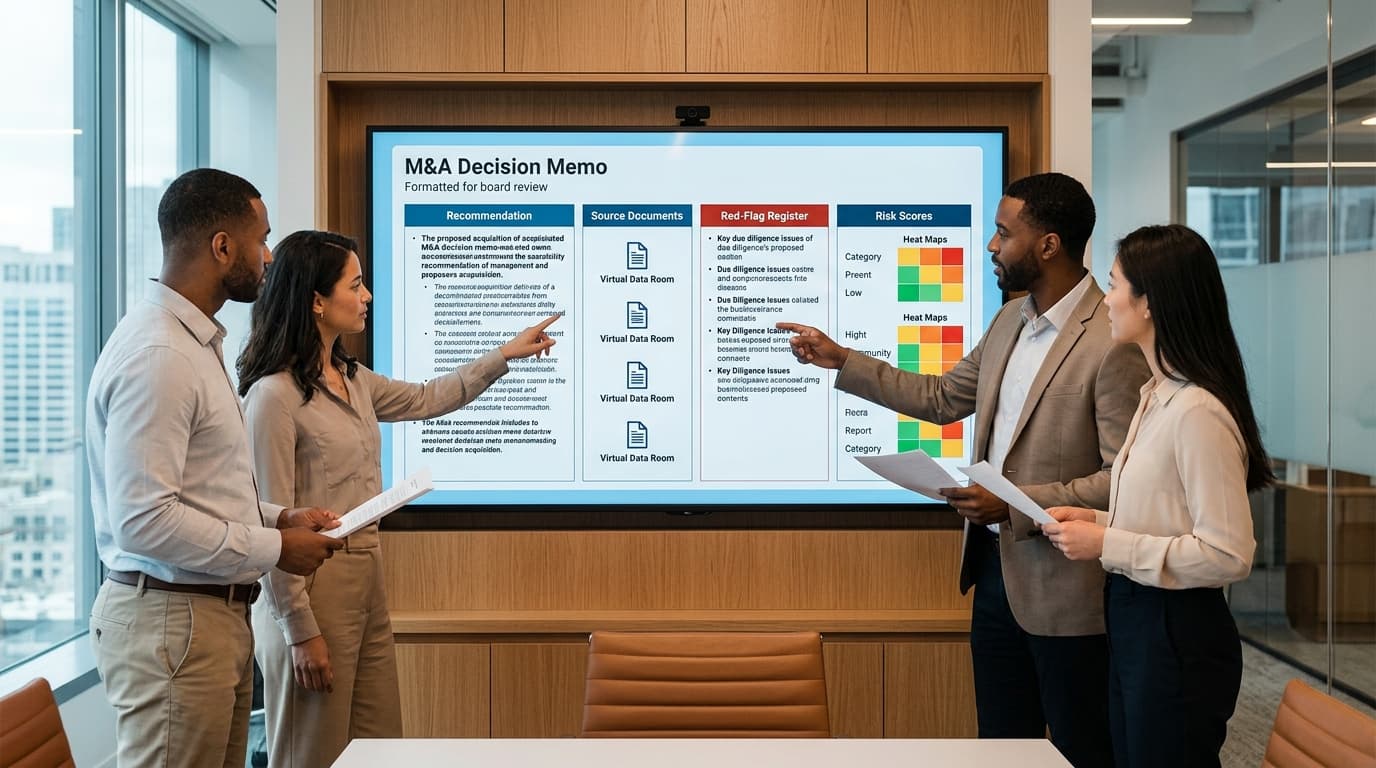
In modern tech acquisitions across Germany, Europe, and global markets, the diligence focus has shifted from simple financial cost optimization to structural operational resilience. While classic audits look at current expenditures, specialized AI due diligence focuses on long-term architecture survival rather than short-term margin fluctuations. This risk is highly systemic: a software target relying on proprietary, single-source AI models or uncommitted cloud clusters faces catastrophic disruption if those providers alter licensing terms or restrict compute access. By deploying specialized platforms like Plausity's Risk Radar to parse virtual data rooms, VC and PE fund investment professionals can systematically map these critical path dependencies during the transaction scoping phase, ensuring that hidden operational exposures do not derail post-deal integration.
The Threat of Hyperscaler Dependency and Compute Lock-In
While assessing ongoing operating expenditures is part of standard AI infrastructure cost diligence, transaction advisory teams must separately evaluate structural hyperscaler concentration. When a target company builds its core architecture exclusively within a single cloud provider's ecosystem, it inherits massive data gravity. Moving multi-terabyte training datasets is severely restricted by prohibitively high egress fees across major providers. This economic barrier, combined with proprietary orchestration tools, effectively creates a monolithic software couple. If the provider increases pricing or constrains GPU capacity, the target has virtually no immediate recourse.
| Infrastructure Layer | Dependency Risk | Portability Status |
|---|---|---|
| Storage and Data | High egress fees restricting dataset movement | Low Portability |
| Model Pipelines | Coupling with proprietary managed machine learning services | Medium Portability |
| Compute Layer | Monolithic orchestration tied to custom hardware instances | Low Portability |
Evaluating portability requires a deep technical audit of the target's machine learning pipelines. Due diligence teams should analyze whether workflows are tied to platform-specific APIs or if they utilize portable, containerized frameworks like Kubernetes that allow multi-cloud deployment. Re-engineering a pipeline that depends on closed-source, vendor-managed training loops can require months of development and hundreds of thousands of Euros in unbudgeted engineering costs. Private equity investors and corporate development professionals must map these exit barriers. By deploying Plausity's Risk Radar during transaction stages, deal teams can systematically scan tech stack documentation to surface these hidden infrastructure entanglements before signing.
GPU Capacity Risk: Assessing Hardware Allocation and Scarcity
For private equity investors and corporate development teams, securing physical GPU hardware is a critical operational bottleneck. Evaluating a target's hardware access is a central pillar of comprehensive AI due diligence because models cannot function without guaranteed, low-latency compute. Transaction advisory professionals must distinguish between targets relying on shared server pools, where compute power is subject to noisy neighbor resource contention and sudden cloud-provider throttling, and those with contractually dedicated, isolated enterprise capacity. When using the Plausity Risk Radar to parse infrastructure agreements, deal teams can quickly identify whether a target's scaling projections are built on solid hardware guarantees or vulnerable, non-binding trial allocations.
- Contractual SLA Priority: Verify if the cloud or GPU provider guarantees priority scheduling and high-availability SLAs, or if the target is subject to preemptible instances that can be shut down without warning during high global demand.
- Portability and Change-of-Control: Assess whether existing GPU allocation rights and favorable pricing terms transfer automatically to the acquirer during an acquisition, or if a transaction triggers renegotiation clauses, price hikes, or complete contract termination.
- Physical Capacity Audits: Validate that the target's reported GPU cluster sizes match their active, provisioned cloud instances rather than theoretical capacity reserves, waitlist positions, or unvested promotional credits.
Beyond immediate availability, investors must evaluate long-term supply chain dependencies and hardware obsolescence. As hardware generations evolve rapidly, a target locked into multi-year commitments for older-generation chips may suffer from declining competitive performance and inflated operational overhead compared to peers utilizing newer architectures. Strategic buyers and VC fund investment professionals must verify how the target's compute agreements accommodate hardware refreshes and seamless migration paths. Understanding these allocation constraints prevents post-transaction scaling bottlenecks and ensures that a portfolio company's long-term growth model remains physically viable under restricted global supply chains.
Evaluating API and LLM Vendor Concentration Risks
Conducting rigorous AI infrastructure exposure due diligence requires private equity and M&A deal teams to look beyond high-level compute costs and scrutinize the target's fundamental compute dependency risk. A primary vulnerability is over-reliance on a single frontier model provider. When a target's core value proposition relies entirely on a single proprietary API, they are highly exposed to AI vendor lock-in. Sudden API deprecations, sudden shifts in service agreements, or unexpected rate limits by model providers can halt operations instantly. For institutional investors evaluating software targets across Europe and global markets, auditing these upstream model relationships is critical to uncovering hidden operational dependencies that could jeopardize the target's business continuity.
| Integration Model | Operational Dependency Risk | Mitigation Strategy |
|---|---|---|
| Direct API Integration | High vendor concentration and single point of failure | None - requires rapid codebase refactoring during outages |
| Model-Agnostic Gateway | Low - decoupled abstraction layer | Dynamic failover routing to alternative LLM providers |
To evaluate these exposures, investment professionals use technology due diligence practices to analyze the target's API integrations and model switching costs. Modern technical architectures mitigate hyperscaler dependency by implementing an abstraction layer or LLM gateway between the core application and upstream providers. This model-agnostic setup ensures that if a vendor changes pricing, throttles capacity, or experiences an outage, the target can route traffic to another model without rebuilding their codebase. Evaluating these structural vulnerabilities during transaction advisory work ensures that PE deal teams protect portfolio companies from unforeseen operational disruption.
Regulatory and Compliance Pressures: EU AI Act and DORA Implications
European regulatory frameworks have elevated the scrutiny of cloud and compute concentration from an operational best practice to a strict legal necessity. For private equity investors evaluating B2B software companies, assessing regulatory readiness is critical if the target serves financial institutions, healthcare providers, or critical infrastructure. Under the Digital Operational Resilience Act (DORA), which governs the European financial sector, financial entities must perform a preliminary assessment of ICT concentration risk before signing any new software contract. This means any AI-native target acting as an ICT third-party provider will face immediate vendor concentration risk reviews from its institutional clients.
- DORA Article 29 Compliance: Financial entities must document and regularly review their exposure to critical ICT third-party service providers, forcing targets to prove multi-cloud redundancy or migration viability.
- EU AI Act General Purpose AI (GPAI) Obligations: Chapter V mandates that providers of systemic GPAI models maintain detailed technical documentation, continuously assess systemic risks, and report serious incidents to the EU AI Office.
- Auditing Vendor Governance: Deal teams must verify that the target's downstream agreements with hyperscalers include mandatory audit rights, service-level guarantees, and robust exit strategies to mitigate concentration risks across the tech stack.
To navigate these operational resilience standards during transaction advisory, private equity deal teams and investment professionals are shifting away from manual audits. By leveraging specialized AI due diligence platforms, transaction professionals can rapidly evaluate target compliance structures. Plausity's Risk Radar and AI-Analysis Engine automate the review of virtual data room documents to verify if a target's cloud vendor governance, incident response plans, and downstream hyperscaler service agreements satisfy DORA and EU AI Act requirements. This automated diligence ensures investors identify latent regulatory liabilities before executing a transaction.
Practical Due Diligence Frameworks: Assessing Contractual Resilience
Evaluating a target’s contractual posture in its Cloud Service Agreements (CSAs) is an essential pillar of comprehensive AI due diligence. Unlike routine IT audits, assessing compute and model dependency requires teams handling diligence for PE and VC funds to map legal provisions directly to technical vulnerabilities. Investors must verify whether the target possesses the legal and operational resilience to withstand vendor pricing shocks, unilateral service termination, or sudden capacity constraints without suffering severe business disruption.
Automated Document Analysis and Key Contractual Benchmarks
To quickly isolate these risks across thousands of pages of VDR documentation, deal teams leverage modern systems like Plausity’s AI-Analysis Engine. By running automated document scans, the platform identifies restrictive covenants, change-of-control triggers, and hidden service level commitments. Integrating these scans with Plausity's Risk Radar allows investors to assess the materiality of contract terms based on the specific investment thesis. When auditing CSAs and AI vendor agreements, teams must systematically evaluate three core areas:
- Exit and Portability Terms: Audit the vendor’s explicit obligations to support migration. Ensure proprietary weights, training checkpoints, and pipeline configurations can be extracted without proprietary lock-in or penalizing egress fees.
- SLA and GPU Capacity Guarantees: Verify whether compute clusters and hardware allocations are backed by firm latency and uptime SLAs, or if they are subject to preemptible terms that expose the target to sudden resource de-allocation.
- Change-of-Control and Pricing Escalators: Track clauses that allow vendors to unilaterally adjust tier pricing, terminate services upon an acquisition, or impose prohibitive transition costs during integration.
By embedding these structured checks into the early phases of transaction advisory, private equity buyers secure a realistic blueprint of post-acquisition operational risks. This contractual clarity helps deal teams negotiate robust indemnification clauses and discount over-concentrated targets before capital is committed.
Mitigating Exposure: Structural Safeguards in Post-Acquisition Integration
Post-transaction, mitigating a target company's infrastructure exposure shifts from risk assessment to active portfolio management. For private equity and corporate development teams, addressing concentrated compute and cloud vendor dependencies is a primary pillar of the modern value creation playbook. When a target depends entirely on a single hyperscaler or proprietary model API, a pricing shock, capacity squeeze, or service outage can immediately disrupt operations. Rather than auditing compute cost economics, which deal teams evaluate during separate commercial reviews, operational integration must establish technical resilience to minimize overall portfolio concentration risk.
- Multi-Cloud Redundancy: Transition core storage and compute workloads to hybrid or multi-cloud configurations to prevent single-provider dependencies.
- Model-Agnostic Abstraction: Deploy open-source abstraction frameworks and API gateways to decouple application logic from proprietary model providers, permitting seamless model swapping.
- Operational Contingency Planning: Establish clear disaster recovery protocols and alternative API fallbacks to ensure continuity if a primary AI vendor experiences a prolonged outage.
Executing these technical changes early in the holding period insulates the portfolio company from unexpected ecosystem adjustments, sudden provider policy shifts, or regional hardware capacity constraints. By embedding these structural safeguards, transaction advisory professionals can systematically turn a critical due diligence risk into a tangible operational advantage. These integration strategies ensure that the acquired asset remains agile, portable, and fundamentally resilient in a highly dynamic technological landscape.
Red-Flag Signals in AI Infrastructure Exposure Due Diligence
| Signal | Why it matters | Diligence action |
|---|---|---|
| Target relies on a single cloud or GPU provider with no documented failover plan | A single point of failure can halt operations if pricing, capacity, or terms change | Request the vendor concentration map and any documented contingency plan |
| Model or API integration is tightly coupled to one vendor's proprietary interface | Switching costs may be prohibitively high, entrenching pricing power with the vendor | Request architecture diagrams showing abstraction layers or gateway design |
| No documented GPU capacity commitments or reserved-instance agreements | Target may be exposed to sudden compute scarcity during demand spikes | Request capacity commitment terms and historical utilization data |
| Cloud Service Agreements contain no audit rights or service-level guarantees | Limits the target's ability to verify vendor performance or escalate disputes | Request the CSA and confirm audit rights, SLAs, and exit provisions |
| No documented DORA or EU AI Act compliance program for critical ICT dependencies | Regulatory exposure for financial-sector clients or systemic AI model use | Request documentation of regulatory risk assessments and compliance programs |
| No contingency plan for vendor price increases, throttling, or service termination | Post-acquisition margin and continuity risk if a vendor relationship deteriorates | Request the vendor exit strategy and migration cost estimates |
Document Request Checklist for AI Infrastructure Exposure Due Diligence
- Cloud Service Agreements and vendor contracts, including SLAs and exit terms
- GPU/compute capacity commitments and historical utilization data
- Architecture diagrams showing vendor coupling or abstraction layers
- Vendor concentration map across cloud, compute, and model providers
- DORA and EU AI Act compliance documentation, where applicable
- Historical incidents of vendor price changes, outages, or service disruption
- Contingency or migration plans for critical vendor relationships
Practical Implications for PE, Growth Equity and Corporate Development
Infrastructure exposure findings should inform deal structuring and post-close integration planning, not just a one-time technical review. PE and growth equity investors typically use the gaps identified above to condition closing on documented vendor contingency plans, or to structure valuation adjustments against undocumented concentration risk. For AI-native targets, this exposure review is closely related to but distinct from vector database due diligence, which examines the retrieval layer specifically. Corporate development teams can use Plausity's AI-powered diligence analysis and findings and risk intelligence capabilities to parse vendor contracts and surface concentration risk at speed, though document analysis does not replace legal review of the underlying agreements.