The Operational Turn: Redefining Private Equity Playbooks
Unlocking modern portfolio upside requires moving past generic financial engineering. This playbook outlines how deal teams use AI-powered due diligence to diagnose margin leaks and execute a targeted 100-day operational roadmap.
The private equity landscape heading into 2026 has experienced a fundamental regime shift. In an era marked by higher interest rates, stubborn inflation, and localized supply chain volatility, the classic playbook of multiple expansion and heavy financial leverage is no longer a viable path to top-tier returns. For VC and PE fund investment professionals as well as M&A advisory firm partners, underwriting models must adapt to these macroeconomic pressures. Growth can no longer be assumed as an automatic byproduct of market momentum. Instead, modern investment teams are prioritizing operational excellence as their primary lever for driving equity stories. Success in this environment requires a structured value creation due diligence playbook that identifies operational leaks, tests commercial resilience, and validates upside before capital is committed.
Recent research underscores this profound shift in how deal teams formulate their investment theses. According to the Simon-Kucher 2025 Value Creation Study, operational improvements have surged to become the leading driver of transaction success. Investors are focusing heavily on execution metrics that sit directly within management's control rather than relying on unpredictable market-wide multiple arbitrage. To navigate the current landscape, teams must shift from traditional post-acquisition restructuring toward early operational diagnostic assessment during the diligence phase itself, building a solid foundation for the eventual transition of the portfolio company.
| Operational Metric | Study Percentage | Strategic Implications for Deal Teams |
|---|---|---|
| Deal teams prioritizing operational improvements in equity stories | 33% | Nearly double the next most important lever, which is Buy and Build at 20 percent |
| Executives expecting operational value to grow in importance | 78% | Represents a substantial rise that highlights the shift away from financial engineering |
| Operational initiative failures stemming from controllable execution reasons | 67% | Points to major gaps in planning, unrealistic business cases, and a lack of diligence buy-in |
Bridging the Gap Between Underwriting and Post-Deal Execution
The high failure rate of post-close operational initiatives (with 53 percent failing due to poor implementation and 37 percent due to unrealistic business cases) exposes a critical disconnect. Traditional due diligence is often treated as a compliance exercise rather than an operational diagnosis. To bridge this gap, deal teams must deploy advanced analytical tools during the bidding phase. By utilizing Plausity's Data Room Ingestion and AI-Analysis Engine capabilities, investment professionals can rapidly scan and parse thousands of legacy contracts, financial models, and customer transaction records. This deep quantitative analysis uncovers pricing leakage, margin dilution, and go-to-market inefficiencies before bidding, converting raw data into a highly structured roadmap for the first 100 days of ownership.
Ultimately, a modern value creation due diligence playbook is not just about avoiding downside risk, it is about accelerating upside capture. Transitioning smoothly from risk identification to the execution of a strategic 100-Day Plan requires a collaborative effort across all workstreams. By shifting the focus of due diligence from historical validation to operational potential, PE firms can ensure that their underwriting assumptions are not just optimistic projections but realistic, actionable plans. In this operational era, the ability to rapidly identify, validate, and execute on value creation opportunities is the ultimate differentiator for leading investment teams.
Diagnosing the Leaks: Commercial and Pricing Due Diligence
Evaluating a target company's standard financial metrics only reveals historical outcomes, not future potential. To unlock authentic post-deal growth, modern investment teams must look beyond backward-looking financial engineering. Instead, they must deploy a systematic value creation due diligence playbook that focuses on operational leaks, pricing models, and commercial margins. By diagnosing commercial inefficiencies before the transaction closes, deal teams can map out concrete, immediate improvements that accelerate profitability. Boston Consulting Group emphasizes that addressing commercial and organizational inattention is critical for preventing margin erosion and maximizing asset value. For private equity and venture capital funds, identifying these pricing and commercial quick wins pre-acquisition provides a bankable starting point for the investment thesis.
Isolating Margin Leakage Inside the Data Room
Uncovering commercial upside requires a granular review of transactional data, which is historically a slow and manual process. By utilizing advanced solutions like Plausity, deal teams can automate this analysis. With Data Room Ingestion, users can instantly scan complex virtual data rooms to extract invoice records, discount logs, and customer contracts. The core AI-Analysis Engine then cross-references these datasets to calculate actual pocket margins, isolating instances where off-invoice rebates, freight costs, or unapproved discounts are eroding margins. This structured analysis enables investment professionals to measure real-time customer cohort expansion and identify exact pricing dispersion across similar customer segments. Simultaneously, Risk Radar scans active agreements to highlight where price-indexing clauses have been ignored, giving advisors a clear view of immediate revenue recovery opportunities that can be captured on day one.
| Focus Area | Traditional Commercial Review | AI-Powered Value Creation Playbook |
|---|---|---|
| Pricing Leakage Analysis | Manual spot-checks of sample invoices, which often miss hidden off-invoice discounts or unaligned pricing tiers. | Automated transaction scanning using Data Room Ingestion to map the full pocket-margin waterfall and isolate leaks. |
| Customer Cohort Expansion | Static Excel sheets that group revenue broadly, obscuring customer churn dynamics and product-mix shifts. | Detailed analysis via the AI-Analysis Engine to trace real-time Net Revenue Retention and cohort expansion velocity. |
| Contract Compliance & Indexing | Reviewing a small fraction of buyer contracts, risking undiscovered pricing escalators and rebate exposures. | Comprehensive scanning with Risk Radar to identify ignored CPI-linkages, outdated discount structures, and risk factors. |
Translating these data-room findings into real-world returns requires speed and coordination. Armed with precise pricing diagnostics, VC & PE Fund Investment Professionals can enter negotiations with a rigorous, evidence-backed evaluation of the target's pricing power. These early insights do not just influence the final purchase price; they form the bedrock of the post-acquisition 100-day plan designed to capture quick margin wins. Rather than waiting months to understand the target's pricing levers, the buying team can initiate targeted commercial optimizations immediately after signing, converting diligence findings into immediate EBITDA expansion.
The Execution Gap: Why Value Creation Plans Fall Short
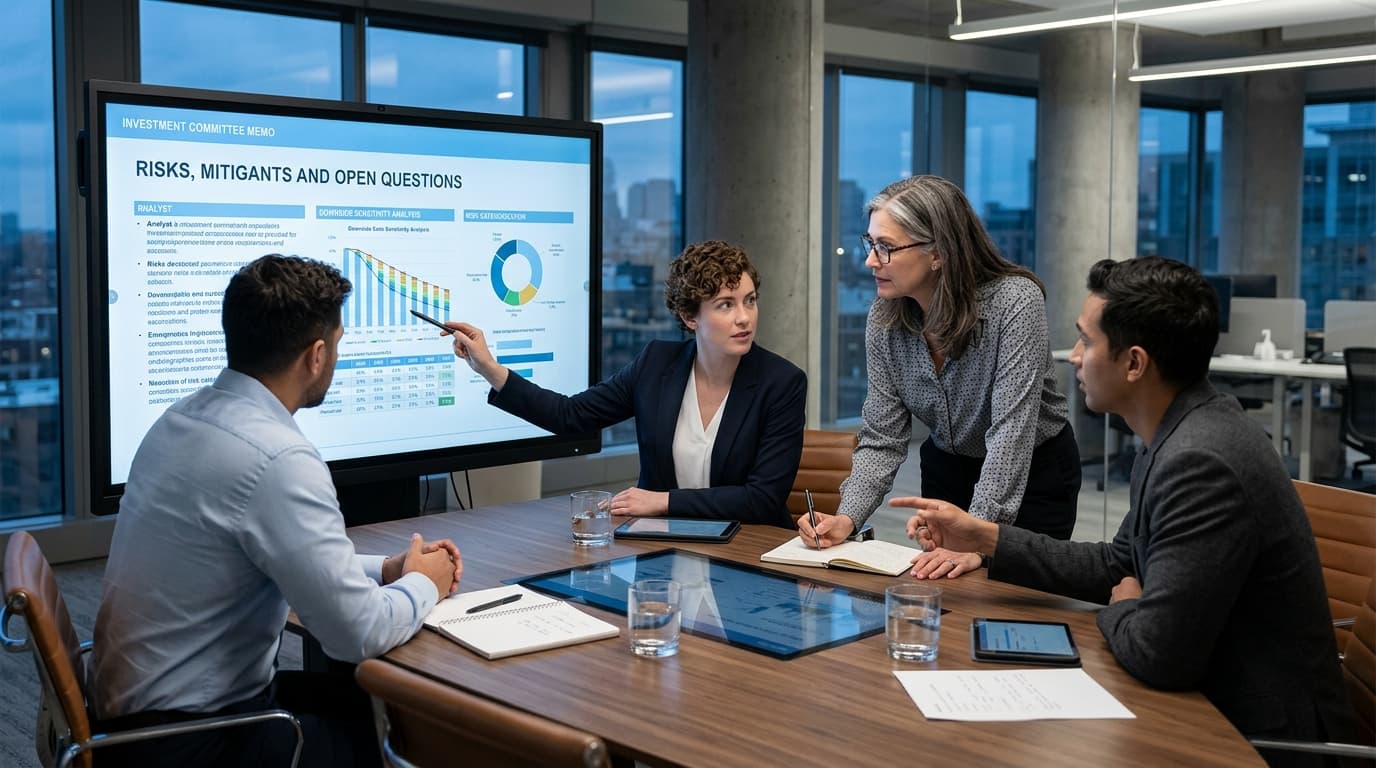
For VC & PE fund investment professionals, the era of relying solely on cheap leverage and financial engineering to drive returns is over. Today, sustainable yield is generated through hands-on operational improvements and rapid execution. Yet, a persistent execution gap remains between the optimistic investment committee memo and the actual performance of the portfolio company. Research reveals that an estimated 67 percent of value creation initiatives fail due to controllable execution reasons rather than unpredictable market shifts or macroeconomic headwinds. This high failure rate underscores a critical weakness in the traditional transaction lifecycle: a fundamental misalignment between pre-deal commercial investigations and post-deal operational realities. To close this gap, deal teams are adopting a comprehensive value creation due diligence playbook that uncovers operational leaks before the transaction is finalized.
Replacing High-Level Assumptions with Data-Room Facts
Many investment theses fail because they are built on high-level market assumptions or generic growth averages rather than granular company data. When a deal team assumes a portfolio company can easily implement a ten percent pricing increase or expand into a new regional market without verifying the underlying customer contracts, they invite post-deal friction. To de-risk these transition plans, advisors and project leads must replace qualitative gut-feel with objective facts extracted directly from the virtual data room. This involves identifying margin leaks, evaluating historical customer churn patterns, and assessing contract terms that could restrict future price optimization.
| Operational Dimension | Traditional Assumptions (Gut-Feel) | Verified Data-Room Reality |
|---|---|---|
| Pricing Strategy | Assumption that all customer accounts can absorb a uniform price hike upon acquisition. | Analysis of historical contract clauses, indexing terms, and margin distribution per account. |
| Customer Churn Risk | Relying on aggregate annual retention rates provided in marketing decks. | Granular cohort-level analysis of contract start dates, renewal cycles, and software usage trends. |
| Synergy Realization | Projected immediate headcount and technology savings based on broad industry benchmarks. | Detailed mapping of software licenses, overlapping vendor contracts, and IT system redundancies. |
Overcoming Management Friction Early
The transition from a pending deal to a signed portfolio company often triggers immediate friction with the target company's existing executive team. Management is frequently defensive when presented with top-down operational targets that they believe are detached from day-to-day realities. Presenting the management team with a collaborative, data-backed 100-day plan built on objective data-room insights transforms this dynamic. When targets are derived from verified contract terms, historical performance trends, and legal risks, they become undeniable. This objective alignment turns a potentially adversarial process into a collaborative effort, positioning the investment firm as a strategic partner rather than an detached owner.
Modern platforms like Plausity help deal teams achieve this alignment rapidly. By utilizing Data Room Ingestion, teams can parse complex contracts and customer schedules within minutes. The core AI-Analysis Engine then identifies potential margin leaks and contract anomalies, while Risk Radar flags any restrictive terms or hidden liabilities that could disrupt the value creation plan. This precise evidence allows deal teams to align with management on realistic growth vectors before day one.
The Modern Playbook: A Practical 100-Day Integration Framework
Traditional acquisition models often treat transactional vetting and post-deal operations as isolated silos. In contrast, modern dealmakers leverage an integrated value creation due diligence playbook to bridge this divide before signing the purchase agreement. According to comprehensive transaction research by KPMG, approximately 88% of firms now actively prioritize and execute value creation planning within the first 100 days post-completion. For private equity and venture capital funds, this transition represents the most critical window to convert identified operational upside into measurable enterprise value.
Bridging the Gap: Ingestion and Quick-Wins
To secure rapid digital implementation, deal teams must replace manual information handoffs with standardized ingestion workflows. Utilizing an AI-native due diligence platform allows investment professionals to extract insights from the data room and transition them directly into operational tracking. For example, Plausity's Data Room Ingestion technology extracts target contracts and financial models within minutes, enabling portfolio teams to identify immediate commercial leaks or pricing anomalies. By prioritizing these digital quick-wins, such as consolidating duplicate vendor agreements or correcting legacy customer billing gaps, acquiring teams can drive immediate EBITDA improvements without waiting for broader organizational restructuring.
- Establish standardized ingestion workflows to compile all historical contracts, financials, and operational records into a central collaborative workspace.
- Analyze the commercial agreements flagged by Plausity's Risk Radar during diligence to renegotiate overlapping vendor pricing within the first 30 days.
- Prioritize digital and commercial quick-wins to eliminate immediate operational leaks and improve initial cash flow.
- Standardize reporting templates and key performance indicators to align the portfolio management team with the investment committee's original deal thesis.
- Implement configurable due diligence playbooks to ensure that every future transaction follows a repeatable, risk-mitigated integration cycle.
The 100-Day Integration Framework
| Phase | Strategic Focus Areas | Key Operational Deliverables |
|---|---|---|
| Days 1 to 30 | Baseline validation and ingestion | Leverage Plausity's AI-Analysis Engine to ingest remaining portfolio data, validate initial risk metrics, and establish the operational baseline. |
| Days 31 to 60 | Execution of quick-wins | Deploy immediate pricing adjustments, eliminate vendor redundancies, and plug commercial revenue leakage identified in the diligence phase. |
| Days 61 to 100 | Long-term scaling and alignment | Incorporate portfolio operations under a unified 100-day plan and align corporate governance structures with the investment thesis. |
The long-term success of an acquisition depends on maintaining deal momentum long after the transaction closes. By translating transaction findings directly into structured operational milestones, advisory and investment teams ensure that value creation is not left to chance. Utilizing tools like Plausity's Report Builder to generate clear, investor-ready integration summaries ensures that all stakeholders remain aligned. Rather than treating diligence as a final compliance checkpoint, modern firms utilize it as the launchpad for continuous operational transformation.
AI-Powered Acceleration: From Document Ingestion to Automated Reporting
Modern dealmaking has moved beyond traditional, spreadsheet-driven financial engineering. In an era where post-deal operational efficiency dictates the ultimate success of an acquisition, transaction teams are increasingly turning to a tech-enabled value creation due diligence playbook to identify hidden upside early in the transaction cycle. According to industry research, leading dealmakers are integrating purpose-built AI into their core workstreams to analyze target companies at a scale and depth previously impossible. By moving away from manual spot-checks and instead deploying systematic, platform-driven diagnostics, private equity and corporate development teams can secure a highly bankable post-deal roadmap during the initial evaluation phase.
Eliminating the Manual Bottlenecks of M&A Diligence
The traditional due diligence timeline is often derailed by the sheer volume of unstructured data hidden inside virtual data rooms. Analysts spend valuable hours manually sorting PDFs, spreadsheets, and commercial contracts, leaving little time for strategic modeling and synergy valuation. Plausity addresses this operational friction at the source by utilizing automated Data Room Ingestion. This capability allows transaction teams to quickly scan and index entire VDR structures, immediately feeding data into the platform for deep analysis. Transitioning from a complex Data Room to Deal-Ready Report no longer requires weeks of manual compiling, allowing advisors to prioritize risk mitigation and revenue growth hypotheses from day one.
Uncovering Latent Risks and Generating Investor-Ready Output
Once files are ingested, Plausity's AI-Analysis Engine runs comprehensive diagnostics across the target's operational and financial records. This native engine reads, interprets, and cross-references thousands of data points, flagging anomalies that might otherwise slip past human reviewers. To streamline this risk identification process, the platform uses Risk Radar to evaluate findings based on materiality, financial exposure, and deal relevance. Rather than leaving teams with disjointed notes, Plausity leverages its Report Builder to automatically structure these insights into professional, investor-ready due diligence deliverables. These drafts feature complete source traceability back to the original VDR documents, ensuring that every identified upside is backed by concrete data-room evidence.
| Diligence Phase | Traditional Manual Workflow | AI-Powered Accelerated Workflow |
|---|---|---|
| VDR Ingestion | Manual downloading, sorting, and folder organization | Automated Data Room Ingestion within minutes |
| Document Analysis | Time-intensive spot-checks and sampling of files | Systematic scanning of all records via the AI-Analysis Engine |
| Risk Detection | Subjective review relying on individual reviewer memory | Materiality-based automated flagging using Risk Radar |
| Reporting | Manual report drafting and source verification | Automated drafting and traceability via the Report Builder |
Ultimately, transforming raw information into actionable post-deal strategies requires speed, accuracy, and standardization. By replacing manual workstreams with automated data ingestion, advanced risk assessments, and structured reporting, deal professionals can run a more precise value creation due diligence process. Utilizing configurable due diligence templates further ensures that corporate development and PE teams can standardize their operational playbooks, freeing up expert minds to focus entirely on negotiating pricing upside and refining the 100-day execution plan.
Unified Alignment: Bridging Deal Teams and Operating Partners
The transition from transaction completion to operational execution has historically been one of the steepest drop-offs in the private equity lifecycle. According to research by PwC in their Creating Value Beyond the Deal report, a staggering number of acquisitions fail to realize their expected synergy or operational upside due to a fundamental disconnect between pre-deal assumptions and post-deal reality. Traditional processes isolate transaction teams, who focus on valuation and financial modeling, from operating partners, who must execute the operational strategy on day one. To prevent this value leakage, modern investment firms are implementing a comprehensive value creation due diligence strategy. By establishing a shared analytical foundation before the deal closes, firms ensure that everyone, from transaction associates to portfolio operating partners, is aligned on the exact operational levers that will drive the investment thesis.
Flagging Operational Leaks and Vulnerabilities
Diagnosing operational leaks during the active transaction phase requires shifting from passive data collection to proactive risk mapping. Using the AI-Analysis Engine, deal teams can instantly ingest millions of data points from the virtual data room to uncover hidden operational challenges. Once the data is processed, Plausity's Risk Radar evaluates these findings based on financial materiality and operational impact. This allows operating partners to identify critical bottlenecks, such as legacy software dependencies, customer concentration issues, or supply chain weaknesses, long before the transition occurs. Instead of receiving a generic list of findings post-close, operating partners can collaborate directly with deal teams during the underwriting process, transforming potential risks into structured, addressable workstreams for the upcoming transition.
A Shared Workspace for Joint Deal Execution
Achieving true alignment requires moving away from fragmented spreadsheets, endless email threads, and siloed advisory reports. By utilizing a centralized workspace like the Collaboration Hub, transaction leads, external advisors, and internal operating specialists can coordinate their deal activities in real time. This unified workflow ensures that findings flagged during the preliminary stages are immediately mapped to strategic initiatives in the post-deal roadmap. When the deal closes, the operating partners do not need to spend weeks parsing through a digital data room to understand the underlying thesis. Instead, they can immediately execute a tailored 100-day plan built on qualified, pre-analyzed insights. This seamless transition is the core engine of a modern, data-driven value creation due diligence playbook.
- Connect transaction teams and operating partners during the initial phase of data room scanning to co-author the key operational hypotheses.
- Utilize Risk Radar to automatically categorize and rank technical, legal, and operational risks by financial materiality.
- Establish a shared channel in the Collaboration Hub to ensure external advisors and internal operational teams can discuss findings instantly.
- Draft the post-deal integration plan using the concrete, traceable operational facts surfaced during the preliminary review phases.
- Leverage the Report Builder to assemble comprehensive, investor-ready executive summaries that link pre-deal operational findings directly to post-deal growth initiatives.
Plausity brings AI-native analysis to this workstream. Explore how Plausity supports value creation due diligence playbook.