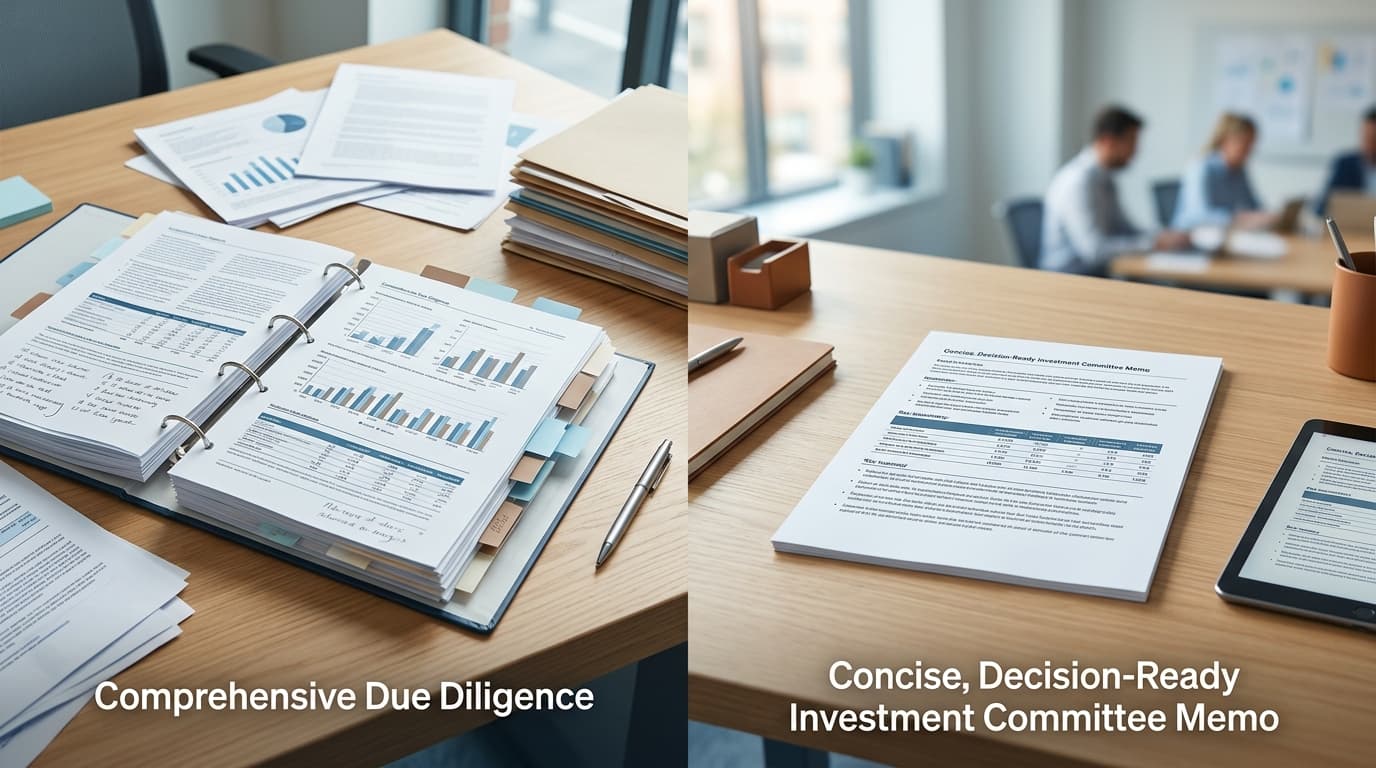
The Shift from Static Checklists to Configurable Workflows
- Custom due diligence templates ensure consistency while letting deal teams adapt checklists to unique sector risks and deal structures.
- Standardizing workflows via due diligence playbooks helps firms maintain a consistent house style and train junior analysts faster.
- According to PwC, of private equity firms plan to deploy generative AI and data analytics in their due diligence processes by 2026
- Tailoring DD workstreams to specific industries prevents checklist fatigue and focuses resources on high-impact risk areas.
Traditional transaction environments have long relied on rigid, one-size-fits-all questionnaires to guide the evaluation of target companies. For private equity investors, investment bankers, and M&A Advisory Firm Partners & Analysts, these static checklists frequently trigger severe checklist fatigue, as analysts spend hundreds of hours verifying irrelevant compliance points. More importantly, standard questionnaires fail to capture sector-specific nuances, leaving critical liabilities undetected. To address these limitations, modern investment teams are shifting toward a customisable due diligence workflow that scales dynamically with deal complexity, transitioning the assessment from a rote compliance exercise into a targeted strategic audit.
The High Cost of Misaligned Scoping
Inadequate scoping during the early stages of a transaction directly undermines post-acquisition performance. When deal teams apply generic checklists, they often miss transaction-specific integration challenges and cost structures. According to M&A research by Bain & Company, approximately 70 percent of merging companies overestimate the potential synergies of a deal. This systemic overestimation typically stems from a failure to identify operational discrepancies and structural misalignments during the initial scoping phase. Without a tailored due diligence process that isolates target-specific variables, acquiring teams build their financial models on broad assumptions rather than granular operational realities.
Transitioning to Dynamic Scoping and Playbooks
To mitigate these risks, sophisticated deal teams configure their investigations using repeatable, sector-specific due diligence playbooks and custom due diligence templates. This approach allows Corporate M&A Project Leads to instantly adapt their investigative framework based on the target company's business model, regulatory environment, and geographic footprint. By utilizing configurable DD workstreams, analysts can easily toggle legal, financial, and compliance streams on or off depending on the mandate, ensuring that resources are concentrated where the risk is highest. This structural flexibility is crucial for fast-paced markets where transaction windows are compressed and teams must identify core liabilities quickly.
| Evaluation Dimension | Static Checklists | Configurable DD Workflows |
|---|---|---|
| Scoping Adaptability | Rigid questions applied uniformly across all target industries, creating substantial administrative overhead. | Workflows are dynamically enabled or disabled depending on the specific transaction sector and mandate. |
| Risk Discovery | Heavy reliance on manual search, increasing the likelihood of missing off-balance-sheet liabilities. | Integrated tools like the AI-Analysis Engine scan and cross-reference documentation to flag sector-specific anomalies. |
| Team Collaboration | Siloed documents and linear workflows that delay communication and slow down decision-making. | A centralized environment connects specialists across financial, legal, and operational workstreams in real time. |
Deploying configurable workflows requires software that can ingest, categorize, and cross-reference complex datasets without manual restructuring. By integrating tools like Data Room Ingestion and the AI-Analysis Engine, investment professionals can upload unstructured documents and automatically map them to their custom due diligence templates. This automated mapping eliminates the manual sorting phase, enabling analysts to focus on assessing high-risk liabilities surfaced by Risk Radar rather than managing spreadsheets. Ultimately, replacing static checklists with dynamic, sector-specific workflows allows deal teams to accelerate their timelines while maintaining a rigorous standard of risk mitigation.
Codifying Firm Expertise with Custom Due Diligence Templates
Modern dealmaking demands that teams move fast without compromising analytical depth. Many venture capital and private equity firms VC and PE funds rely on custom due diligence templates to codify their unique investment thesis and analytical standards. Standardizing these assets across the deal team ensures that institutional knowledge is preserved and applied systematically to every transaction. When institutional memory is siloed in individual spreadsheets or locked in the minds of senior partners, teams run the risk of repeating past analytical oversights. A unified framework ensures that junior analysts and seasoned partners alike evaluate targets against the same rigorous criteria, minimizing variance and protecting capital.
This standardization is critical to addressing lessons from past transactions. Research from PwC shows that 80% of buyers learned they need deeper diligence from past transactions to avoid post-close value destruction. By designing a tailored due diligence process based on reusable playbooks, firms can turn these historical lessons into automated, actionable frameworks. Instead of starting from a blank page for every transaction, M&A project leads can deploy pre-configured diligence templates that target specific vulnerabilities based on the transaction profile. This systematic approach ensures that key risks are never overlooked, even under compressed deal timelines.
Configuring Workflows to Match the Mandate
Depending on whether a transaction is a minority growth equity investment or a complex multinational merger, the deal team needs a customisable due diligence workflow customizable workflow that aligns with the deal's size, sector, and risk profile. This level of customization allows firms to toggle configurable DD workstreams on or off, ensuring that legal, financial, and operational reviews focus on target-specific variables. For example, a software sector transaction prioritizes IP ownership, tech stack scalability, and open-source compliance, while an industrial asset requires deep environmental and operational reviews. Rather than executing a generic checklist, teams can align their due diligence playbooks with sector-specific realities sector-specific insights.
| Deal Type | Key Diligence Dimension | Tailored Analysis Focus |
|---|---|---|
| Growth Equity | IP and Technology Scalability | Evaluating codebase architecture, software dependencies, and patent defensibility. |
| Leveraged Buyout (LBO) | Historical Cash Flow Quality | De-risking working capital, checking customer concentration, and auditing debt structures. |
| Strategic Corporate M&A | Integration and Synergy Realization | Assessing cultural alignment, cross-entity compliance, and IT system compatibility. |
Scaling Diligence with Automated Risk Identification
To execute these custom frameworks at scale, deal teams can leverage automated platforms to handle the heavy lifting of document processing. Using Plausity's AI-Analysis Engine, analysts can rapidly parse historical deal documents and compare them against their standardized templates. Through seamless Data Room Ingestion, the platform connects to virtual data rooms and structures unstructured files into organized streams. Once ingested, Risk Radar scans the data room for potential risks and legal exposures, flagging findings that deviate from the firm's established materiality thresholds risk intelligence. This process allows partners and analysts to maintain their high standards of rigor, turning raw information into verified insights without sacrificing speed.
Executing Tailored Processes with Due Diligence Playbooks
An abstract investment thesis only delivers value when translated into systematic execution. According to research from McKinsey, successful programmatic acquirers establish rigorous corporate development blueprints to bridge the gap between deal strategy and due diligence execution. For analytical investment teams, this translation is achieved through highly structured due diligence playbooks. These playbooks transform general checklists into granular, step-by-step instructions. By deploying clear guidelines, M&A project leads and advisory partners can align internal analysts and external advisors with the firm's core standards, ensuring that no critical risk is overlooked in the rush to sign.
Structuring the Governance Model and Accountability
A key pillar of any robust playbook is the clear mapping of roles and responsibilities. Deal teams often employ structured decision-right frameworks, such as Bain's RAPID model, to establish who recommends, approves, performs, inputs, and decides on key diligence findings. Implementing a customizable due diligence workflow ensures that every workstream has a designated owner, preventing critical tasks from falling through the cracks. For example, while junior analysts may manage the initial Data Room Ingestion and document triaging, the responsibility for validating material findings resides with senior partners. Through a centralized system, team leaders can assign specific tasks, track progress in real-time, and ensure that external legal and financial advisors work within the same governance structure.
- Mapping Roles and Responsibilities: Establish clear accountability by assigning dedicated owners to specific workstreams, defining who performs the analysis and who holds the final decision rights.
- Setting configurable DD workstreams: Activate or deactivate specific legal, financial, or commercial modules based on the sector, deal size, and transaction complexity.
- Defining Escalation Thresholds: Detail the specific red flags, such as undisclosed liabilities or change of control restrictions, that require immediate escalation to senior leadership.
- Integrating AI-Powered Tools: Leverage the AI-Analysis Engine to ingest and analyze virtual data room contents, automatically flagging anomalies and cross-references.
- Standardizing Deliverables: Utilize custom due diligence templates to ensure that final reports maintain a consistent house style and are ready for investment committee review.
Adapting to McKinsey's Core Execution Models
Every transaction requires a tailored due diligence process. Investment teams cannot apply the same intensity or focus to an early-stage venture investment as they do to a complex cross-border corporate carve-out. Playbooks must adapt standardized framework structures to match the specific integration and execution models defined by M&A researchers. For instance, McKinsey identifies different integration postures, from complete absorption to holding-company preservation, each demanding a distinct focus during the diligence phase. In an absorption model, diligence must prioritize cultural and systems compatibility, whereas a preservation model focuses heavily on regulatory compliance and standalone financial viability.
By leveraging the Collaboration Hub and the Risk Radar, deal teams can seamlessly customize their inquiry path. The platform allows users to toggle specific workstreams on and off, adjusting the depth of analysis to align with the deal’s strategic objectives. When the analysis is complete, the Report Builder automatically structures the findings into highly professional, investor-ready documents that trace every risk directly back to its source file. This structured adaptability ensures that deal professionals maintain rigorous quality standards while keeping pace with the transaction timeline.
Configuring Workstreams by Industry and Transaction Size
Due diligence cannot follow a one-size-fits-all checklist. Bain & Company's transaction performance studies indicate that approximately 60% of M&A deals fail to meet internal expectations. A primary driver of this underperformance is the tendency to run a generic, untargeted due diligence process that spreads analytical resources too thin rather than focusing on key risk areas. To prevent checklist fatigue and ensure thorough analysis, serious deal professionals require a customisable due diligence workflow that allows them to activate or deactivate specific workstreams based on the target asset's sector and transaction characteristics.
Tailoring for Sector-Specific Value Drivers
The operational realities of a target asset dictate which risks are material. For example, a software-as-a-service (SaaS) transaction requires rigorous analysis of recurring revenue metrics, IP protection, open-source software risk, and data privacy compliance. In contrast, an industrial manufacturing acquisition demands a deep dive into physical supply chains, equipment depreciation, and environmental liabilities. Leveraging industry expertise to configure your due diligence process ensures that analysts focus on the specific drivers of long-term value creation.
Through configurable DD workstreams, deal teams can deploy custom due diligence templates that match these specific industry profiles. Instead of drowning in thousands of irrelevant checklist questions, the diligence team focuses exclusively on high-priority risk areas. For instance, the target's regulatory landscape can be addressed via custom regulatory checklists built directly into the workflow.
- Software SaaS: Prioritizes intellectual property chain-of-title, open-source software license exposure, SOC reports, and GDPR compliance.
- Industrial Manufacturing: Prioritizes site-level environmental assessments, equipment maintenance logs, health and safety regulations, and key supplier dependencies.
Adapting to Transaction Size: Platform vs. Bolt-On Deals
The depth and breadth of due diligence must also scale with transaction size and deal complexity. A major platform acquisition typically involves multi-layered commercial, financial, and legal reviews across several corporate entities. This requires comprehensive coordination across numerous cross-functional workstreams. On the other hand, a bolt-on acquisition for an existing portfolio company needs a highly targeted, accelerated review that focuses strictly on integration fit and immediate synergies.
Executing the same level of inquiry for a small bolt-on as a large platform slows down transactions and wastes valuable resources. By establishing standardised due diligence playbooks, corporate development heads and private equity teams can automatically configure the platform's workstreams to match the exact deal scale PE funds. This ensures that smaller deals are processed with speed and efficiency, while major platform transactions receive the deep, systematic scrutiny they require.
| Deal Parameter | Platform Acquisition Scope | Bolt-On Acquisition Scope |
|---|---|---|
| Core Focus | Comprehensive commercial, technical, and regulatory alignment | Post-merger integration synergy and operational fit |
| Regulatory Review | Full multi-jurisdictional compliance audit | Targeted local regulatory and key contract reviews |
| Workflow Setup | Multi-workstream team structure with dedicated leads | Lean, accelerated review via automated risk scanning |
For corporate M&A project leads and M&A advisory firm partners, having a tailored due diligence process is essential to maintaining high standards of analytical rigor. With Plausity, deal teams can seamlessly configure their workflows, using the AI-Analysis Engine to parse documents and Risk Radar to surface material risks across their preferred workstreams, ensuring a consistent and defensible transaction process.
Leveraging Technology to Operationalize Configurable Due Diligence
The rapid digitization of corporate transaction markets has elevated the strategic demand for flexible technology solutions. According to a study by PwC, 83 percent of private equity firms plan to deploy data analytics and generative AI in due diligence by 2026. This structural shift in the industry highlights the need for investment teams to move past legacy checklists and adopt custom workflows. By using a platform designed for agility, deal professionals can instantly align their review processes with the target company's sector, transaction structure, and risk profile.
Operationalizing this level of customisation requires an integrated infrastructure that translates institutional knowledge into systematic execution. Developed by CITO GmbH in Hamburg, Germany, Plausity is built specifically to address these demands. Through its core AI-Analysis Engine, the platform enables transaction teams to activate or deactivate specific configurable DD workstreams depending on the specific scope of the mandate. This modular structure ensures that analysts spend their hours investigating high-value risks rather than sorting through irrelevant categories.
Standardizing Quality with Playbooks and Automation
Deploying a tailored due diligence process at scale depends on bridging the gap between initial data room access and the final investment memorandum. The technology pipeline starts with Data Room Ingestion, which connects directly to the transaction's virtual data room to import thousands of folders, spreadsheets, and PDFs within minutes. Once ingested, the documents are structured and processed against the firm's pre-defined due diligence playbooks and custom due diligence templates, ensuring that the target's operational documents are evaluated according to the buyer's established house style.
To identify risks that might otherwise remain buried in unstructured text, the platform's Risk Radar automatically scans the corpus to detect, evaluate, and flag liabilities based on their financial and legal exposure. This risk assessment feeds seamlessly into the Report Builder, which compiles findings into structured, investor-ready summaries. Crucially, every single risk flag and observation in the draft report is linked directly back to its source document, establishing a clear path of traceability that analysts can verify instantly. This level of automation allows teams to maintain complete analytical rigor even when operating under compressed timelines.
| Diligence Component | Traditional Manual Setup | AI-Powered Configurable Approach |
|---|---|---|
| Workstream Setup | Manual preparation of rigid checklists for every deal | Configurable DD workstreams toggled on or off based on sector and mandate |
| Document Ingestion | Sequential manual review of data rooms taking days or weeks | Data Room Ingestion connects to VDRs and processes files in minutes |
| Risk Analysis | Ad-hoc skimming of files prone to missing hidden liabilities | Risk Radar automatically detects and flags material liabilities based on playbooks |
| Report Generation | Manual copying and pasting of text with high risk of citation errors | Report Builder automatically structures outputs with findings linked to sources |
- Private equity firms can execute multi-scope legal and commercial reviews that match their rapid transaction cycles.
- Corporate M&A leads can maintain rigorous standards and process consistency across multiple parallel acquisition targets.
- Advisory partners can easily scale custom due diligence templates to match the specific regulatory demands of different target sectors.