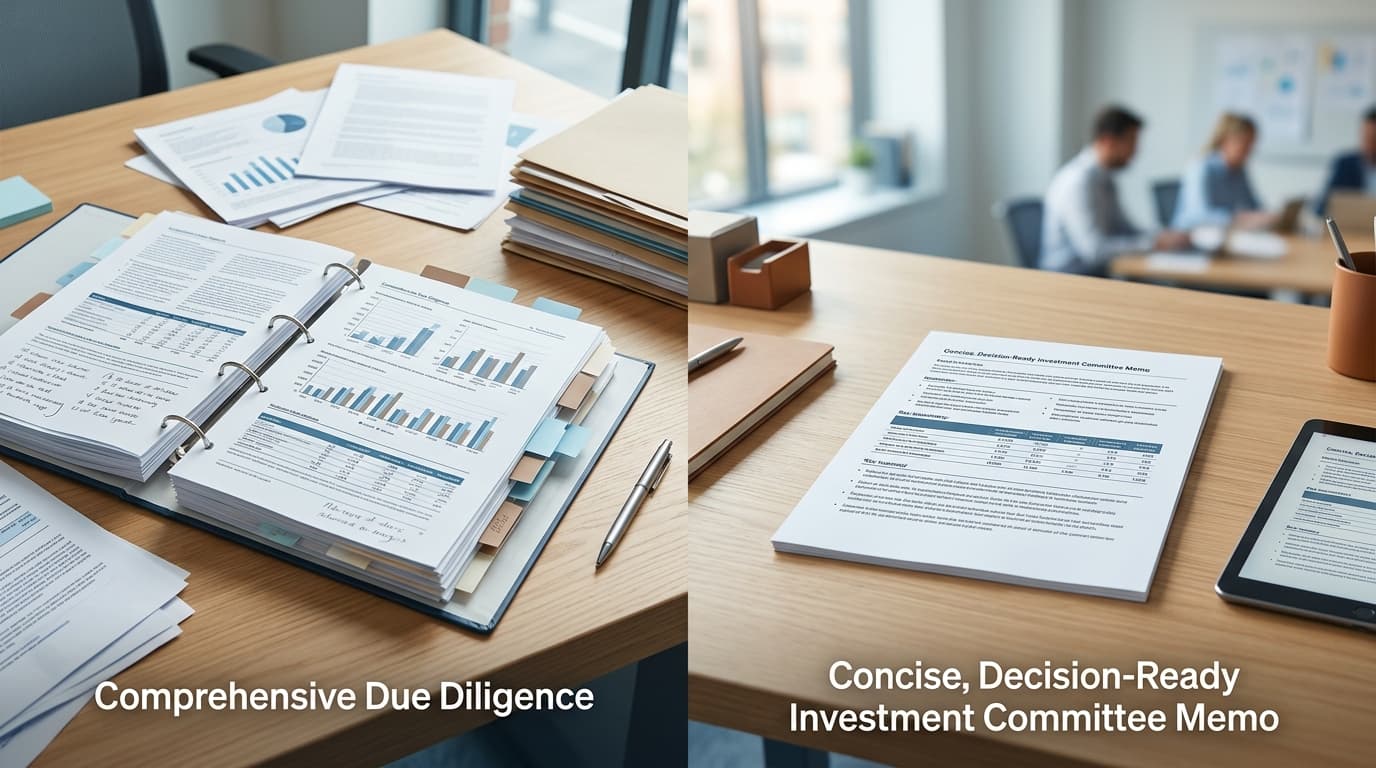
What Is Private Wealth Alternatives Due Diligence?
Private wealth alternatives due diligence is the specialized operational, structural, and legal evaluation conducted by wealth platforms, private banks, and advisers before distributing private market funds to individual investors. Unlike institutional diligence, which focuses primarily on GP track record, deal sourcing, and portfolio underwriting, private wealth due diligence evaluates product packaging, liquidity mechanics, suitability protocols, distribution governance, and operational plumbing. It tests whether a manager can support monthly or quarterly valuation cycles, execute secondary tender offers, manage investor qualification, educate wealth advisers, and deliver clear reporting without exposing individual investors or wealth platforms to structural, liquidity, or reputational risks.
Why This Matters Now
The rapid expansion of private markets beyond traditional institutional LPs has forced asset managers to re-examine how funds are designed and distributed. Institutional investors face distribution slowdowns and allocation constraints, a dynamic explored in more depth in our work on VC DPI due diligence, prompting fund managers to target high-net-worth individuals, mass-affluent investors, and family office networks. However, bringing private equity, private credit, real estate, and infrastructure to non-institutional channels requires passing gatekeeper scrutiny that looks far beyond historic returns.
This shift is accelerating across global wealth management channels. Industry analysis indicates that meaningful private capital exposure is projected to reach 16% of registered funds by 2030. Achieving that scale requires asset managers to prove that their fund structures can withstand retail distribution demands, operational friction, and strict regulatory oversight.
The Practical Diligence Framework for Retail Funds
Evaluating a private fund destined for retail distribution requires analyzing four distinct dimensions: structural packaging, distribution suitability, operational readiness, and investor experience. A fund that excels in asset selection will still fail on a wealth platform if its liquidity terms, tax reporting, or clearing plumbing create administrative bottlenecks for financial advisers. The financial workstream still applies, and a standard financial due diligence checklist remains the baseline, but wealth channel due diligence layers packaging and distribution tests on top of it.
Product Wrappers and Liquidity Mechanics
The choice of product wrapper dictates how a fund interacts with wealth channels. Traditional closed-end drawdown funds with 10-year lockups and capital calls are unsuitable for most individual investors. Managers increasingly deploy evergreen, semi-liquid, or tender-offer structures that allow continuous capital inflows and periodic liquidity. When evaluating these structures during asset manager M&A due diligence or platform onboarding, diligence teams must examine how underlying portfolio liquidity aligns with investor redemption rights.
| Wrapper Structure | Primary Liquidity Mechanism | Valuation Cadence | Target Investor Segment |
|---|---|---|---|
| Semi-Liquid Interval Fund | Mandatory periodic repurchase offers up to a stated share of NAV | Daily or Monthly NAV | Mass-affluent & accredited investors |
| Tender-Offer Closed-End Fund | Discretionary board-approved tender offers | Quarterly NAV | Accredited investors & qualified purchasers |
| Evergreen / Open-End Private Fund | Monthly or quarterly redemption caps with gate limits | Monthly NAV | Qualified purchasers & HNW individuals |
Model Portfolio Fit and Adviser Education
Wealth managers increasingly construct model portfolios and unified managed accounts (UMAs) for their clients. To earn a spot in a model portfolio, a private fund must offer predictable subscription schedules, fractional share capabilities, and tax reporting that advisers can deliver to clients without partnership-level complexity or late schedules. Diligence teams evaluate whether the manager provides comprehensive adviser education modules, turnkey marketing collateral, and clear risk disclosures that explain illiquidity concepts to non-institutional clients.
What Platforms and Advisers Are Really Testing
Wealth platforms and private bank gatekeepers perform exhaustive operational due diligence (ODD) before adding a manager to their approved product lists. These gatekeepers act as fiduciaries for thousands of financial advisers and must ensure that retail fund claims match operational reality. Team stability matters too, which is why platforms borrow tests from PE talent retention due diligence when assessing whether the investment and distribution teams behind a fund will still be in place in three years.
Suitability, Risk Disclosure, and Valuation Cadence
Gatekeepers scrutinize how risk is communicated across distribution networks. They inspect marketing materials to confirm that illiquidity risks, leverage limits, and capital loss possibilities are stated clearly without misleading return projections. Valuation policies undergo intense review: diligence teams mandate independent third-party pricing, formal valuation committee charters, and transparent fair-value pricing methodologies that protect remaining investors when redemptions occur.
Liquidity Gates and Fee Transparency
Liquidity gates represent one of the highest reputational risks for wealth platforms. Evaluators test the fund's liquidity management framework under market stress, examining cash buffers, revolving credit lines, and secondary liquidity facilities. Fee transparency is equally critical. Diligence teams audit every layer of fee structure, including direct management fees, underlying asset-level expenses, platform access fees, and performance incentive allocations, verifying that net-of-fee returns are disclosed accurately.
Operational Plumbing and Reporting Infrastructure
Manual processes do not scale in wealth channels. Gatekeepers evaluate a manager's technological integration with automated clearing networks, such as the Depository Trust & Clearing Corporation's National Securities Clearing Corporation Alternative Investment Products (DTCC/NSCC AIP) system. Seamless transfer agency integration, digital onboarding portals, and automated reporting infrastructure are essential prerequisites for platform approval.
Key Red Flags in Private Wealth Distribution
Identifying operational or structural deficiencies early prevents costly platform suspensions and client disputes. Diligence teams must systematically evaluate red flags across distribution channels, utilizing risk register automation to track and resolve potential exposure.
| Red Flag Category | Specific Warning Sign | Impact on Distribution / Investor Risk |
|---|---|---|
| Liquidity Mismatch | Illiquid underlying assets paired with monthly redemption promises without cash buffers. | Risk of abrupt fund gates, forced asset sales, or fund suspensions during market stress. |
| Opaque Fee Layering | Undisclosed platform access fees, sub-transfer agent charges, or complex performance hurdles. | Erosion of net investor returns, potential regulatory enforcement, and adviser friction. |
| Fragmented Operational Plumbing | Manual subscription processing, lack of NSCC/AIP clearing integration, and physical paperwork. | High order error rates, delayed capital allocation, and inability to scale across wealth networks. |
| Inadequate Valuation Governance | Internal-only valuation models without independent third-party pricing oversight. | Mispriced investor subscriptions and redemptions, leading to cross-subsidization risk. |
| Missing Suitability Controls | Generic marketing materials lacking explicit risk disclosures on illiquidity and leverage. | Exposure to mis-selling claims, regulatory fines, and reputational damage for platforms. |
| Tax and Reporting Delays | Delayed K-1 tax schedule delivery past annual deadlines or complex multi-state tax filings. | Investor dissatisfaction, tax penalty friction, and risk of custodian platform delisting. |
What Managers Are Expected to Show: Evidence Checklist
Asset managers seeking distribution across wealth platforms must populate their data room with verifiable operational and structural documentation. The following checklist details the core evidence required during private wealth due diligence, and it is the same evidence base that feeds IC memo automation when a platform's investment committee takes the final approval decision.
- Product Structure and Constituent Documents: Form N-2 or prospectus filings, offering memoranda, partnership agreements, and operating terms governing investor redemption rights.
- Liquidity Management and Stress-Testing Framework: Quantitative models demonstrating portfolio cash buffers, credit facilities, and gate execution protocols under market downturn scenarios.
- Independent Valuation Policy and Pricing Governance: Valuation committee charters, independent pricing vendor contracts, and fair-value pricing policy documentation.
- Distribution and Intermediary Agreements: Master selling group agreements, platform distribution contracts, fee-sharing arrangements, and sub-transfer agency terms.
- Adviser Education and Suitability Materials: Wholesaler training decks, adviser product guides, investor suitability questionnaires, and compliance sign-offs for marketing literature.
- Operational Plumbing and Transfer Agency Protocols: Systems architecture diagrams showing NSCC/AIP connectivity, transfer agent service level agreements, and tax reporting workflows.
- Fee Layering and Expense Disclosure Statements: Comprehensive schedule of management fees, administrative expenses, platform access fees, and performance waterfall calculations.
- Regulatory and Compliance Framework: Regulatory examination records, compliance manuals covering retail distribution rules, FINRA review logs, and conflict-of-interest policies.
Practical Implications for the Alternatives Ecosystem
The expansion of private market strategies into individual investor portfolios creates strategic imperatives for fund managers, wealth platforms, and institutional investors alike. Aligning product structures with retail distribution requirements is no longer optional for firms seeking asset growth. LPs assessing how a manager handles liquidity for existing investors often read these signals alongside continuation fund super carry due diligence and continuation vehicle due diligence, where valuation integrity and conflict management face the same scrutiny.
Regulatory frameworks are evolving rapidly to support this transition. For example, the SEC Division of Investment Management released Accounting and Disclosure Information (ADI 2025-16) regarding registered closed-end funds of private funds, confirming that staff will no longer request registrants to limit private fund holdings to 15% of assets or mandate accredited investor status for registered closed-end funds. This regulatory clarity encourages broader adoption of semi-liquid and registered closed-end fund structures.
At the same time, market growth projections reinforce the scale of this opportunity. Private market assets under management are projected to reach $60 to $65 trillion by 2032, with the retail investor share of private market AUM expanding from 16% to 22%. Fund managers who establish robust distribution diligence protocols today will capture a disproportionate share of this capital inflow.
How to use this in your next diligence workflow
Executing rigorous private wealth due diligence across hundreds of fund documents, distribution agreements, and regulatory disclosures requires advanced technological support. An AI-native diligence workspace gives deal teams, compliance leads, and wealth platform gatekeepers a single place to automate complex document analysis and risk detection, whether the work sits inside M&A advisory workflows or in diligence for PE and VC funds.
How Plausity Supports This Workflow
With AI-powered diligence analysis, teams can cross-reference complex fund prospectuses, selling group agreements, and liquidity management frameworks within minutes. Data room ingestion scans and processes virtual data room contents across multi-format files, extracting critical terms regarding redemption gates, fee waterfalls, and valuation policies.
To ensure complete risk coverage, Plausity's findings and risk intelligence surfaces structural anomalies, fee discrepancies, and regulatory exposure across distribution channels, populating a real-time risk register with source-traceable findings. Embedding these steps into your diligence workflow helps your firm accelerate platform onboarding, protect fiduciary integrity, and scale private wealth distribution with confidence.