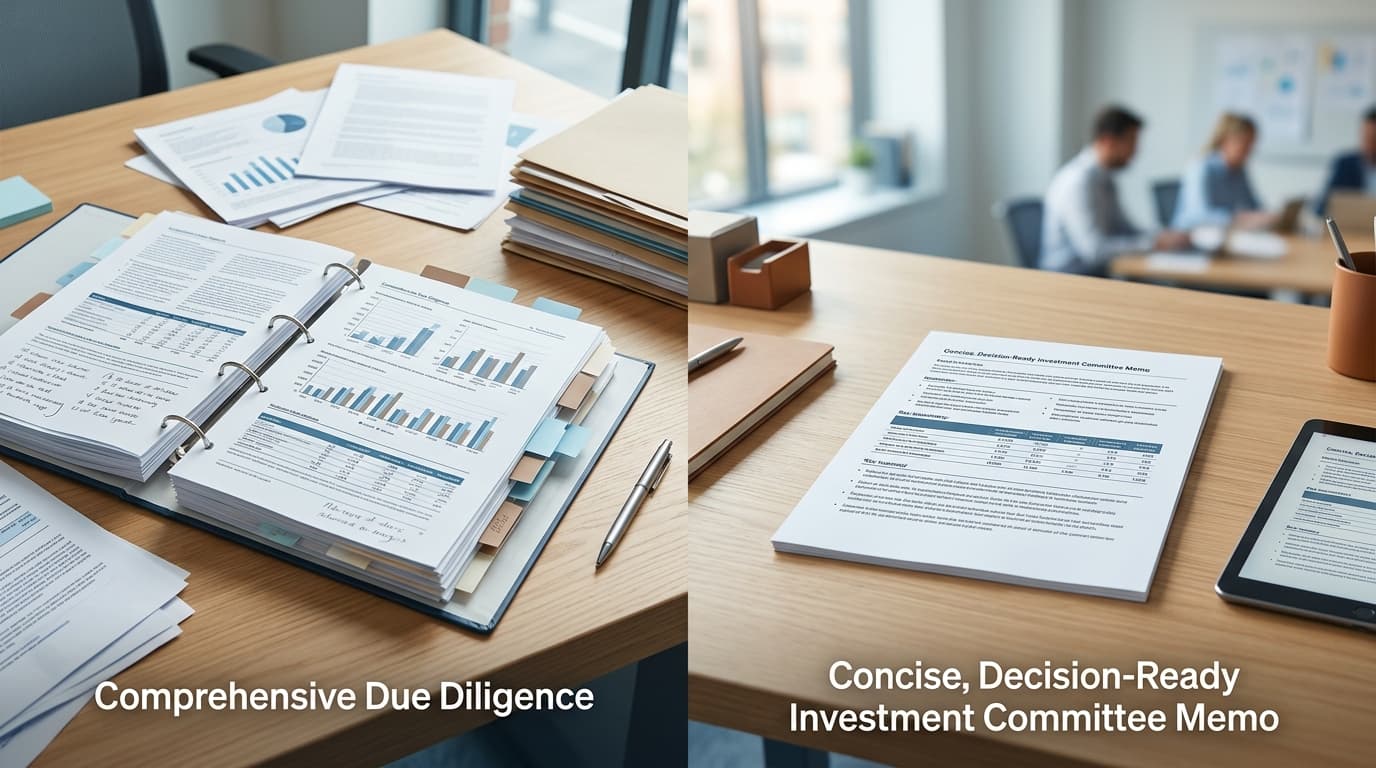
The High Stakes of Cyber Negligence in Modern Transactions
Cybersecurity is no longer just an IT concern, it is a primary driver of M&A deal value. Discover how to protect your transactions with a modern, structured cybersecurity due diligence framework powered by AI.
In modern corporate transactions, technology is no longer a peripheral asset category but the very engine that powers business scale and valuation. Despite this reality, inadequate tech scoping remains a persistent blind spot in traditional mergers and acquisitions. When private equity and venture capital investment professionals fail to thoroughly evaluate a target company's digital infrastructure, they risk inheriting severe operational crises and substantial post-closing liabilities. Historically, deal teams treated IT security as an afterthought to financial audits. In 2026, security is a core pillar of technical due diligence, requiring buyers to move beyond static surveys toward a comprehensive cybersecurity due diligence framework.
The financial cost of cyber oversight is higher than ever. According to global research, the average cost of a data breach reached a record 4.88 million USD. In the context of transactional M&A, these vulnerabilities directly impact deal economics. The most famous historic example is Verizon's acquisition of Yahoo, which suffered a massive 350 million USD valuation reduction after previously undisclosed data breaches were brought to light. Today, a simple check-the-box due diligence checklist is no longer sufficient to identify nested vulnerabilities, making a rigorous and automated risk evaluation essential.
| Risk Category | Potential Financial Impact | Regulatory Exposure Example |
|---|---|---|
| Undiscovered Data Breach | Direct remediation costs averaging up to 4.88 million USD | High risk of immediate operational disruptions post-close |
| Regulatory Non-Compliance | Fines up to 4% of global annual turnover or 20 million EUR | Severe corporate liability exposure under GDPR and modern data privacy laws |
| M&A Valuation Discount | Immediate valuation write-down similar to the 350 million USD Yahoo price cut | Damage to buyer trust and permanent loss of intellectual property |
Beyond immediate valuation discounts, regulatory exposure has transformed the liability profile of M&A transactions. Under stringent frameworks like the General Data Protection Regulation, or GDPR, acquiring entities inherit the historical cyber liabilities and compliance infractions of their targets. If a target firm operates with unpatched vulnerabilities, lax access controls, or systemic data mishandling, those vulnerabilities instantly transition to the buyer's balance sheet upon closing. This shift means that modern deal teams cannot afford to treat cybersecurity as a simple technical checkbox. It must be addressed as a critical workstream within the broader spectrum of due diligence workstreams.
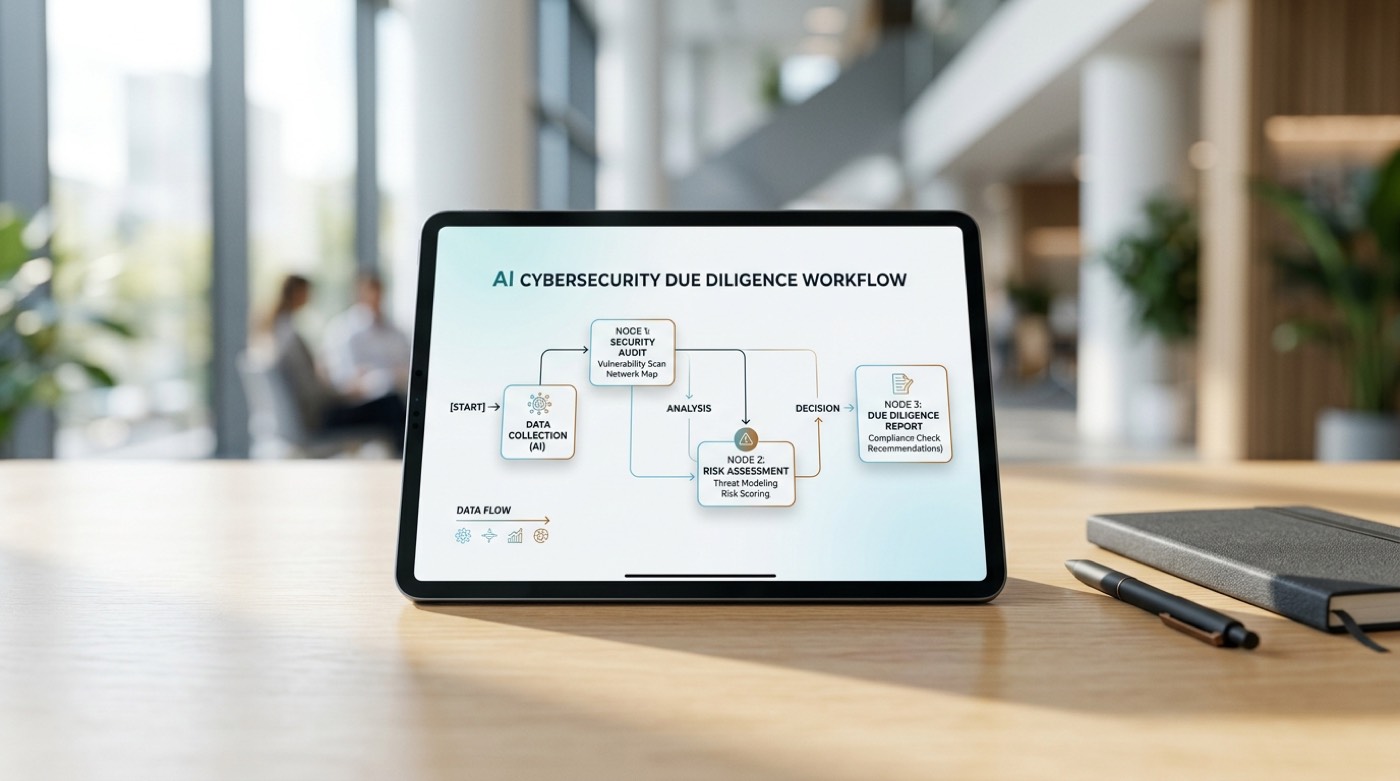
Addressing these vulnerabilities in a fast-paced transaction environment requires a modern, AI-assisted approach. Manual file-by-file reviews of technical documentation often fail to spot hidden risks. To streamline this process, M&A advisors and corporate development teams can utilize automated tools. By deploying Plausity's Data Room Ingestion, teams can parse hundreds of security audits, network logs, and policy files in minutes. The core AI-Analysis Engine then identifies inconsistencies and extracts critical liabilities, while Risk Radar evaluates these findings based on materiality, regulatory exposure, and transaction relevance. This process transforms raw data room contents into an actionable, deal-ready report that ensures complete transparency before negotiations conclude.
The 9-Phase Cybersecurity Due Diligence Framework
Modern mergers and acquisitions operate in a highly volatile digital threat landscape. Cybersecurity incidents and undiscovered vulnerabilities do not merely represent operational threats to day-to-day work; they directly degrade deal enterprise value, invite regulatory penalties, and compromise post-merger synergy realization. Research shows that cybersecurity problems delay approximately 62% of M&A transactions, and a staggering 73% of dealmakers report being willing to walk away from a transaction entirely if severe, undisclosed cyber risks are discovered during evaluation. Navigating these high stakes requires transitioning from a manual checklist to a repeatable, rigorous, and automated process integrated into broader due diligence workstreams. This structure ensures that no critical threat vectors are overlooked between initial deal sourcing and ultimate post-merger integration.
For private equity firms, venture capital investors, and corporate development leaders, a disciplined cybersecurity due diligence framework must be both thorough and rapid. VC and PE fund investment professionals increasingly rely on a structured, 2026-ready cybersecurity due diligence framework to identify and quantify target liabilities before committing capital. By structuring the investigation into nine discrete, sequential phases, deal teams can systematically unearth risks, estimate remediation budgets, and adjust valuations or construct indemnity escrows before signing. Incorporating automated tools into these phases helps maintain transaction momentum while significantly increasing the depth of security analysis.
The 9 Essential Phases of Cyber Diligence
- Phase 1: Deal Scoping and Target Profiling. Define the regulatory and technical boundaries of the target based on its industry vertical, geographic footprint, and core digital assets.
- Phase 2: External Vulnerability and Threat Surface Scan. Perform non-intrusive scans to map the target's public-facing digital assets, domain health, and active exposures.
- Phase 3: Information Security Governance Review. Evaluate the target's formal security policies, organizational structure, reporting lines, and employee security awareness training.
- Phase 4: Regulatory and Compliance Mapping. Verify alignment with applicable regional frameworks such as GDPR, HIPAA, or specialized standards like the EU AI Act.
- Phase 5: Core Infrastructure and Cloud Security Assessment. Inspect virtual private clouds, network topologies, firewall configurations, identity and access management controls, and endpoint protections.
- Phase 6: Third-Party and Vendor Supply Chain Risk. Assess the security postures of critical software-as-a-service providers and open-source software libraries integrated into proprietary code.
- Phase 7: Historical Incident and Breach Audit. Investigate prior security incidents, operational downtime, ransom payouts, data leak exposures, and the effectiveness of prior remediation efforts.
- Phase 8: Financial Exposure and Remediation Estimations. Quantify potential capital expenditures needed to bring the target up to a modern security baseline after closing.
- Phase 9: Post-Closing Cybersecurity Integration Planning. Design the tactical roadmap to align the target's operational environment with the acquirer's corporate security policies.
Successfully executing this multi-phase investigation requires parsing thousands of complex pages of technical data, policy manuals, and compliance certificates. Traditionally, this process took weeks of manual labor, often stalling transaction schedules or leading to rushed, incomplete reviews. Implementing a modern AI-native due diligence platform changes the math completely. Plausity's Data Room Ingestion connects directly to virtual data rooms, extracting security documents and organizing them for immediate analysis. Once ingested, the AI-Analysis Engine reads, interprets, and cross-references policies, audit reports, and vulnerability files within minutes rather than weeks.
With the documents compiled, corporate M&A project leads can deploy Plausity's Risk Radar to instantly identify gaps in the target's governance or infrastructure policies. This intelligent scanning flags omissions in incident response protocols or missing regulatory certificates, matching findings against rigorous global benchmarks. Finally, the Report Builder automatically structures these technical insights into investor-ready summaries, providing full source traceability. By combining this structured 9-phase framework with automated intelligence, deal professionals can confidently price cybersecurity risk, secure transaction parameters, and establish a clear integration plan long before the final contracts are signed.
Evaluating Key Target Cyber Risk Domains
As cyber threats become more sophisticated, tech-related diligence has pulled decisively ahead of all other transactional domains. A 2026 market study of senior transaction professionals found that 84% anticipate increased scrutiny of cybersecurity due diligence in the coming 12 to 24 months, while 51% now rank tech diligence as the single most burdensome element of the entire deal review. For VC and PE fund investment professionals as well as corporate M&A project leads, assessing these digital vulnerabilities is no longer a check-the-box exercise. Traditional methods of auditing target systems often fail to capture the modern, highly distributed risk landscape. To protect transactional value, deal teams must transition to a modern cybersecurity due diligence framework that utilizes advanced automated tools to dissect complex digital perimeters and integrate these findings into a comprehensive due diligence checklist during the pre-signing phase.
Evaluating a target company's cyber posture requires a meticulous look beyond generic IT infrastructure. Deal teams must perform deep audits across high-exposure domains including cloud infrastructure security, identity and access management, and historical incident history. In many high-growth technology companies, cloud configurations are highly dynamic, frequently resulting in misconfigured buckets or outdated access controls that manual legal and technical reviews easily miss. Without deep validation, an acquiring team risks inheriting active breach vulnerabilities or orphaned accounts with administrative privileges. This can lead to immediate post-acquisition security failures or compliance penalties under modern data privacy regulations, directly impacting the post-close operational model and overall investment thesis.
The Critical Domains and the Cost of Blind Spots
Another critical but frequently neglected domain is software supply chain security, specifically involving software bill of materials (SBOM) risks and unpatched vulnerabilities. Target software products are often built upon thousands of open-source components and third-party dependencies. If any of these libraries contain critical vulnerabilities, the intellectual property being acquired might be heavily compromised or even legally unusable. For investment professionals managing end-to-end due diligence across multiple parallel workstreams, manually tracing these complex code footprints is virtually impossible within standard deal timelines. A structured framework must therefore leverage automated code-analysis capabilities to surface hidden liabilities and quantify their potential financial impact before binding commitments are made.
| Security Domain | Traditional Manual Review | AI-Native Automated Analysis |
|---|---|---|
| Cloud Security | Sampling random system configurations and reviewing self-reported IT policy documents. | Automated verification of active configurations and compliance tracking using data room documents. |
| Access Management | Checking static user rosters and lists without context on active permissions. | Algorithmic analysis of user permission histories and identification of orphaned accounts. |
| SBOM & Dependencies | Requesting manual spreadsheets that are typically outdated at the time of the transaction. | Instant scanning of virtual data room documents and repository records to trace software components. |
| Incident History | Relying on self-disclosure questionnaires and hoping previous breaches were reported. | Deep cross-referencing of legal, operational, and financial files to surface hidden risk signals. |
AI-Powered Acceleration with Data Room Ingestion
Plausity streamlines the evaluation of these complex cyber domains by replacing tedious manual discovery with automated intelligence. Through Data Room Ingestion, the platform seamlessly connects to virtual data rooms and instantly processes thousands of PDFs, technical specifications, and spreadsheets. Rather than relying on technical teams to manually sort through hundreds of folders, Plausity utilizes its AI-Analysis Engine to parse software documentation, compliance reports, and architecture diagrams. From there, the Risk Radar evaluates these findings based on materiality and deal relevance, surfacing hidden vulnerabilities and SBOM risks that would otherwise remain buried in the virtual data room. This accelerated workflow enables M&A Advisory Firm Partners & Analysts to deliver highly precise, evidence-backed security assessments in a fraction of the time.
Ultimately, integrating AI-native tools into your cybersecurity due diligence framework allows deal teams to transition from defensive risk management to offensive value creation. Instead of discovering software flaws or access control issues months after the transaction has closed, buyers can address remediation requirements during the negotiations, adjusting valuations or drafting specific indemnity clauses. While extracting these sensitive insights, deal teams can trust that their operations run on systems built around a stringent security baseline to safeguard transaction integrity. By replacing subjective assessments with verifiable, data-driven security intelligence, modern transaction leaders can confidently execute integrations while maximizing long-term deal value.
How Undisclosed Security Risks Destroy Deal Value
In modern mergers and acquisitions, digital infrastructure represents both the engine of business growth and a potential point of extreme failure. Historically, technical investigations were treated as secondary checklists, but in 2026, security vulnerabilities represent direct threats to transaction viability. When VC and PE fund investment professionals or corporate M&A project leads bypass deep systems vetting, they risk inheriting severe liabilities. Undisclosed cyber issues often act as ultimate deal-breakers, delaying 62% of transactions and causing 73% of dealmakers to walk away from deals entirely if critical undisclosed breaches or system vulnerabilities are discovered during the process.
The post-close value erosion of an unvetted acquisition can be catastrophic. These liabilities translate directly into unexpected remediation costs, decreased valuation, and severe reputational damage. Historically, high-profile deals like Verizon's purchase of Yahoo or Marriott's acquisition of Starwood suffered massive price cuts and years of post-transaction regulatory fines because attackers were already resident inside target systems prior to close. In today's market, acquiring a target without verifying its security controls is equivalent to purchasing a digital Trojan horse. This makes a structured, continuous cybersecurity due diligence framework an absolute operational necessity.
Quantifying Deal Risk and Acquisition Exposure
To safeguard capital, transaction teams must move beyond qualitative questionnaires to quantitative risk models. Incorporating security analysis into the broader portfolio of due diligence checklists ensures that vulnerabilities are priced directly into the deal terms. This is where advanced artificial intelligence shifts the balance. By using Plausity's Risk Radar, deal teams can ingest virtual data room documentation and automatically map target vulnerabilities to concrete financial exposure. This risk quantification converts abstract threats, such as poor credential hygiene or unpatched legacy software, into structured legal and operational metrics that advisors can use to adjust enterprise value, structure indemnities, or draft escrows before signing.
| Undisclosed Risk Category | M&A Deal Impact | Valuation and Mitigation Strategy |
|---|---|---|
| Unpatched legacy system vulnerabilities | Increased threat of operational downtime or ransomware immediately post-close | Establish pre-closing covenants requiring immediate software patching and network segmentation. |
| Active unauthorized access or historical breaches | Severe regulatory penalties, litigation, and immediate enterprise value drop | Structure specific indemnities and escrow holdbacks to cover future legal claims. |
| Inadequate identity and access management | Uncontrolled data leakage, compromised IP, and weak operational compliance | Adjust post-close capex budgets to deploy multi-factor authentication across all endpoints. |
Evaluating these technical workstreams manually is incredibly time-consuming and often delays transaction timelines. Leveraging an AI-driven platform helps speed up the transition from raw data rooms to investor-ready insight. By integrating automated risk assessments into the end-to-end due diligence process, deal partners ensure that security is not treated as an afterthought. It allows transaction teams to discover hidden liabilities in days rather than weeks, keeping timelines on track while ensuring complete protection against costly post-acquisition surprises.
AI-Powered Acceleration in Due Diligence Workflows
The strategic environment for mergers and acquisitions heading into 2026 demands unparalleled transaction speed, yet cybersecurity risks are more acute than ever. According to recent market studies, approximately 73% of dealmakers expect due diligence processes to grow increasingly complex over the coming years. Traditional, human-led cyber diligence workflows struggle to keep pace with these demands. Manual scoping, document collection, and raw policy analysis routinely consume between one and three weeks before preliminary risk summaries are even compiled. This structural delay can derail deal momentum and leave critical vulnerabilities hidden in unread data room folders. Embracing AI-native due diligence platforms changes this paradigm entirely, converting what used to be a multi-week bottleneck into an automated, highly accurate workflow.
Automating Document Parsing and Vulnerability Mapping
To accelerate this workstream, deal teams are moving away from manual information-gathering spreadsheets. By integrating Plausity's Data Room Ingestion tool, investment advisors and corporate development teams can instantly connect to secure virtual data rooms. Once connected, the AI-Analysis Engine processes hundreds of technical documents, system architecture charts, third-party audit reports, and historic security logs within minutes. The engine automatically classifies policy documents, parses complicated system hierarchies, and maps them against standard industry frameworks. This eliminates the need for junior analysts to spend dozens of hours cross-referencing file structures, ensuring that no overlooked technical detail is missed during the initial vetting stage.
Real-Time Risk Quantifying and Deal Posture
Once document data is ingested and organized, the next priority is converting technical vulnerabilities into clear business risks. For VC & PE Fund Investment Professionals, technical jargon must be translated into material financial exposure or operational liability. This is where Plausity's Risk Radar shines, analyzing discovered software vulnerabilities, outdated firewall configurations, or missing data encryption parameters to calculate potential post-close costs. By placing a dollar amount on risk severity, deal teams can negotiate representations and warranties, adjust enterprise valuation, or establish precise post-acquisition integration plans.
- Traditional Scoping: Requires up to a week of manual email exchanges and spreadsheet-based tracking to establish target asset profiles.
- Automated Ingestion: Utilizes Data Room Ingestion to automatically process and structure entire virtual directories within minutes.
- Manual Document Analysis: Relies on manual document review of massive policy files and technical logs, creating substantial risk of overlooked clauses.
- AI-Powered Discovery: Employs the AI-Analysis Engine to continuously parse files and flag anomalies against standard cybersecurity baselines.
- Manual Reporting: Demands days of administrative effort to draft comprehensive risk summaries and advisory reports from raw notes.
- Automated Deliverables: Leverages Report Builder to generate professional, investor-ready documents complete with clear source attribution.
Ultimately, integrating advanced automation into security reviews shifts cybersecurity due diligence from a check-the-box exercise into a strategic asset. By mapping cyber risk early, advisory teams can incorporate findings directly into the broader due diligence workstreams without delaying the closing timeline. This systematic approach ensures that acquirers fully understand the technical posture of their target, turning risk mitigation into a structured, highly predictable process.
From Discovery to Remediation: Generating the Final Report
Identifying technical vulnerabilities is only half the battle in M&A transactions. The true value of a robust cybersecurity due diligence framework lies in translating raw vulnerability scans and compliance gaps into concrete, risk-quantified deal protections. With research showing that cybersecurity problems delay 62 percent of M&A transactions, deal teams cannot afford manual synthesis bottlenecks during critical negotiation windows. For private equity investment professionals, converting these findings into actionable risk adjustments is essential to protect capital and preserve the projected investment thesis.
Mapping Cyber Vulnerabilities to Deal Safeguards
When a target company presents unresolved security defects, the buy-side team must decide how to address these liabilities. Severe issues, such as active malware infections, unpatched critical CVEs, or non-compliance with data protection regulations, require structured remediation. These are typically handled through specific contractual provisions, valuation adjustments, or formal pre-closing covenants.
| Identified Cyber Risk Finding | Contractual or Commercial Remedy | Post-Close Integration Priority |
|---|---|---|
| Critical unpatched software vulnerabilities | Pre-closing remediation covenants requiring target patch deployment | Immediate technical vulnerability scan and patch management rollout |
| Active or history of undisclosed data breaches | Specific indemnity clauses and dedicated escrow holdback accounts | Comprehensive forensic security audit and incident response protocol update |
| Non-compliance with privacy frameworks | Purchase price adjustment or holdback pending compliance audits | Rapid alignment with regulatory baselines and policy restructuring |
Automating Executive-Ready Synthesis
Historically, compiling technical findings into a cohesive report took weeks of manual collaboration between specialized consultants and legal experts. In today's accelerated deal environment, transaction teams must automate this process to maintain momentum. Seamlessly transitioning from a virtual data room to a professional deal-ready report allows buyers to raise issues before exclusivity expires. By using Plausity's Report Builder, corporate M&A project leads can automatically draft, structure, and refine professional, investor-ready deliverables based on findings generated by the AI-Analysis Engine. This automated workflow ensures complete source traceability, meaning every risk assessment is directly linked to its origin file in the data room.
Coordinating Post-Discovery Workflows
Once the cybersecurity due diligence framework has identified critical exposure areas, the deal team must coordinate the remediation phase. Rather than managing communication across disjointed spreadsheets and email threads, stakeholders can utilize a secure Collaboration Hub to coordinate real-time responses. This workspace allows buy-side corporate development, legal, and IT advisors to assign remediation tasks, track patch progress, and coordinate with sell-side contacts. Integrating this specific cybersecurity audit with other essential due diligence workstreams ensures that technical liabilities are fully accounted for during the broader valuation and negotiation phases.
Plausity brings AI-native analysis to this workstream. Explore how Plausity supports cybersecurity due diligence framework.