Market Context: The True Price of Carve-Out Separation Risk
In a complex macroeconomic environment characterized by elevated capital costs and compressed valuation multiples, transaction advisory professionals must look beyond standard checklists to quantify carve-out separation risks early in the deal lifecycle. Operational divestitures are notoriously complex, and miscalculating the friction of detangling a business unit from its parent company regularly erodes post-transaction margins. Verified empirical research indicates that one-time operational separation costs typically range from 1% to 5% of the divested business's revenues, but can escalate to as much as 13% in highly entangled, cross-border corporate separations. These substantial figures represent a severe downside risk for private equity sponsors and corporate development teams if left unmitigated during initial pricing negotiations.
- IT and Enterprise Systems: ERP decoupling, data migration, and software license duplication often account for the largest share of separation outlays.
- Stranded Overhead: Parent-company corporate costs that do not transfer to the carve-out entity but remain as margin drag on the seller.
- Operational Redundancy: The temporary duplication of staff and facilities required to maintain continuity during the transition phase.
While verified market data quantifies these historical cost ranges, Plausity's strategic interpretation of modern deal dynamics highlights a more systemic challenge. We observe that transaction failures rarely stem from a lack of awareness regarding these cost categories. Instead, they arise from the static, siloed nature of traditional diligence processes, which fail to model the dynamic, multi-workstream dependencies between operational separation and Transition Service Agreements (TSAs). For a comprehensive view of the macro factors shaping corporate divestitures in the current environment, readers can refer to our strategic analysis of carve-out opportunities as complementary reading. By shifting from historical checklists to real-time, integrated risk modeling with Plausity's AI-Analysis Engine, deal teams can transform carve-out due diligence from a defensive auditing exercise into an active value-creation lever.
Step 1: Mapping Transition Service Agreement (TSA) Scope and Duration
The initial phase of carve-out due diligence requires a comprehensive audit of all shared corporate services to outline functional dependencies. Buyers must define what services the seller will provide post-closing, at what service levels, and for how long. While simple carve-out transactions typically require a Transitional Service Agreement (TSA) duration of 6 to 12 months, complex enterprise divisions often extend this to 24 months. However, empirical research from PwC highlights that poorly calibrated TSA durations (either too short or excessively prolonged beyond 18 months) significantly degrade transaction success and erode deal value. Managing this trade-off is essential to maintain business continuity while capping post-separation operational expenses.
- Functional boundaries: Cataloging every ERP instance, payroll system, supply chain workflow, and regulatory compliance process currently tethered to the parent company.
- Cost allocation structures: Auditing the exact pricing mechanisms (such as cost-plus or flat monthly fees) and potential markups embedded within the transition services.
- Exit strategies: Establishing hard milestones and operational separation targets to systematically decommission parent services without disrupting Day 1 readiness.
To streamline this mapping, deal teams use specialized software to analyze intercompany contracts and parent-level agreements. By linking virtual data rooms directly to Data Room Ingestion, transaction teams can instantly process complex vendor agreements, shared service templates, and historical cost allocations. This automated document analysis surfaces hidden dependencies and contract clauses that might mandate costly "shadow TSAs" or delay the separation timeline. When contrasted with broader private equity strategies outlined in our review of carve-out opportunities, this step-by-step operational scrutiny ensures that the TSA serves as a temporary bridge rather than an expensive, open-ended operational liability.
Step 2: Quantifying Dis-Synergies and Stranded Costs
A critical failure point in carve-out due diligence is confusing the seller's stranded costs with the target's standalone dis-synergies, both of which amplify carve-out separation risk. Stranded costs represent shared corporate overhead (such as enterprise ERP systems, centralized HR, or legal departments) that remains with the parent entity after divestiture without matching revenue scale. Conversely, dis-synergies are the incremental, permanent cost increases the carved-out target incurs to replicate those lost parent functions on a standalone basis. Analysis by Boston Consulting Group indicates that operational separation costs are remarkably high, typically ranging from 1% to 5% of the divested business's revenues, and up to 13% in highly complex cases. Rigorous synergy validation requires separating temporary one-time separation expenses (like transitional software licenses) from permanent, run-rate operational cost increases.
| Cost Type | Impacted Entity | Financial Profile | Key Focus for Deal Teams |
|---|---|---|---|
| Stranded Costs | Seller (Parent Co.) | Shared overhead remaining with parent without scale | Assess seller's post-deal cost mitigation speed |
| Dis-Synergies | Target (Carve-out) | Incremental, permanent cost increases to build standalone capacity | Ensure these are modeled in post-deal EBITDA projections |
| One-Time Separation Costs | Target & Seller | Temporary, non-recurring expenses (e.g., IT setup, advisory) | Separate completely from run-rate operating expenses |
To systematically unpack these complex cost structures, transaction advisory teams deploy Plausity's AI-Analysis Engine to instantly parse thousands of ledger lines, shared services agreements, and transitional service arrangements. The platform's automated capabilities isolate hidden dis-synergies within complex intercompany agreements, ensuring that buyers do not overpay based on inflated parent-backed margins. By feeding corporate expense databases directly into the data room, deal teams can pressure-test stand-alone readiness and secure a highly accurate, audit-ready baseline of the target's true operational run-rate.
Step 3: Assessing IT Infrastructure and Systems Separation
IT systems disentanglement is consistently the most expensive, complex, and risk-prone dimension of a corporate carve-out. For PE investors evaluating these assets, this analysis complements broader strategic assessments of carve-out trends, where operational independence dictates long-term performance. Because technology-related activities require the longest lead times and constitute one of the largest transaction cost items, pre-deal assessments must estimate these requirements early to protect valuation models. For buyers evaluating divestments, this means auditing legacy Enterprise Resource Planning (ERP) databases, clarifying software licensing rights, and assessing regional data protection compliance. In European M&A transactions, this analysis also requires mapping complex shared data environments to avoid General Data Protection Regulation (GDPR) liabilities upon legal separation.
- ERP Separation and Data Migration: Mapping joint database architectures to identify dependencies and outline data migration paths.
- Software Licensing and Right-to-Use: Verifying whether current enterprise agreements permit transfer or require costly net-new licensing.
- Infrastructure and Cybersecurity: Determining hosting arrangements, network segmentations, and necessary security protocols for independent operation.
- Regulatory and Compliance Alignments: Identifying shared systems that process personal or sensitive customer records to prevent post-close compliance breaches.
Quantifying these variables manually often slows down the transactional due diligence process. Investment teams can leverage Plausity's AI-Analysis Engine to parse thousands of transition agreement drafts and software contracts from the virtual data room. This accelerates the formulation of a structured due diligence checklist, highlighting unpriced technical debt and stranded IT costs. By utilizing specialized red flag reporting capabilities, transaction professionals can isolate critical dependencies before signing the sale and purchase agreement, ultimately mitigating post-deal execution risk.
Step 4: Evaluating Stand-Alone Operational Readiness (Day 1 vs. Day 2)
To ensure a successful carve-out separation, transaction advisors and corporate development teams must distinguish between immediate Day 1 survival and long-term Day 2 strategic optimization. Day 1 readiness focuses on basic operational continuity, verifying that the target has the legal entities, administrative setups, and third-party supplier contracts needed to operate independently on the transaction's effective date. For corporate M&A project leads, this initial phase represents the baseline threshold required to avoid post-closing disruption.
Day 2 planning looks beyond temporary Transition Service Agreements to design a target operating model tailored for sustainable growth. At this stage, transaction advisors must address long-term carve-out separation risk and design cost-effective, native alternatives to the seller's legacy shared services. Sophisticated private equity sponsors treat this transition period as an opportunity to build robust operational capabilities, optimizing everything from commercial systems to localized supply chains. For a broader analysis of how these complex carve-out requirements intersect with wider M&A trends, see our complementary reading on carve-out and distressed market dynamics.
- Legal Entity Setup (Day 1): Verifying that new legal entities are incorporated, registered, and compliant across all target jurisdictions to hold assets and transition personnel legally.
- Contract Splitting and Assignment (Day 1): Identifying and renegotiating shared vendor contracts, software licenses, and customer agreements to ensure seamless independent coverage.
- Independent IT and HR Infrastructures (Day 2): Migrating from parent-company ERP, payroll, and benefits systems to standalone, optimized corporate environments.
- Target Operating Model Design (Day 2): Structuring processes and systems to support long-term scalability and eliminate operational dis-synergies.
Evaluating these dual-phase operational requirements during carve-out due diligence requires processing massive contract volumes. By utilizing Plausity's AI-Analysis Engine, M&A advisory teams can rapidly analyze virtual data rooms to identify shared vendor dependencies. Furthermore, the Risk Radar instantly flags contract-splitting clauses, change-of-control restrictions, and licensing bottlenecks, allowing deal partners to draft highly precise standalone readiness roadmaps before signing.
Step 5: Auditing HR, Shared Services, and Legal Entity Transfer
Transferring employees and central corporate functions across European jurisdictions introduces significant operational and legal friction. Unlike standard asset deals, carve-out transactions must navigate complex local labor laws, such as TUPE in the UK and Section 613a BGB in Germany. When a transaction triggers these regulations, the buyer automatically inherits existing employee rights and historical liabilities. Furthermore, if a carve-out requires splitting an integrated business, German law obliges the seller to negotiate a reconciliation of interests (Interessenausgleich) and a formal social plan (Sozialplan) with the works council. These labor negotiations can easily take several months, occasionally extending up to a full year, delaying operational independence. While we analyze the wider market context of European carve-out opportunities separately, this step demands localized diligence.
- Audit historical and current pension liabilities, including obligations owed to retired or former staff, which present substantial long-term financial exposure.
- Review shared service center (SSC) contracts and administrative SLAs to prevent sudden loss of essential finance, payroll, and billing capabilities.
- Establish key personnel retention programs to protect critical operational talent during the highly sensitive transitional phases.
Evaluating these multi-jurisdictional liabilities manually represents a massive administrative burden for transaction advisors. Using the Plausity AI-Analysis Engine, deal teams can quickly scan thousands of employment contracts, pension plans, and collective agreements to flag hidden risk factors. The platform identifies inconsistencies in transfer-of-undertakings documentation and maps critical dependencies in shared administrative services. This automated audit provides the exact structured data required to build a realistic HR migration schedule, draft precise transitional service agreements, and protect the post-closing business model from costly operational disruption.
Step 6: Leveraging AI-Native Due Diligence for Separation Execution
Executing a successful transaction requires transaction advisory professionals and corporate development leads to analyze thousands of transition documents, historical financial models, and shared supplier agreements within narrow transaction windows. Traditional manual audits are highly prone to overlooking hidden dis-synergies and operational gaps, which can lead to prolonged transition service agreements and unexpected stranded costs. Leveraging a modern AI-native due diligence platform enables deal teams to systematically manage these separation complexities at scale. By automating data extraction and contextual reasoning, private equity investors can rapidly validate stand-alone readiness and protect transaction value before signing.
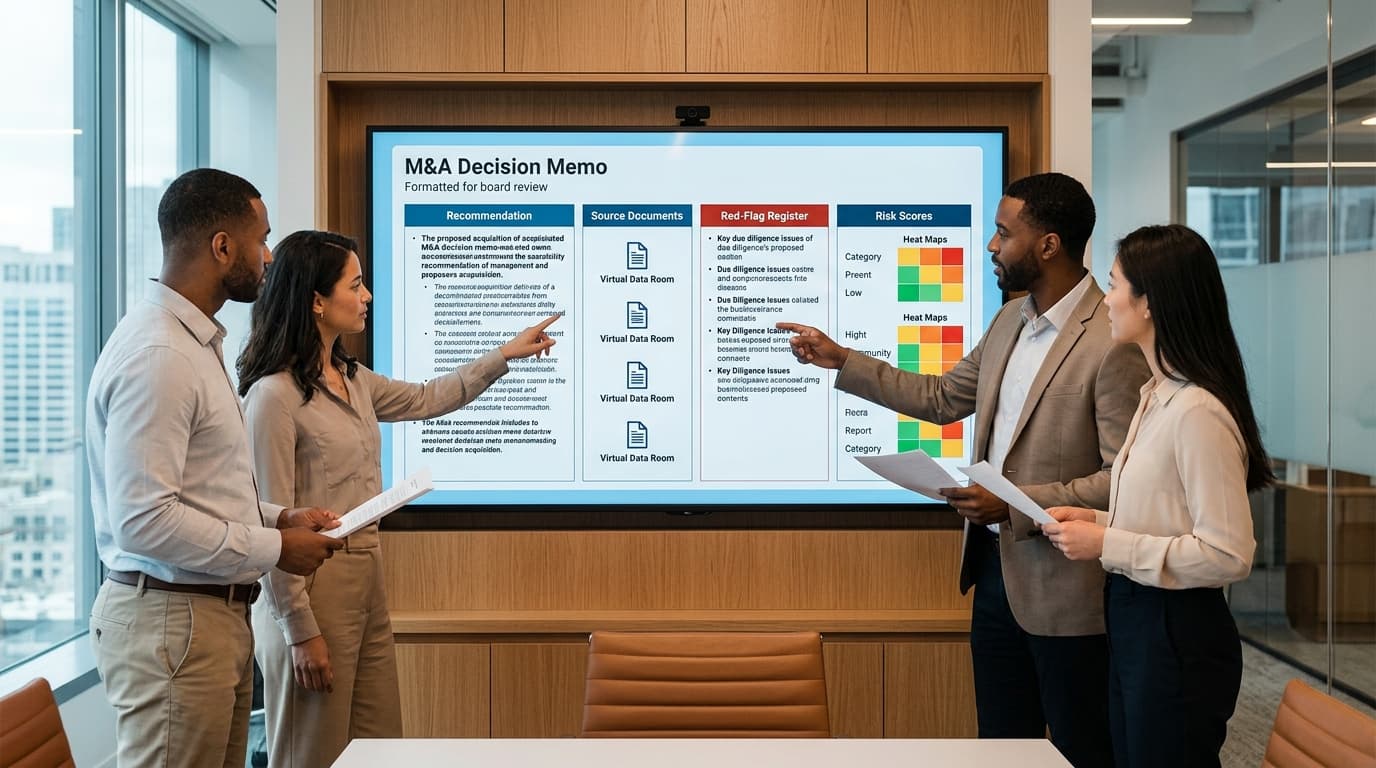
- Data Room Ingestion: Seamlessly connects to and scans virtual data rooms (VDRs), immediately parsing and structuring complex PDFs, legacy contracts, and financial models within minutes.
- AI-Analysis Engine: Reads, interprets, and cross-references multi-party agreements across diverse workstreams to isolate shared-service dependencies and assess critical TSA exposure.
- Risk Radar: Identifies and evaluates separation anomalies based on materiality and financial impact, highlighting hidden dis-synergies and operational risk profiles.
- Report Builder: Automatically drafts and structures institutional-grade, investor-ready carve-out due diligence reports with full source traceability back to the original VDR documents.
Through this automated workflow, transaction advisory professionals can transition from passive document review to proactive risk mitigation. For example, Plausity's AI-Analysis Engine cross-references historical supplier contracts with planned target operating models, highlighting where duplicate software licenses, service fees, or stranded IT infrastructure will inflate post-close expenses. Armed with these precise, audit-ready insights, private equity firms can negotiate robust TSA exit provisions, secure favorable purchase price adjustments, and establish an actionable, transparent roadmap for day-one operational separation.
Red-Flag Signals in Carve-Out Separation Diligence
| Signal | Why it matters | Diligence action |
|---|---|---|
| TSA duration exceeds 18 months with no defined exit milestones | Open-ended dependency inflates integration risk and cost | Request the TSA draft; negotiate milestone-based exit triggers |
| Stranded cost estimate excludes IT/ERP dis-synergies | Understates the true post-separation cost base | Request the full IT architecture and system entanglement map |
| No dedicated separation management office at the seller | Signals underinvestment in transition planning | Request the org chart and separation governance plan |
| Key personnel are dual-hatted between RemainCo and NewCo | Retention and knowledge-transfer risk post-close | Request the personnel dependency schedule |
| Historical carve-out P&L is allocated rather than bottom-up rebuilt | Allocated costs can mask true stand-alone economics | Request a bottom-up stand-alone cost build |
Document Request Checklist for Carve-Out Due Diligence
- TSA draft or term sheet with service-by-service cost and duration detail
- Shared services cost allocation methodology (historical vs. carve-out basis)
- IT architecture and system entanglement map (ERP, data, licenses)
- Headcount and shared-function org charts, including dual-hatted roles
- Historical stand-alone P&L reconstruction / carve-out financial statements
- Vendor and lease contracts requiring novation or assignment
- Separation management office governance plan, if one exists
Practical Implications for PE and M&A Teams
Unresolved TSA and stranded-cost exposure should feed directly into deal structuring, not just post-close planning. Deal teams typically reserve a dedicated separation budget informed by the document checklist above, negotiate milestone-based TSA exit triggers rather than open-ended service periods, and adjust valuation for stranded costs that will not transfer with the carve-out entity. Where separation scope is still unclear at signing, teams should consider a post-close true-up mechanism tied to verified stand-alone cost-to-operate findings.
Plausity brings AI-native analysis to this workstream. Explore Plausity's Collaboration Hub, or read more on the broader landscape of take-privates, carve-outs and distressed deals.