Why AI infrastructure financing due diligence matters now
AI infrastructure financing due diligence is the rigorous process of verifying physical capacity, hardware economics, legal contracts, and capital durability before underwriting compute clusters and high-density data centers. As artificial intelligence models scale, data centers are no longer underwritten as commercial real estate; they are structured as high-yield, compute-first infrastructure assets. Private equity sponsors, private credit lenders, and infrastructure funds must stress-test grid interconnection timelines, GPU depreciation schedules, take-or-pay customer contracts, and SPV collateral structures. Evaluating these core dependencies prevents catastrophic loan defaults, covenant breaches, and unexpected capex shortfalls in multi-billion-dollar debt stacks.
The global buildout of artificial intelligence facilities represents a fundamental shift in digital infrastructure capital allocation. Industry estimates project that meeting global computing demand will require $5.2 trillion in total infrastructure investments by the end of the decade. Hyperscale technology companies and specialized cloud platforms can no longer fund this expansion solely through internal operating cash flows. As capital expenditures outpace free cash flow, sponsors and operators are turning to public and private debt markets, raising hundreds of billions through asset-backed facilities, project finance bonds, and private credit loans.
This capital supercycle moves data center underwriting away from traditional commercial real estate metrics like square footage and long-term land leases toward compute-centric financial engineering. In compute-first infrastructure, value is driven by power density, chip utilization, and high-performance interconnects rather than mere physical shell availability. Consequently, credit underwriters and equity sponsors face complex, multi-layered debt and equity stacks where operational hiccups directly impair debt service capacity.
The main practical framework for compute and data center risk
To evaluate AI infrastructure investments effectively, deal teams apply a practical three-pillar framework centered on Capacity, Compute, and Contracts. Capacity assesses physical site viability, grid interconnection rights, power purchase agreements (PPAs), and cooling infrastructure. Compute evaluates the underlying hardware assets, including graphics processing unit (GPU) generations, server architecture, optical interconnects, and depreciation profiles. Contracts scrutinizes revenue durability through master services agreements (MSAs), take-or-pay clauses, creditworthiness of off-takers, and termination rights.
Underwriters must distinguish between three distinct asset archetypes within the infrastructure spectrum: powered land, colocation facilities, and specialized GPU clusters. Powered land investments carry high development and interconnection risk but minimal technology obsolescence risk. Colocation facilities provide core power, shell, and cooling to third parties, generating stable long-term yields similar to real assets. In contrast, specialized GPU clusters operated by specialized platforms carry intensive hardware depreciation, high customer churn risk, and rapid technical turnover.
Evaluating these specialized compute platforms requires rigorous neocloud due diligence to test whether unit economics hold up across hardware cycles. Lenders and buyers must look beyond headline revenue figures to examine whether compute clusters maintain high utilization rates after the initial training contract expires. When compute assets are ring-fenced inside special purpose vehicles (SPVs), underwriters must verify that cash flows generated by hardware rental remain insulated from platform-level liabilities.
What operators are expected to show: Power and utilization
Power availability represents the single greatest bottleneck in contemporary data center development. Substation interconnection wait times now frequently extend from three to seven years in major data center hubs, turning utility queue positions into primary value drivers. Operators seeking capital must present verified interconnection agreements, firm power delivery schedules, and binding PPAs rather than speculative letters of intent. Lenders must evaluate whether transmission bottlenecks or regional grid curtailments could delay facility energization and push back cash generation.
To support debt service in capital-intensive compute financings, operators must demonstrate high contracted utilization through robust revenue agreements. Underwriters look for 'pay-whether-used' (take-or-pay) contract structures that require customers to pay fixed monthly reservation fees regardless of actual compute consumption. These structures shield the project's cash flow from fluctuations in AI model training demand and ensure predictable debt service coverage ratios (DSCR) during early operational phases.
Managing hardware depreciation is equally critical when underwriting GPU clusters. Major hyperscalers have historically assumed roughly six-year useful lives for server infrastructure, but Amazon shortened the useful life of a subset of its servers and networking equipment from six years to five, effective January 2025, citing the increased pace of AI-driven technology development. Nvidia has since moved to an annual release cadence, introducing a new data center GPU architecture each year, so lenders must test whether hardware value holds over the life of the loan rather than assuming a fixed amortization curve. Operators must show a clear secondary market strategy or inference re-deployment plan to capture residual value as chips age.
Red flags in AI infrastructure and compute deals
During due diligence, deal teams must remain vigilant for systemic operational and legal red flags that signal structural risk. A frequent operational red flag is a timeline mismatch between hardware delivery and facility energization. Taking delivery of tens of thousands of GPUs months before a data center's power transformers are fully energized creates idle hardware depreciation, severe interest expense drag, and potential warranty expiration before the cluster yields revenue.
Compliance vulnerabilities represent another critical red flag, particularly surrounding regulatory enforcement in Infrastructure-as-a-Service (IaaS) and GPU-as-a-Service (GPUaaS) models. A U.S. Department of Commerce proposed rule would require IaaS providers and their foreign resellers to maintain Customer Identification Programs that verify the identity of foreign customers, and to report transactions in which a foreign person uses U.S. cloud services to train a large AI model. Platforms that fail to enforce rigorous Know Your Customer (KYC) screening or lack automated geo-fencing risk severe sanctions, export control violations, and immediate operational shutdown.
| Diligence Area | Red Flag Indicator | Underwriting Impact | Mitigation Strategy |
|---|---|---|---|
| Power & Grid | Energization target reliant on non-binding utility letter | 24 to 36 month revenue delay and debt service shortfall | Require firm Interconnection Agreement and utility sign-off |
| Hardware Delivery | GPU cluster delivery scheduled before substation commissioning | Severe idle hardware depreciation and warranty loss | Align supply chain delivery triggers directly to energization milestones |
| Customer Concentration | Contracted revenue dominated by one AI counterparty, so losing a single anchor customer can destabilize the financing | High default risk if customer fails to secure follow-on funding | Enforce credit enhancements, cash sweeps, or parent guarantees |
| Regulatory & KYC | Absence of automated user KYC screening on GPUaaS platform | Potential BIS export control violation and cluster seizure | Mandate third-party compliance audit and automated verification |
| Contractual SLAs | MSA contains unlimited liquidated damages for power outages | Catastrophic equity wipeout during unexpected grid downtime | Cap SLA liabilities at monthly recurring revenue thresholds |
Data-room evidence and diligence checklist
Conducting comprehensive virtual data room analysis requires systematically reviewing underlying legal, technical, and commercial agreements. Deal teams must verify that energy tariffs, power purchase agreements (PPAs), and grid connection contracts contain explicit pricing guarantees and firm delivery dates. In parallel, Engineering, Procurement, and Construction (EPC) contracts must be examined for fixed-price terms, liquidating damages for delays, and contractor creditworthiness to prevent cost overruns.
Master Services Agreements (MSAs) demand detailed scrutiny to evaluate service level agreement (SLA) penalties and termination rights. Lenders must verify whether downtime caused by utility power outages or cooling failures allows customers to terminate contracts without penalty or claim uncapped damages. Conducting AI infrastructure exposure due diligence enables deal teams to isolate contractual liabilities across vendor stacks, ensuring that operational SLAs align with underlying hardware warranties and insurance policies.
- Firm Interconnection Agreements and PPA contracts with verified utility delivery milestones
- EPC construction contracts featuring fixed-price caps, milestone guarantees, and contractor performance bonds
- Customer MSAs with take-or-pay payment terms, credit-approved counterparties, and capped SLA damages
- Hardware supply contracts with OEM warranty terms, delivery schedules, and technical support SLAs
- Regulatory compliance documentation, including automated KYC protocols and BIS export control frameworks
- Environmental and land use permits, including water usage rights, noise permits, and local zoning approvals
Practical implications for private credit and equity structures
The financing of AI infrastructure relies heavily on specialized credit and equity structures designed to balance technology risk against capital preservation. High-density compute deployments are frequently ring-fenced within Special Purpose Vehicles (SPVs) where debt is collateralized directly by GPU hardware, customer contracts, and facility leases. Private credit lenders have stepped into this market as primary debt providers, structuring asset-backed facilities with strict loan-to-cost parameters.
In these capital stacks, equity capital acts as the primary buffer against technological obsolescence and utilization volatility, absorbing initial ramp-up delays before debt is drawn. Debt itself is typically layered rather than single-tranche: CoreWeave, the template for the neocloud model, has executed a series of delayed draw term loan facilities, each housed in a separate bankruptcy-remote special purpose vehicle that owns the GPUs and pledges them, along with customer services contracts, as collateral. Private credit lenders enforce maintenance covenants tied to cluster uptime, minimum revenue backlogs, and hardware value ratios.
Understanding these debt dynamics requires broader AI credit risk due diligence to evaluate how software valuations and compute expenses interact across macro credit cycles. If software target margins compress due to rising compute costs, customer payment defaults can propagate directly up the infrastructure chain into data center SPVs.
How to use this in your next diligence workflow
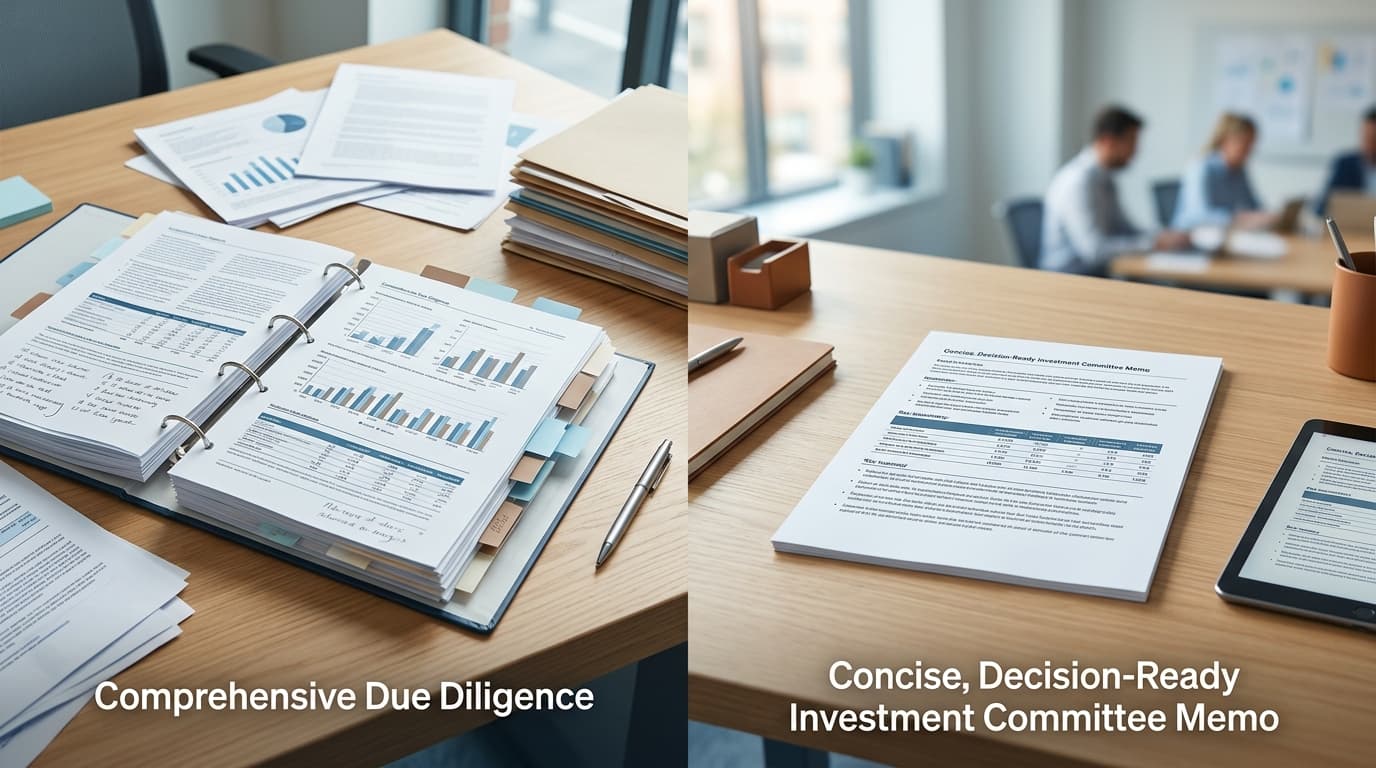
Navigating complex AI infrastructure transactions requires moving away from manual spreadsheet reviews toward automated, cross-referenced evidence extraction. Modern deal teams use specialized AI platforms to process thousands of pages of data room documents within hours, identifying critical contractual risks before investment committee meetings.
How Plausity supports the workflow
Plausity transforms how investment teams and lenders perform AI infrastructure financing due diligence. Using Data Room Ingestion, deal teams automatically process complex data room files including multi-gigabyte PPAs, EPC contracts, and customer MSAs in minutes. The core AI-Analysis Engine cross-references contractual clauses, extracting take-or-pay commitments, SLA penalty caps, and energization deadlines with complete source traceability.
To prevent critical deal oversight, the Risk Radar automatically surfaces compliance anomalies, flagging missing KYC protocols, BIS export control exposures, and timeline mismatches between power availability and hardware delivery. Findings are seamlessly compiled into risk register automation workflows and finalized into structured, investor-ready IC memos using Report Builder. Deal teams can also connect findings directly to value creation plans to monitor post-close execution.
How Plausity supports the workflow
Plausity is an AI-native due diligence and deal intelligence platform. For AI infrastructure financing diligence, Plausity helps investors and lenders convert scattered technical, contractual, and financial evidence into a structured, source-backed workstream that stays auditable across the deal team.
Deal teams can use AI-powered diligence analysis to cross-reference PPAs, GPU procurement contracts, and offtake commitments with capex schedules, then track exposure across the co-lender group with findings and risk intelligence. Plausity is a document-and-workflow layer, not a substitute for professional judgement: it does not independently provide legal, financial, tax, commercial, or technical advice, and it does not guarantee returns, credit outcomes, or project feasibility.