Why Management Presentation Due Diligence Matters Now
Management presentation due diligence is the pivotal phase in an M&A transaction where buyers test whether executive leadership can realistically deliver on the financial forecasts presented in marketing materials. While static data room analysis verifies historical records, the live management meeting evaluates executive credibility, operational mastery, and cultural alignment. Harvard Business Review research by Clayton Christensen and colleagues notes that study after study puts the failure rate of mergers and acquisitions somewhere between 70% and 90%, making rigorous, interactive diligence on the Chief Executive Officer and Chief Financial Officer essential to de-risking the acquisition.
Modern private equity sponsors and corporate development teams no longer treat management presentations as passive pitch sessions. Data rooms in mid-market processes now run to thousands of documents, meaning buyers enter the room armed with granular data anomalies. For financial sponsors targeting returns of 20% or higher Internal Rate of Return (IRR) over a 3 to 5 year holding period, these intensive three-to-four-hour sessions determine whether the leadership team possesses the operational discipline required to execute the value creation plan or whether executive friction will jeopardize post-close integration.
- Verification of leadership depth beyond the charismatic founder or CEO
- Validation of reported quality of earnings and cash conversion durability
- Assessment of the management team's ability to navigate market downturns and margin compression
- Identification of undisclosed operational bottlenecks before submitting binding offers
- Alignment on strategic priorities and post-acquisition governance structures
The Core M&A Management Diligence Framework
A successful management presentation requires a structured framework that shifts the dynamic from high-level storytelling to empirical validation. Experienced deal teams organize their inquiry around three core pillars: leadership capability, thesis validation, and operational risk discovery. Rather than allowing executives to deliver an uninterrupted slide deck, buyers guide the meeting through targeted interventions that probe the underlying assumptions of the business model.
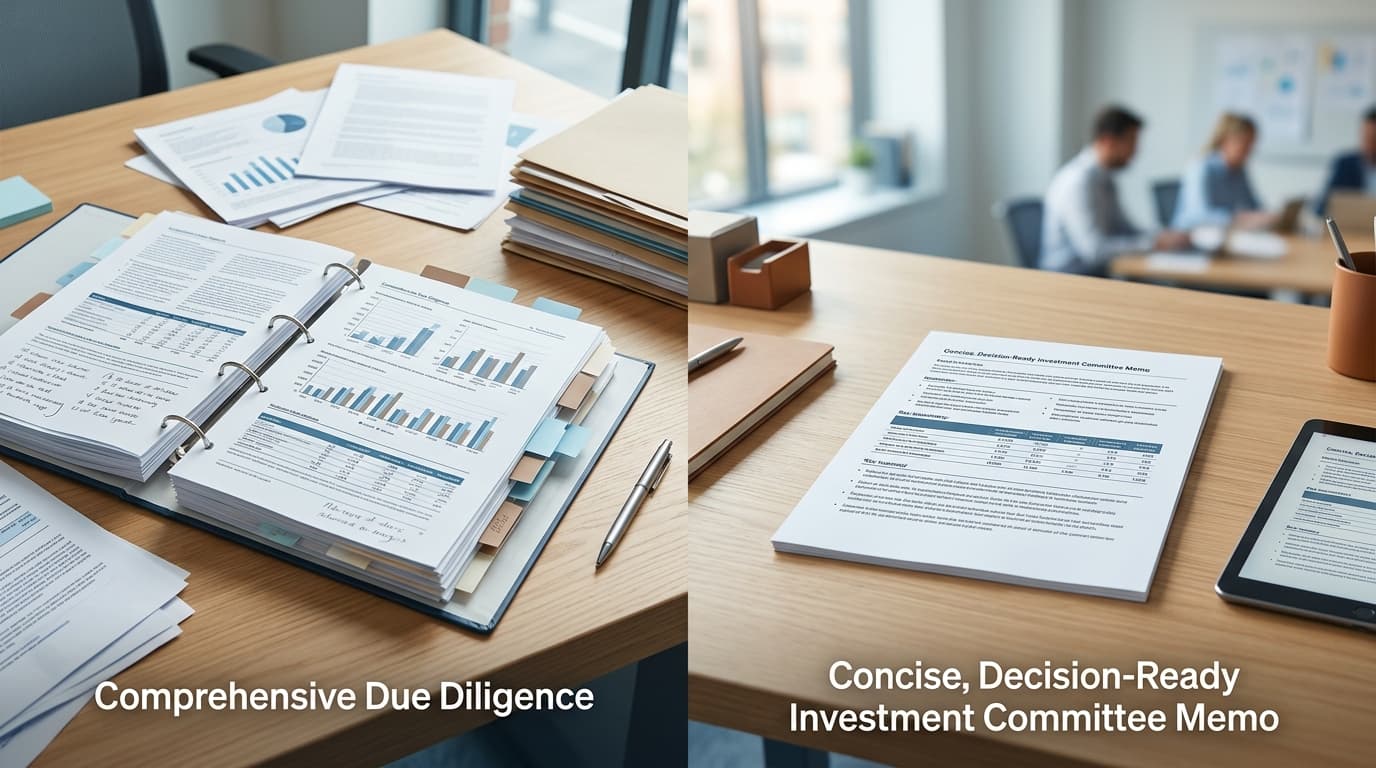
To test transparency, buyers systematically cross-reference live statements against the Confidential Information Memorandum (CIM) and preliminary quality of earnings findings. When a CEO claims strong organic growth but historical customer cohort analysis shows materially slower recurring revenue expansion, the discrepancy exposes either narrative inflation or a lack of granular reporting controls. Aligning these insights early allows the deal team to structure an effective investment committee memo that separates management perception from audited facts.
50 Due Diligence Questions Buyers Must Ask
Below is a comprehensive checklist of 50 targeted diligence questions structured across five core operational disciplines. These inquiries are designed to be deployed directly in CEO and CFO sessions to test baseline competence, uncover hidden liabilities, and pressure-test growth projections.
Financial Health and Quality of Earnings (Questions 1-10)
- What percentage of your historical EBITDA adjustments represent true one-off occurrences versus recurring operational overhead?
- How do you account for capitalization of internal software development or R&D costs under your current revenue recognition policies?
- What is your historical cash conversion rate from reported EBITDA to free cash flow over the trailing 24 months?
- What drives the seasonality of your net working capital requirements throughout the fiscal year?
- How do you monitor accounts receivable aging, and what is the current recovery expectation for balances over 90 days exceeding 10% of total receivables?
- What specific vendor price increases have occurred over the last 18 months, and how quickly were they passed through to end customers?
- Are there any off-balance-sheet liabilities, parent-company guarantees, or pending tax audits across active operating jurisdictions?
- How do your bad debt provisions correlate with customer churn trends over the last three fiscal years?
- What portion of your reported gross margin expansion stems from temporary input cost reductions rather than permanent pricing power?
- What capital expenditure investments are strictly non-discretionary maintenance versus growth initiatives over the next 36 months?
Operational Capacity and Scalability (Questions 11-20)
- What is your current operational capacity utilization across facilities, and at what utilization threshold do immediate capital expenditures become unavoidable?
- What are your primary operational bottlenecks if transaction volumes or product orders increase materially over the next 12 months?
- Which single-source supplier relationships present immediate supply chain disruption risks, and what dual-sourcing contingencies exist?
- What is your average customer fulfillment or onboarding cycle time, and how has this metric trended over the past two years?
- What service-level agreement (SLA) breach penalties have been paid or credited to clients over the last 24 months?
- How is unit-level productivity measured across front-line staff, and what automation initiatives are currently underway?
- What third-party logistics or outsourced service dependencies represent direct margin or delivery vulnerabilities?
- How do you manage equipment maintenance schedules and unexpected production downtime across core assets?
- What regulatory, environmental, or health and safety audits are scheduled within the next 12 months?
- What are the exact operational prerequisites and capital requirements needed to launch into your next target geography?
Revenue Quality and Commercial Durability (Questions 21-30)
- What is the revenue concentration of your top five and top ten customers over the trailing twelve months?
- What is your annual gross customer churn rate and net revenue retention rate across enterprise customer cohorts?
- How much of your projected revenue growth is backed by signed, committed backlogs versus unweighted pipeline opportunities?
- What is the average tenure and contract duration of your primary customer relationships, and how many come up for renewal within 12 months?
- Can you provide a walkthrough of your latest win-loss analysis against your top three direct competitors?
- What discounting authority do sales representatives hold, and how has average realized price per contract trended over eight quarters?
- How do you track customer acquisition cost (CAC) and customer lifetime value (LTV) across distinct sales channels?
- What percentage of annual revenue is derived from professional services versus recurring, high-margin product lines?
- How exposed is your customer base to cyclical industry downturns, interest rate fluctuations, or regulatory policy shifts?
- What contractual price indexation or inflation escalation clauses are embedded in your standard enterprise master service agreements?
IT Infrastructure, Cybersecurity and Technical Debt (Questions 31-40)
- Which core enterprise systems rely on legacy, end-of-life software architectures that require post-close modernization?
- When was your last independent penetration test or SOC 2 Type II audit conducted, and what material remediation points remain open?
- How are data privacy and regulatory compliance mandates, such as GDPR or HIPAA, monitored and audited across user databases?
- What is your disaster recovery time objective (RTO) and recovery point objective (RPO) in the event of a catastrophic infrastructure outage?
- How much technical debt is currently tracked in your engineering backlog, and what proportion of engineering bandwidth is allocated to maintenance?
- Are all critical proprietary software modules and patents fully owned and assigned to the primary legal entity being acquired?
- What open-source software libraries are integrated into your proprietary codebase, and how are licensing risks governed?
- How frequently are software release cycles deployed, and what automated testing frameworks ensure stability in production?
- What third-party vendor APIs or cloud infrastructure components represent single points of operational failure?
- What cybersecurity insurance coverage limits are in place, and have any security incident claims been filed historically?
People, Culture and Value Creation Execution (Questions 41-50)
- Which key executives and operational managers hold critical customer relationships or institutional technical knowledge?
- What non-compete, non-solicitation, and retention agreements are currently executed with the second-tier management team?
- What has been the voluntary and involuntary employee turnover rate across key departments over the last 24 months?
- How is variable compensation structured for the executive leadership team, and how is it aligned with long-term enterprise value?
- What gaps currently exist within middle management that must be filled immediately following deal closure?
- How would you characterize the internal company culture, and how has employee engagement been formally measured?
- What specific post-acquisition value creation initiatives do you believe offer the highest return on invested capital?
- How do you track operational KPI cadence across departments, and how transparent is performance data to business unit heads?
- What past acquisition or organic restructuring initiatives has this leadership team successfully executed together?
- What are the three biggest external threats that could derail management forecasts over the next 36 months?
Deal teams can integrate these questions with a broader target evaluation framework to ensure no functional blind spots remain before entering confirmatory diligence.
Critical Red Flags During the CEO and CFO Meeting
Experienced buyers evaluate not only the answers provided but also executive body language, alignment between the leaders present, and responsiveness under pressure. A well-prepared CFO should show immediate command over balance sheet dynamics, working capital adjustments, and cash conversion realities without deferring to advisers. Hesitation or defensiveness from the leadership team often points to unrecorded operational risks or narrative exaggeration.
One of the most expensive post-close discoveries is outdated legacy software and IT architecture surfaced only during executive interviews. Legacy infrastructure that was masked in marketing decks routinely triggers an unbudgeted modernization project in the early months of ownership, competing directly with the growth initiatives underwritten in the investment case. The table below outlines key red flags, their deal impact, and the recommended verification step.
| Red Flag Indicator | Underlying Operational Risk | Diligence Verification Method |
|---|---|---|
| Evasive answers on customer churn and cohort retention | Hidden client dissatisfaction, aggressive discounting, or impending contract non-renewals | Request granular logo-level revenue bridge and commission raw customer interview calls commercial due diligence checklist |
| Disparate financial metrics between CEO and CFO | Weak internal financial controls, siloed reporting, or unverified marketing projections | Cross-reference historical general ledger records against CIM forecast models |
| Extreme key-person dependency on the founder | Severe institutional knowledge loss and client flight risk upon founder exit | Review detailed organizational charts and assess second-tier management autonomy |
| Unbudgeted legacy tech debt and end-of-life systems | Immediate post-close capital expenditure for software architecture modernization | Execute independent third-party code audits and infrastructure vulnerability assessments |
| Over 10% of accounts receivable aged past 90 days | Revenue recognition manipulation, disputed customer deliverables, or uncollectible balances | Audit customer dispute logs, payment histories, and historical bad debt write-offs |
The Evidence Checklist and Data Room Requests
A management presentation is only as reliable as the data supporting it. Following the meeting, the buyer's deal team must issue a focused confirmatory data request to validate every material claim made by the CEO and CFO. In practice, incomplete or repeatedly delayed documentation is itself a finding: it usually points to weak internal governance, thin finance resourcing, or operational friction inside the target.
Buyers should structure confirmatory diligence around verifiable primary records rather than summarized management schedules. In particular, a seller's inability to provide reconciled monthly cash flow statements that evidence consistent conversion of EBITDA into free cash flow is a critical warning sign that working capital leakage is draining underlying profitability. Comparing raw documentation against executive statements forms the foundation for robust value creation evidence packs.
- Customer-level revenue data: Monthly revenue by customer for the trailing 36 months, broken down by product and service line
- Granular 24-month P&L statements: Monthly general ledger exports with detailed cost categorization and expense normalization backup
- Reconciled cash flow statements: Monthly operating, investing, and financing cash flows showing historical working capital cycles
- Complete insurance policies: All active general liability, cyber, directors and officers (D&O), and key-person policies including 5-year claims history
- Customer and vendor contracts: Master service agreements, pricing schedules, and change-of-control provisions for top 20 customers and top 10 suppliers
- Human resources records: Second-tier employment agreements, non-compete covenants, commission plans, and organizational turnover reports
How Plausity supports the workflow
Navigating thousands of virtual data room documents while preparing for executive interviews places immense strain on deal teams. Plausity provides an AI-powered due diligence platform that structures, accelerates, and organizes document review, giving investment professionals the empirical backing required to challenge management presentations with precision.
The platform features the AI-Analysis Engine, which automatically reads, interprets, and cross-references management claims against thousands of uploaded files, financial statements, and commercial contracts within minutes. Concurrently, Risk Radar continuously evaluates ingested materials to surface financial anomalies, revenue recognition irregularities, and contractual liabilities that require immediate executive clarification.
To streamline deal execution, Collaboration Hub aligns multidisciplinary teams across workstreams in real time, ensuring analysts, partners, and external advisors coordinate questions seamlessly. Once diligence findings are confirmed, Report Builder automatically drafts and structures investor-ready deliverables with complete source traceability, allowing deal teams to produce institutional-grade investment committee packages with verified audit trails.
How to use this in your next diligence workflow
Deploying a structured 50-question management presentation framework transforms pre-signing diligence from a reactive review into a disciplined underwriting process. By systematizing executive inquiry across financial, operational, and technical disciplines, investment teams can uncover hidden risks before submitting binding legal agreements.
To maximize efficiency in your upcoming transactions, deploy Data Room Ingestion prior to the management presentation to parse customer contracts, general ledgers, and operational filings in advance. Equipping your deal team with pre-verified anomalies allows you to spend the live meeting evaluating executive character, operational capability, and cultural fit rather than validating baseline arithmetic. Incorporate these structured C-level diligence questions into your standardized playbook to safeguard returns and accelerate post-close value creation.