Why Exit Readiness Value Creation Matters Now
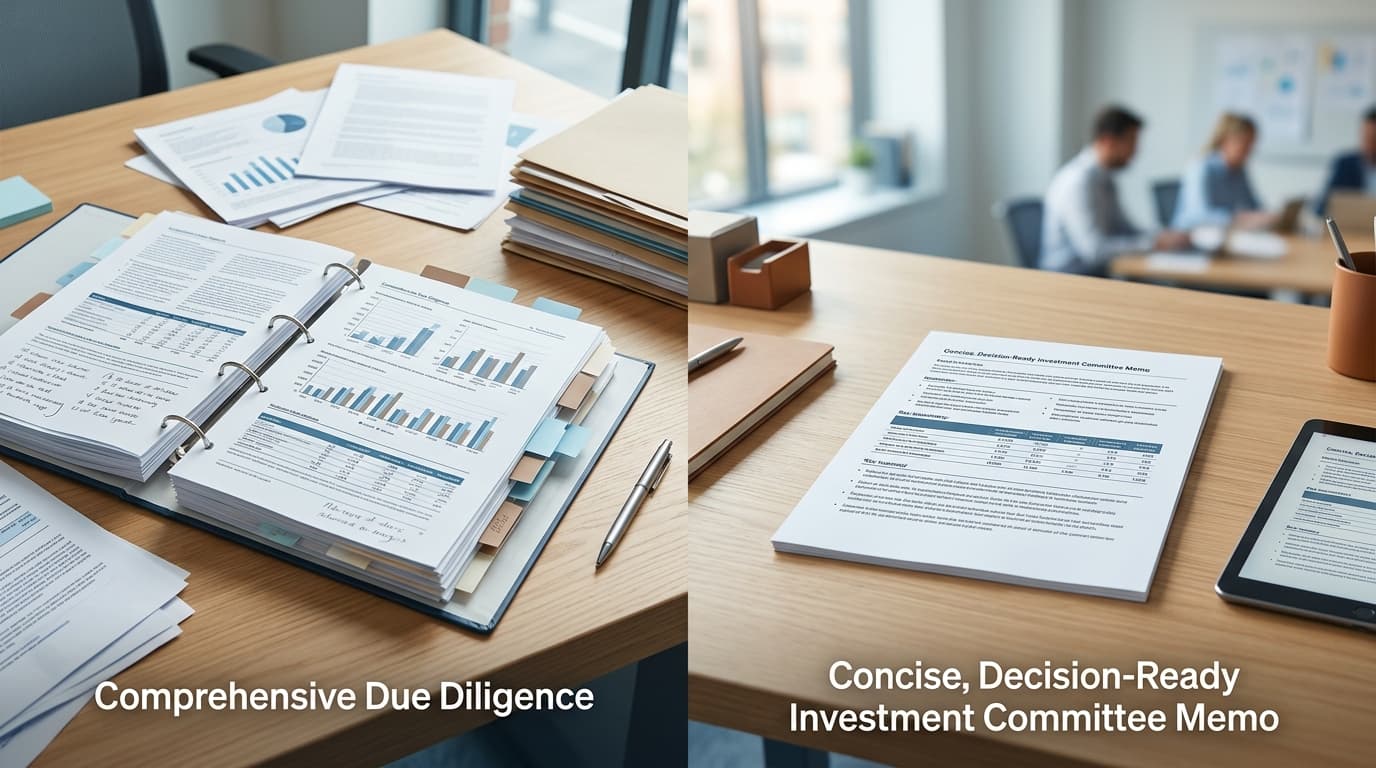
Exit readiness value creation due diligence is the structured operational, commercial, and financial audit private equity sponsors conduct 12 to 24 months before bringing a portfolio company to market. It systematically converts historical performance and future growth projections into auditable, verifiable evidence that directly substantiates the equity story. Rather than relying on last-minute sell-side positioning, this proactive process evaluates whether the original investment thesis was achieved, validates quality of earnings, resolves operational red flags, and aligns management reporting with what institutional buyers scrutinize during confirmatory diligence.
In the current dealmaking environment, macroeconomic shifts have transformed how private equity funds generate returns. Multiple expansion and cheap leverage no longer drive top-quartile performance. Extended holding periods mean sponsors face rigorous scrutiny from sophisticated buyers who re-underwrite every revenue stream and operational assumption. When deal teams wait until the launch of an auction to document their value creation achievements, buyers uncover information asymmetries, discount unproven run-rate adjustments, and negotiate aggressive purchase price reductions.
- Prolonged holding periods require earlier operational preparation to demonstrate multi-year sustainable performance.
- Multiple arbitrage is subdued, forcing sponsors to prove that earnings growth stems from fundamental operational improvements.
- Confirmatory diligence timelines have compressed, giving sellers less time to address ad-hoc data requests and accounting reconciliations.
- Buyer skepticism regarding adjusted EBITDA add-backs requires auditable transaction-level proof rather than top-down assumptions.
Conducting exit readiness diligence well in advance allows deal teams to identify narrative disconnects and operational blind spots before external advisors draft the confidential information memorandum. By addressing these gaps early, sponsors protect valuation multiples, defend against reticence from debt providers, and maintain competitive tension throughout the bidding process.
The Practical Framework for Building the Equity Story
A successful equity story is not marketing collateral; it is a proven bridge between the sponsor's initial underwriting thesis and the target company's demonstrated operating performance. In recent market cycles, operational performance has become the decisive driver of returns. In 2024 exits, revenue growth accounted for 71% of value creation, demonstrating that financial engineering has yielded to verifiable commercial execution.
To build an equity story that withstands hostile buyer scrutiny, deal teams must execute a four-pillar evidence framework that translates operational changes into financial outcomes.
- Thesis Alignment: Map every initiative from the original 100-day plan directly to realized financial metrics, detailing what was executed, what changed, and what baseline was improved.
- Commercial Proof Architecture: Establish unit-level commercial validation, including cohort retention, customer acquisition efficiency, pricing power realization, and net revenue expansion.
- The Operational Bridge: Construct a clean EBITDA reconciliation that separates organic volume growth, pricing actions, cost optimization, and bolt-on synergy realization.
- Future Run-Rate Sustainability: Quantify the remaining pipeline of initiated value creation projects so the next buyer can clearly see the subsequent phase of growth.
Proving operational alpha requires disaggregating top-line expansion into its underlying components. Buyers will dismantle blended revenue growth to see whether gains originated from repeatable market-share capture or non-recurring tailwinds. Sponsors must show margin expansion alongside clear unit economics, proving that fixed-cost leverage and procurement optimizations are permanently embedded into operating margins rather than temporary cost deferrals.
What Buyers Are Testing and What Sellers Must Show
During confirmatory due diligence, institutional acquirers and credit committees do not accept aggregated presentations at face value. They test the company across three dimensions: commercial durability, operational scalability, and digital execution.
In particular, digital maturity and modern workflows have emerged as key underwriting criteria. While general partners widely acknowledge the necessity of technology-driven operations, only about 20% of private-equity portfolio companies have operationalised generative AI with measurable results. Furthermore, while 86% of the 1,000 corporate and private equity leaders surveyed by Deloitte in 2025 said their organisations had integrated generative AI into their M&A workflows, buyers are acutely sensitive to superficial digital claims. Acquirers test whether technology deployments have produced tangible productivity uplifts or defensible proprietary data advantages.
- Contractual Durability: Buyers analyze contract structures, master service agreements, termination provisions, and price-escalation clauses across the customer base.
- Revenue Retention and Cohorts: Sell-side teams must present granular gross and net revenue retention by vintage, product line, and customer tier to prove zero structural churn.
- Operating Cadence: Acquirers evaluate whether management operates with institutional reporting discipline, testing tracking accuracy against historical board decks.
- Technology and Automation Evidence: Sellers must document concrete automation returns, demonstrating how internal tools reduced cycle times or improved gross margins.
When sellers can tie their digital and operational investments to specific margin improvements, they disarm buyer skepticism. Demonstrating rigorous commercial due diligence metrics upfront transforms potential renegotiation points into validated proof points.
Red Flags in the Exit Readiness Process
Unresolved diligence vulnerabilities discovered during an active transaction lead to deal delays, renegotiated multiples, or collapsed exclusivity periods. Practicing radical transparency during internal preparations ensures these risks are mitigated or transparently bounded before launching the sale process.
| Diligence Dimension | Common Red Flag | Buyer Underwriting Impact | Sell-Side Remediation Action |
|---|---|---|---|
| Revenue Quality | High unbilled revenue or reliance on non-recurring custom development | Buyer discounts ARR and applies a lower revenue multiple | Reclassify revenue streams into separate recurring and services categories with historical run-rates |
| Customer Concentration | Top five accounts generate a disproportionate share of gross margin with expiring terms | Lender debt capacity decreases; buyer models steep downside haircuts | Execute long-term renewals and establish multi-year MSA extensions prior to market launch |
| EBITDA Adjustments | Unverified cost-saving run-rate add-backs without invoice-level evidence | Buyer Quality of Earnings rejects the bridge and cuts purchase price | Build bottom-up transaction schedules supporting every pro-forma normalisation item |
| Operational Scalability | Key management dependencies and manual operational processes | Buyer demands escrow holdbacks or management retention conditions | Institutionalize operational documentation and transition core workflows into structured systems |
| Compliance and IP | Incomplete software licensing trails or open-source vulnerabilities | Indemnity expansion, special escrows, or delayed regulatory clearance | Conduct third-party code and compliance audits to resolve all licensing conflicts |
When deal teams maintain a structured risk register, they systematically eliminate these friction points. Surfacing and neutralizing operational liabilities early prevents buyers from using discovered risks to claw back value.
Data Room Readiness and Evidence Checklist
A successful transaction relies on a robust proof architecture. A disorganized virtual data room with fragmented file naming, incomplete schedules, and unlinked reconciliations signals poor corporate governance and invites invasive buyer requests.
Sponsors should request a rigorous set of core documentation from portfolio management teams 12 to 18 months prior to exit launch.
- Corporate Governance & Cap Table: Complete statutory registers, historical share transfers, capitalization tables, and fully executed board minutes.
- Financial Quality of Earnings Package: Audited trial balances, monthly historical financials, detailed working capital seasonality models, and bridge schedules for all EBITDA adjustments.
- Commercial & Contractual Archive: Standard customer contracts, top-50 customer signed agreements, partner agreements, pricing schedules, and customer churn logs.
- Operational & Human Capital Repository: Organizational charts, employment contracts for key executives, incentive compensation plans, and operational standard operating procedures.
- Technology, IP & Compliance: Source code repository governance logs, third-party software licenses, intellectual property registrations, data privacy compliance records, and cybersecurity audit reports.
Structuring the evidence repository before engaging sell-side investment bankers ensures that financial models directly mirror the underlying legal and operational contracts, eliminating painful reconciliation cycles during confirmatory diligence.
How to use this in your next diligence workflow
Executing an exit readiness review requires shifting from reactive deal defense to proactive equity story engineering. Deal teams should integrate the following disciplined steps into their standard portfolio review cadence.
- Initiate an Exit Diagnostic 18 Months Out: Perform an internal diagnostic of the portfolio company's commercial, financial, and technical operations to establish the baseline equity story.
- Quantify and Audit Value Creation Drivers: Build a transaction-level bridge linking the original underwriting thesis to current revenue and margin improvements, pruning unprovable claims.
- Remediate Operational and Diligence Gaps: Run mock diligence audits across contracts, IP, tax, and compliance to identify and resolve red flags before external advisors are appointed.
- Assemble the Auditable Proof Architecture: Populate a centralized repository with structured contracts, customer cohort models, and reconciled financial schedules.
- Deploy AI-Driven Diligence Automation: Utilize dedicated analysis tools to continuously monitor data integrity, streamline cross-functional alignment, and maintain an audit-ready transaction record.
Teams preparing for an upcoming exit can navigate market complexities and valuation reset pressures by grounding their equity story in auditable operational proof. Adopting this structured exit preparation workflow protects deal certainty and maximizes value realization across the investment lifecycle.
How Plausity supports the workflow
Preparing a portfolio company for a transaction requires analyzing tens of thousands of unstructured contracts, customer records, and board materials. Plausity provides an institutional AI due diligence platform designed specifically for private equity deal teams, operating partners, and M&A advisors.
The platform accelerates exit preparation through specialized core capabilities:
- Data Room Ingestion: Connects directly to virtual data rooms to ingest, parse, and structure thousands of complex multi-format documents, contracts, and spreadsheets in minutes.
- AI-Analysis Engine: Reads, interprets, and cross-references entire document archives to extract critical contract terms, customer commitments, and financial clauses with full source citations.
- Risk Radar: Continuously scans transaction materials to surface hidden liabilities, customer concentration risks, non-standard contractual terms, and compliance gaps based on materiality.
- Report Builder: Generates structured, professional, investor-ready diligence reports and risk registers that trace every conclusion directly back to source documents.
- Collaboration Hub: Coordinates workstreams across deal leads, operating partners, external advisors, and portfolio management to resolve diligence findings in a unified workspace.
By leveraging this technology, deal teams reduce manual review burdens and construct an auditable, bulletproof data room that defends the company's valuation.