The Static Diligence Trap: Why One-Shot Reports Fail in Dynamic Deals
- Virtual data rooms are dynamic, making static, point-in-time due diligence reports obsolete and prone to overlooking late-stage uploads.
- According to Drooms research, 46% of M&A analysts have seen deals delayed or fail due to coordination and communication bottlenecks.
- A key court ruling confirms buyers must actively monitor VDR uploads, heightening the risk of overlooking late-disclosed documents.
- Continuous due diligence automatically ingests new files and updates reports, saving critical time during rapid transaction cycles.
Traditional due diligence operates on a critical flaw: it treats a highly fluid, fast-moving transaction as a static event. During typical M&A transactions, virtual data rooms (VDRs) are not static libraries; they are dynamic repositories that expand daily as corporate teams and investment professionals negotiate terms. New employment agreements, updated disclosure schedules, and revised financial forecasts are continually added to the room. When M&A Advisory Firm Partners & Analysts rely on conventional due diligence reports, they work with point-in-time snapshots that become obsolete the moment a new folder is uploaded. For Corporate M&A Project Leads who must coordinate across tax, legal, and financial streams, this disconnect forces an impossible choice: either delay the transaction to conduct manual reviews of new materials, or move forward with blind spots that can derail post-merger integration.
These operational bottlenecks directly translate into transaction risk. In fact, due diligence issues and transaction delays remain a primary threat to successful deal closings, with nearly 46% of transaction disputes in recent deals linked directly to due diligence oversights and dynamic information changes. When deal teams lack the capability to automatically update their analysis, they are forced to manually compare document versions, re-run due diligence steps, and copy-paste findings into static spreadsheets. This fragmented workflow is slow, expensive, and error-prone. The time spent manually cross-referencing late-stage uploads means that critical risks, such as a change-of-control clause in a newly added supplier contract or a revised tax liability, are easily overlooked in the final hours of a deal.
The Operational Cost of Manual Re-Analysis
For institutional buyers, including VC & PE fund investment professionals, these delays and blind spots erode deal value. When a transaction relies on static analysis, any major update requires the advisory team to manually review new files. Without an enterprise system designed to re-run due diligence automatically, teams are forced to restart their analysis from scratch, wasting valuable days. This bottleneck stalls deal momentum, increases advisory fees, and heightens the risk of competitive bids preempting the transaction. Rather than focusing on strategic valuation and synergy modeling, investment teams find themselves bogged down in document tracking. To mitigate these risks, deal professionals require dynamic due diligence reports that synchronize directly with the virtual data room, ensuring that every finding and risk score reflects the absolute latest information available.
| Workflow Stage | Traditional Static Snapshots | Continuous Diligence |
|---|---|---|
| VDR Synchronization | Point-in-time document download. Any subsequent seller uploads are missed or must be fetched manually. | Automated synchronization via Data Room Ingestion, capturing folders and sub-folders the moment they change. |
| Risk Assessment | Manual, static reading of agreements. Finding new contract revisions requires repetitive word-by-word reviews. | Continuous automated risk detection through the Risk Radar, which highlights new discrepancies instantly. |
| Analysis Coverage | Siloed workstreams that rely on analysts' memory and static checklists, risking critical oversights. | End-to-end coverage across multiple workstreams unified by the core AI-Analysis Engine. |
| Advisory Outputs | Static reports compiled in slide decks or documents that require manual redrafting for every update. | Live, updated reporting with the Report Builder, ensuring all findings link directly back to their source files. |
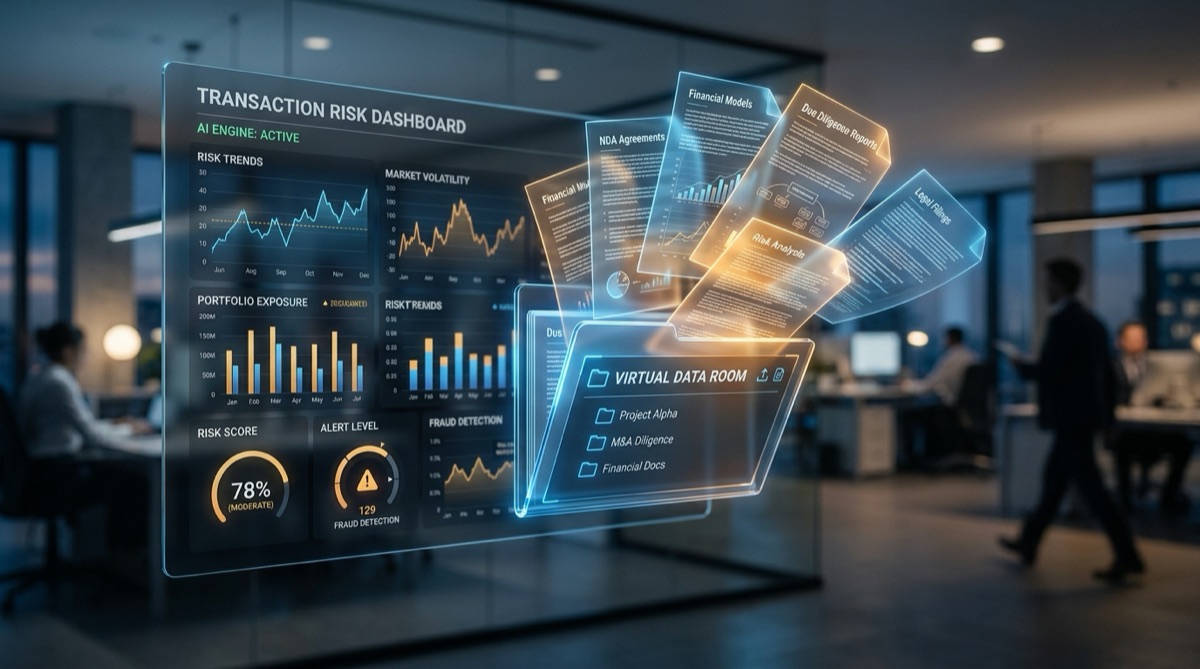
This is where continuous due diligence fundamentally changes the transaction workflow. Instead of generating a single, static deliverable, modern deal teams use the Plausity platform to establish a live connection to the VDR. When a seller uploads new documents, the Data Room Ingestion tool automatically syncs the files, and the AI-Analysis Engine runs an automatic due diligence update. The platform's built-in smart due diligence regeneration then updates the findings across all workstreams, integrating the new data into the master analysis. By maintaining a live, traceable record where every observation links back to its source document, Plausity ensures that M&A professionals can make decisions based on reality, not outdated snapshots.
The Risks of Manual Re-Ingestion and Late VDR Disclosures
During corporate acquisitions, sellers frequently upload material documents late in the deal cycle. From undisclosed commercial litigation to updated environmental liability reports, these late-stage virtual data room (VDR) uploads present severe compliance and financial exposures for prospective buyers if left unaddressed.
This operational risk is amplified by legal reality. Under German Supreme Court precedent, specifically the Federal Court of Justice judgment in case V ZR 77/22, while a seller has an obligation to structure and index a VDR logically, a buyer is expected to inspect the provided documents thoroughly. In high-value M&A transactions, standard share purchase agreements typically contain clauses stating that all information in the data room is deemed disclosed. This shifts the full commercial burden and risk directly onto the buyer the moment a file is uploaded, requiring deal teams to maintain a continuous, flawless overview of incoming VDR content.
The Administrative Bottleneck of Static Reports
In a traditional deal workflow, once an advisory team compiles its initial due diligence report, that report is frozen as a static document. When the seller uploads new files, analysts face the arduous task of manual re-ingestion. They must identify what files have changed, download them, conduct a manual review, and attempt to weave the new findings back into existing slide decks and spreadsheets. This manual overhead is slow, expensive, and highly prone to human error, raising the risk that critical liabilities will slip through the cracks during the final, high-pressure hours before transaction signing.
Plausity eliminates this bottleneck by shifting investment professionals away from one-shot assessments toward continuous due diligence. Instead of forcing analysts to manually check folders and then re-run due diligence automatically by starting their analytical process from scratch, Plausity integrates real-time data updates directly into a single, cohesive workflow.
| Workflow Dimension | Traditional Static Due Diligence | Continuous Due Diligence |
|---|---|---|
| VDR Document Ingestion | Requires periodic manual downloads, index checks, and repetitive folder comparisons. | Automated scanning and immediate document processing as files are added. |
| Analysis Process | Reviews are frozen until a request is made, requiring teams to manually start over. | Smart due diligence regeneration of analytical findings with real-time risk scoring. |
| Report Dynamic | Static slide decks and PDFs that require manual drafting for every transaction update. | Dynamic due diligence reports that automatically adapt to reflect the current state of the data room. |
How Continuous Ingestion Protects Deal Value
By connecting Plausity's dedicated Data Room Ingestion feature directly to the seller's virtual data room, M&A project leads can ensure that no late disclosures are missed. The core AI-Analysis Engine continuously parses and cross-references incoming PDFs, contracts, and financial models, providing an automatic due diligence update whenever new files are detected.
This continuous oversight means that if a seller uploads a material lease amendment, an updated litigation docket, or a modified tax position in the middle of the night, Plausity's Risk Radar captures the discrepancy immediately. Deal teams receive an immediate update to their core analysis, helping protect transaction value and preventing costly post-closing surprises.
Continuous Due Diligence: Real-Time Findings as the Data Room Grows
In high-velocity transaction environments, traditional point-in-time due diligence reports become obsolete the moment a virtual data room receives new uploads. This risk is amplified during periods of intense dealmaking, such as the market surge in late 2025 when global technology, media, and telecommunications (TMT) deal values rose 49%. With hundreds of documents flowing into virtual data rooms right up to the signing date, relying on static advisory outputs creates critical information gaps. Modern transaction management requires continuous due diligence: a dynamic approach where analytical findings and risk reports update automatically as the target's data room grows, eliminating the need to manually re-run due diligence automatically.
The Challenge of One-Shot Diligence in Dynamic Markets
For investment professionals at private equity firms and corporate M&A project leads, the manual overhead of managing late-stage document uploads is a primary source of deal fatigue. Traditional workflows require analysts to constantly compare data room indices, identify newly added files, and manually request additional reviews. When new contracts or financial models are uploaded, the team must often coordinate with external advisors to update existing legal or financial findings. This disjointed process delay increases transaction friction and leaves deal teams vulnerable to overlooked liabilities buried in late-stage uploads.
| Dimension | Traditional Due Diligence | Continuous Due Diligence with Plausity |
|---|---|---|
| VDR Integration | Manual index comparison and episodic document downloading | Direct connection and automated file indexing via Data Room Ingestion |
| Analysis Model | One-shot review of static document batches with high manual effort | Continuous analysis of incoming files in real time using the AI-Analysis Engine |
| Reporting Framework | Static PDF or slide reports that require manual copy-pasting | Dynamic due diligence reports that support smart due diligence regeneration |
| Risk Tracking | Risk registers that are updated only during major report revisions | Real-time risk scoring and automated updates via Risk Radar |
How Plausity Automates the Diligence Pipeline
Plausity resolves these limitations by establishing a seamless pipeline from ingestion to final reporting. The platform's Data Room Ingestion connects directly to leading virtual data rooms to scan, organize, and classify new documents within minutes. Once a new document lands, the core AI-Analysis Engine processes the fresh documentation in real time, automatically extracting key terms and cross-referencing them against prior findings. Rather than requiring teams to re-run due diligence automatically from scratch, the platform executes a targeted automatic due diligence update that reflects the new information across all relevant workstreams.
Through this automated architecture, Plausity provides deal teams with dynamic due diligence reports that remain accurate throughout the entire transaction lifecycle. As the AI-Analysis Engine uncovers new data points, the Risk Radar evaluates them based on materiality and deal relevance, instantly updating risk scores. Simultaneously, the Report Builder enables smart due diligence regeneration, updating drafted sections and executive summaries to output investor-ready reports while preserving customized team edits. This centralized approach enables deal teams working within the Collaboration Hub to coordinate in real time. Every updated finding is linked back to its precise source document, ensuring complete traceability and allowing M&A advisory firm partners, corporate buyers, and fund managers to make decisions based on the most current data available.
Smart Due Diligence Regeneration and Automated Risk Analysis
During massive deal cycles like the recent market peak that reached 4.6 trillion USD in deal value across over 43,000 transactions, the rate of document uploads to virtual data rooms can easily overwhelm transaction teams. Traditional static diligence models rely on periodic batches of document processing. When a deal team depends on these static reports, new file uploads force them to manually re-run due diligence automatically or, worse, complete manual re-drafts under tight closing deadlines.
Instead of restarting transaction analysis from scratch, modern M&A advisory partners and corporate M&A project leads rely on smart due diligence regeneration. With this automated capability, the AI-Analysis Engine continuously monitors virtual data rooms. Whenever new documents are added, the platform processes the incoming data instantly and initiates an automatic due diligence update. This means deal teams can maintain an uninterrupted view of transaction risks, eliminating the need to manually re-run due diligence automatically or duplicate critical analytical efforts.
How Risk Radar Powers Dynamic Intelligence
At the heart of this continuous due diligence workflow is Risk Radar, a purpose-built risk analysis and intelligence tool. Rather than treating compliance, financial, or legal review as a single snapshot, Risk Radar dynamically flags and ranks new risks as they emerge in the data room. Each newly discovered risk is evaluated based on materiality, financial impact, and deal relevance, then integrated into dynamic due diligence reports. This dynamic risk scoring ensures that high-impact exposures are surfaced to VC and PE fund investment professionals immediately, rather than languishing unnoticed inside newly added folders.
Crucially, every dynamic finding retains full traceability back to its source document. The platform links every single observation back to its exact source file, providing verifiable proof of all financial and legal discrepancies. When the underlying virtual data room grows, these cross-references are automatically updated, preserving the direct connection between executive summaries and the primary documents. This precise lineage transforms reports generated by Report Builder into living documents that adapt in parallel with the data room.
| Capability | Traditional Static Diligence | Continuous Due Diligence |
|---|---|---|
| Data Room Ingestion | Static manual batch ingestion of transaction documents. | Dynamic automated ingestion of data room contents in real time. |
| Risk Detection | Manual search and offline analysis of new files. | Risk Radar dynamically flags and ranks emerging risks. |
| Report Updates | Requires manual re-drafting or re-running of analysis. | Smart due diligence regeneration automatically updates living reports. |
| Traceability & Evidence | Static footnotes that easily break as index numbers shift. | Source-linked traceability where every finding links directly to the source file. |
Translating Dynamic Insights Into Actionable Deal Execution
In traditional M&A processes, due diligence is a snapshot of a business at a single point in time. Deal teams spend weeks reviewing virtual data rooms, only for the resulting reports to become obsolete the moment a target company uploads fresh files. This static approach introduces significant friction: partners and analysts must manually re-verify documents, cross-reference past findings, and search for newly introduced liabilities. This continuous cycle of manual checks not only drains advisory resources but also contributes to broader operational bottlenecks, with research showing that timeline delays affect roughly 30% of major acquisitions. To maintain deal velocity without sacrificing thoroughness, modern transactions require a transition to continuous due diligence where findings and deliverables evolve in parallel with data room expansion.
Automated Deliverables with Report Builder
By integrating directly with virtual data rooms, Plausity's AI-Analysis Engine eliminates the need to re-run due diligence automatically or perform repetitive manual audits when new files are uploaded. The platform's Data Room Ingestion tool constantly monitors and processes incoming documents, while Risk Radar evaluates and prioritizes newly discovered anomalies according to materiality, financial impact, and deal relevance. This process ensures that critical findings are flagged in near real-time, providing M&A Advisory Firm Partners & Analysts and Corporate M&A Project Leads with up-to-the-minute risk visibility. With an automatic due diligence update constantly running in the background, deal teams can make strategic decisions grounded in complete, current datasets rather than outdated point-in-time reports.
Translating these real-time insights into actionable deal terms requires a reporting mechanism that is just as flexible. Traditional workflows force junior analysts to spend hours copy-pasting new details into static slide decks or word processor documents. Plausity resolves this bottleneck with Report Builder, a tool designed to instantly update investor-ready deliverables. This capability enables smart due diligence regeneration: as new transaction files are uploaded, Report Builder refreshes drafts automatically, ensuring that executive summaries, risk matrices, and legal reviews remain fully synchronized. Deal teams can now generate dynamic due diligence reports by exporting structured Reports & Deliverables that remain accurate up to the final hours of negotiation.
Real-Time Coordination in the Collaboration Hub
Beyond generating documentation, deal teams must manage and mitigate identified risks in an organized fashion. Plausity's Collaboration Hub acts as a centralized workspace where advisors and investors can triage emerging findings as they occur. For example, if Risk Radar flags a restrictive change-of-control provision in a newly uploaded supplier contract, the team can immediately assign a remediation task, leave comments, and track the mitigation process within the hub. This integrated workflow connects continuous due diligence directly to daily operations, allowing teams at VC & PE Funds and corporate development offices to protect deal terms and renegotiate valuations before signing.
| Diligence Capability | Static Due Diligence Workflows | Continuous Due Diligence Workflows |
|---|---|---|
| VDR Document Management | Requires manual re-reading of late uploads, creating high risk of overlooked documents. | Continuous monitoring and immediate ingestion of new PDFs, spreadsheets, and contracts. |
| Analysis & Risk Assessment | Diligence teams must manually re-run due diligence processes or perform spot-checks. | AI-powered engines continuously scan and evaluate incoming files, raising real-time alerts. |
| Report Generation | Drafting is a manual, sequential effort; reports become obsolete upon export. | Smart due diligence regeneration automatically updates investor-ready drafts with Report Builder. |
| Team Collaboration | Teams must track risk remediation via fragmented emails, chat threads, and spreadsheets. | Collaboration Hub centralizes tracking, task assignment, and document cross-referencing. |