The Strategic Role of Tax Due Diligence in 2026
In the current deal environment, tax due diligence serves as a critical bridge between financial analysis and legal protection. It is not merely an audit of past filings but a forward-looking assessment of how a target's tax profile will integrate into the acquirer's structure. Deal professionals must evaluate whether the target has maintained adequate documentation for its tax positions and if those positions can withstand scrutiny from global tax authorities.
The scope of tax DD has expanded to include emerging regulatory requirements such as the EU's Pillar Two global minimum tax and various digital services taxes. Failure to identify non-compliance in these areas can lead to significant financial penalties and reputational damage. Furthermore, tax findings often dictate the terms of the Stock Purchase Agreement (SPA), specifically regarding tax indemnities and escrows. A thorough TDD process provides the leverage needed to negotiate these protections effectively.
Modern TDD also focuses on the sustainability of the target's effective tax rate (ETR). If a target has achieved a low ETR through aggressive or temporary tax incentives, the acquirer must model the impact of those incentives expiring post-acquisition. This level of analysis ensures that the pro forma financial projections are grounded in reality rather than optimistic tax assumptions.
Core Components of a Modern Tax DD Framework
A comprehensive tax due diligence process covers multiple layers of taxation across all jurisdictions where the target operates. The following table outlines the primary workstreams and the specific risks they address:
| Workstream | Primary Focus Areas | Common Risk Indicators |
|---|---|---|
| Income Tax | Federal, state, and local filings; NOL carryforwards; tax credits. | Unresolved audits, aggressive revenue recognition, expired credits. |
| Indirect Tax | VAT, GST, Sales and Use tax compliance. | Lack of nexus documentation, improper exemption certificates. |
| Employment Tax | Payroll withholding, contractor classification, benefit taxation. | Misclassification of employees as independent contractors. |
| Transfer Pricing | Intercompany transactions, management fees, IP licensing. | Lack of contemporaneous documentation, non-arm's length pricing. |
Beyond these core areas, deal teams must also examine specialized taxes such as property tax, excise tax, and customs duties. In 30+ industry verticals, Plausity applies tailored risk frameworks to ensure that sector-specific tax nuances, such as R&D tax credits in technology or depletion allowances in energy, are fully scrutinized. This granular approach prevents material risks from slipping through the cracks during the high-pressure deal window.
Identifying Red Flags: From Transfer Pricing to Nexus
Identifying red flags early in the diligence process is essential for maintaining deal momentum. One of the most significant risks in 2026 is transfer pricing. As tax authorities increase their focus on base erosion and profit shifting (BEPS), targets with significant intercompany transactions must demonstrate that their pricing models are robust. A lack of transfer pricing studies or inconsistent documentation across jurisdictions is a major red flag that could lead to multi-million dollar adjustments.
Another common area of exposure is tax nexus. With the rise of remote work and digital sales, many companies have inadvertently created tax presence in jurisdictions where they do not file returns. This 'hidden nexus' can result in years of back taxes, interest, and penalties. Acquirers must verify that the target has conducted a nexus study and is compliant with the varying thresholds of different states and countries.
Finally, the quality of tax documentation itself is a risk indicator. If a target struggles to produce basic tax workpapers or cannot explain the reconciliation between its financial statements and tax returns, it suggests a lack of internal controls. This operational risk often correlates with broader financial reporting issues, necessitating a deeper dive into the target's accounting practices.
Accelerating Tax DD with AI-Native Workspaces
Traditional tax due diligence is often hampered by the sheer volume of documentation. A mid-market data room can contain thousands of tax-related files, from returns and audit correspondence to intercompany agreements. Manually reviewing these documents is time-consuming and prone to human error. Plausity transforms this workflow by providing an AI-native workspace that automates document ingestion and analysis across 9 workstreams simultaneously.
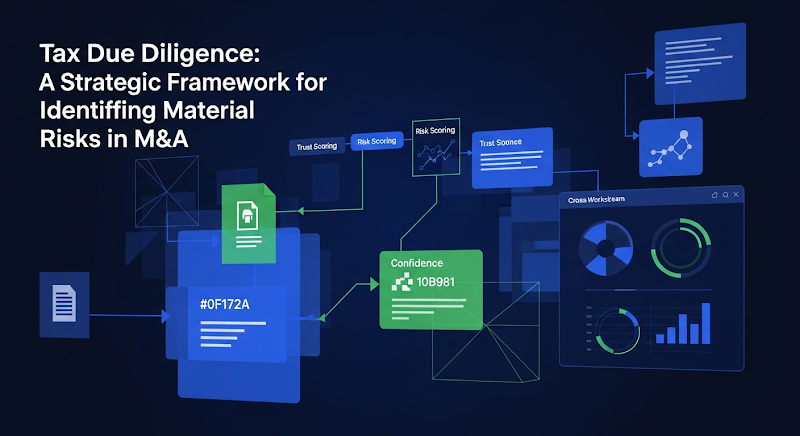
The platform's AI Analysis Engine does more than just read documents; it reasons across them. For example, it can triangulate data from management accounts against filed tax returns to detect inconsistencies in reported income. This cross-document reasoning is a key differentiator, allowing deal teams to identify disclosure gaps that single-document review would miss. Every finding generated by Plausity is backed by source traceability, linking directly to the specific document, page, and paragraph, which ensures full auditability for investment committees and LPs.
The impact on timelines is significant. A Big Four Advisory partner reported that using Plausity cut their commercial DD timeline from three weeks to five days on a mid-market transaction. Similar efficiencies are realized in tax DD, where the platform's ability to classify documents and extract key terms allows senior advisors to focus on high-level risk assessment rather than manual data entry. This human-in-the-loop approach ensures that AI handles the operational heavy lifting while experts retain control over the final conclusions.
Deliverables and Post-Acquisition Value Creation
The output of a tax due diligence process should be more than a list of risks; it should be an actionable roadmap for the post-acquisition period. Plausity's Report Builder generates investor-ready deliverables, including red flag summaries and executive briefings, that are dynamically structured based on the findings. These reports can be exported to Word, PowerPoint, or PDF with custom branding, saving senior professionals hours of formatting time.
Effective TDD also identifies opportunities for value creation. This might include identifying underutilized tax attributes, such as net operating losses (NOLs), or suggesting a more tax-efficient legal structure for the combined entity. By converting DD findings into a prioritized 100-day plan, acquirers can begin remediating risks and capturing tax synergies immediately after closing. This proactive approach ensures that the tax function contributes directly to the overall ROI of the transaction.
- Risk Scoring: Findings are scored by financial impact and deal relevance.
- Remediation Tracking: Identified gaps are mapped to post-closing action items.
- Audit Trail: A complete record of all reviewed documents and findings is maintained for future reference.