Índice
La evolución de la metodología de due diligence
La due diligence tradicional a menudo sufre de fragmentación. Los analistas financieros, asesores legales y expertos técnicos trabajan frecuentemente de forma aislada, lo que lleva a pasar por alto riesgos que existen en la intersección de diferentes flujos de trabajo. Por ejemplo, una cláusula legal de cambio de control (change-of-control) podría tener implicaciones financieras significativas que se pasan por alto si los dos equipos no sintetizan sus hallazgos en tiempo real. La metodología moderna exige un espacio de trabajo unificado donde la ingesta del data room y la clasificación de documentos se realicen automáticamente, permitiendo a los expertos centrarse en el razonamiento de alto nivel.
El cambio hacia espacios de trabajo nativos de IA ha redefinido el estándar de eficiencia en las operaciones. Un socio de Advisory de las Big Four informó recientemente haber reducido el plazo de una due diligence comercial de tres semanas a cinco días en una transacción del mid-market mediante el uso de análisis automatizado. Esta aceleración no se logra omitiendo pasos, sino automatizando el trabajo analítico repetitivo de revisión de documentos y normalización de datos. La siguiente tabla describe los 9 flujos de trabajo esenciales que constituyen un marco exhaustivo de due diligence para 2026.
| Flujo de trabajo | Enfoque principal | Entregable crítico |
|---|---|---|
| DD Comercial | Posición de mercado, calidad de los ingresos, rotación de clientes (churn) | Informe de validación de mercado |
| DD Financiera | Quality of Earnings (QoE), normalización del EBITDA | Evaluación de riesgos financieros |
| DD Legal | Cartera de contratos, litigios, derechos de PI | Resumen de red flags legales |
| DD Fiscal | Precios de transferencia, exposición multijurisdiccional | Cuantificación de pasivos fiscales |
| Org. y Cumplimiento | Gobernanza, cultura de RR. HH., cumplimiento normativo | Auditoría de cumplimiento |
| DD Tecnológica | Arquitectura, deuda técnica, escalabilidad | Hoja de ruta tecnológica |
| DD de Ciberseguridad | Evaluación de vulnerabilidades, madurez de seguridad | Scorecard de riesgos cibernéticos |
| ESG | Cumplimiento CSRD/SFDR, detección de greenwashing | Informe de impacto ESG |
| Cumplimiento Web | Políticas de privacidad, consentimiento de cookies, accesibilidad | Auditoría de cumplimiento digital |
Rigor financiero y comercial: Validación de la tesis central
La due diligence financiera sigue siendo la piedra angular del proceso de adquisición. El objetivo es validar la sostenibilidad y precisión de los beneficios reportados por la empresa target. Esto implica un análisis profundo de la calidad de los beneficios (Quality of Earnings o QoE), donde los equipos de la operación identifican ganancias extraordinarias, gastos no recurrentes y ajustes proforma. El análisis del fondo de maniobra (working capital) es igualmente crítico, ya que revela patrones estacionales y posibles restricciones de flujo de caja que podrían afectar la liquidez del negocio tras el cierre (post-closing).
La due diligence comercial complementa la revisión financiera al evaluar la dinámica de mercado de la empresa target. Los analistas deben examinar la calidad de los clientes, buscando específicamente el riesgo de concentración. Si más del 30% de los ingresos provienen de los tres principales clientes, la operación presenta una red flag significativa. La validación de ingresos también requiere comprobar los términos de renovación y las tasas históricas de rotación (churn) frente a las proyecciones de la dirección. El motor de análisis de IA de Plausity facilita esto al triangular datos entre las cuentas de gestión y los estados financieros auditados para detectar inconsistencias que una revisión manual podría pasar por alto.
- Normalización del EBITDA: Eliminación de partidas no operativas para encontrar la verdadera rentabilidad subyacente.
- Conciliación de la deuda neta: Identificación de todas las partidas asimilables a deuda (debt-like items), incluidos los pasivos por pensiones no financiados o el mantenimiento diferido.
- Concentración de clientes: Cálculo del porcentaje de ingresos de las cuentas principales para evaluar el riesgo de dependencia.
- Análisis de cuota de mercado: Benchmarking de la empresa target frente a sus competidores dentro de su vertical industrial específico.
Marco de cumplimiento legal, fiscal y regulatorio
El flujo de trabajo legal se centra en las obligaciones y posibles pasivos de la empresa target. Una preocupación principal es la revisión de la cartera de contratos, buscando específicamente cláusulas de cambio de control (change-of-control) o de terminación que podrían activarse por la adquisición. Los derechos de propiedad intelectual deben verificarse para asegurar que la empresa target tiene la propiedad clara o licencias válidas para todas las tecnologías clave. La exposición a litigios, tanto actuales como históricos, debe cuantificarse para comprender los posibles impactos futuros en el balance.
La due diligence fiscal se ha vuelto cada vez más compleja debido a la naturaleza multijurisdiccional de las empresas modernas. Los equipos de la operación deben mapear el panorama fiscal en todas las regiones operativas, prestando especial atención a la exposición en precios de transferencia y auditorías no resueltas. En el mercado europeo, el cumplimiento de la Ley de IA de la UE y el RGPD (GDPR) es ahora un componente innegociable del flujo de trabajo de Organización y Cumplimiento. Plausity garantiza que cada hallazgo en estas áreas esté vinculado directamente al documento de origen, página y párrafo, proporcionando una trazabilidad del 100% para pistas de auditoría y reportes a inversores.
- Revisar todos los contratos materiales en busca de disposiciones de cesibilidad y cambio de control.
- Verificar la propiedad de marcas comerciales, patentes y código de software propietario.
- Evaluar las declaraciones de impuestos históricas e identificar cualquier pasivo fiscal contingente.
- Auditar las políticas de RR. HH. y los contratos de trabajo para verificar el cumplimiento de las leyes laborales locales.
- Evaluar la estructura de gobernanza y el entorno de control interno de la empresa target.
Tecnología, ciberseguridad y el mandato ESG
La due diligence tecnológica evalúa la infraestructura digital de la empresa target, centrándose en la deuda técnica y la escalabilidad. Para las empresas impulsadas por software, la madurez de la ingeniería y la solidez de la arquitectura del producto son indicadores clave de los futuros requisitos de gasto de capital (CapEx). La ciberseguridad ha pasado de ser una preocupación de nicho a un flujo de trabajo estándar. Una brecha posterior a la adquisición puede destruir el valor de la operación de la noche a la mañana, lo que hace que las evaluaciones de vulnerabilidad y las auditorías de madurez de las operaciones de seguridad sean esenciales. El cumplimiento de estándares como SOC 2, ISO 27001 y NIST debe verificarse mediante evidencia documentada.
La due diligence ESG (Ambiental, Social y de Gobernanza) es ahora obligatoria para muchos fondos bajo regulaciones como la CSRD y la SFDR. Este flujo de trabajo implica puntuar el impacto ambiental, la responsabilidad social y la transparencia de gobernanza de la empresa target. Más allá del mero cumplimiento, la DD ESG identifica riesgos relacionados con el greenwashing y el mapeo regulatorio frente a la Taxonomía de la UE. Plausity proporciona marcos de riesgo adaptados a más de 30 verticales de la industria para garantizar que las evaluaciones ESG sean relevantes para el sector específico de la empresa target.
Elementos críticos de la checklist de tecnología y ciberseguridad:
- Evaluación de la arquitectura de software y la dependencia de sistemas heredados (legacy).
- Revisión de licencias de software de código abierto y posibles vulnerabilidades de seguridad.
- Verificación de medidas de protección de datos y planes de respuesta a incidentes.
- Análisis del gasto en TI como porcentaje de los ingresos en comparación con los benchmarks de la industria.
- Evaluación de la estrategia de recuperación ante desastres y continuidad del negocio.
Optimización del flujo de trabajo: Del data room al informe
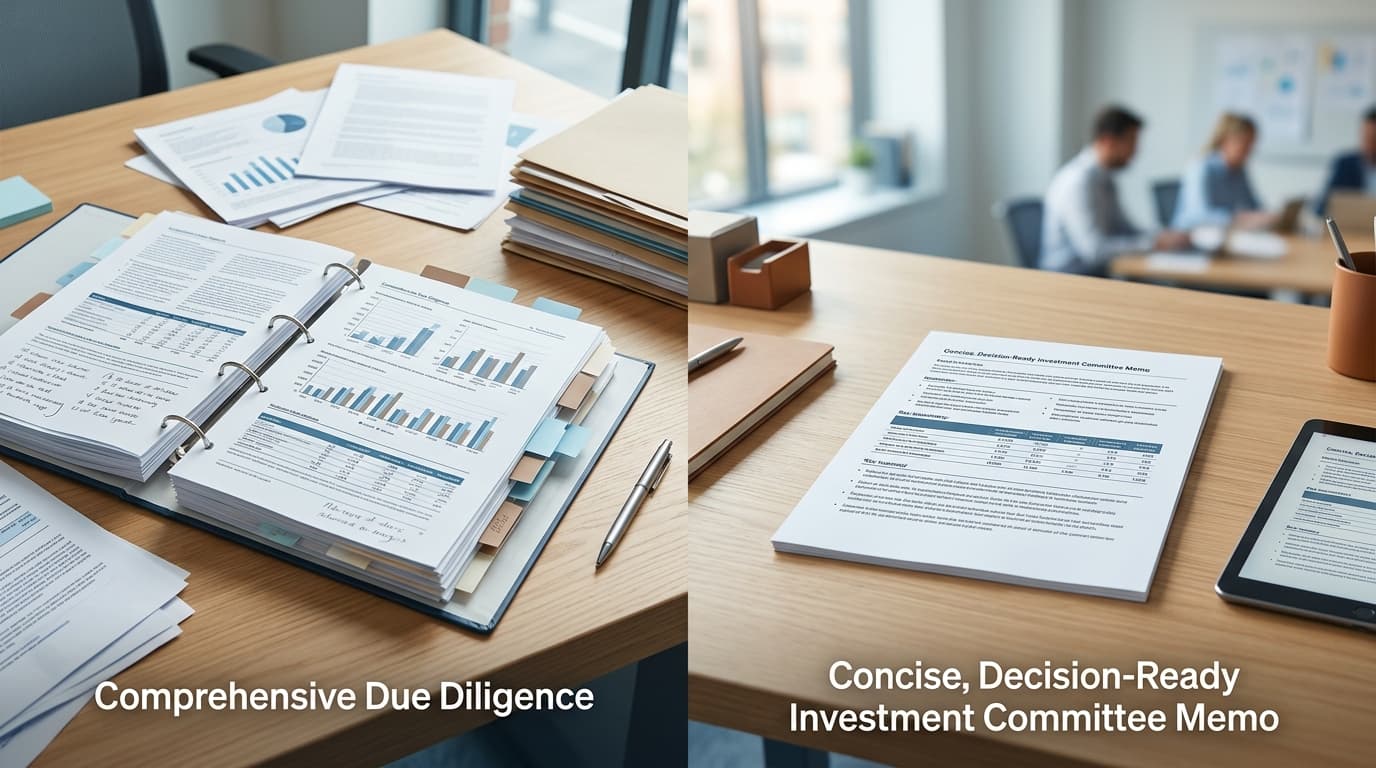
La etapa final del proceso de due diligence es la síntesis de los hallazgos en entregables listos para inversores. La elaboración de informes tradicionales suele ser una tarea manual y que consume mucho tiempo para los asesores senior. Al utilizar una plataforma que ofrece generación automatizada de informes, los equipos de la operación pueden producir resúmenes de red flags, informes ejecutivos y reportes completos de DD en formatos Word, PowerPoint o PDF con branding personalizado. Estos informes se estructuran dinámicamente en función de los hallazgos reales, garantizando que los riesgos más materiales se destaquen para los responsables de la toma de decisiones.
El enfoque "human-in-the-loop" sigue siendo el principio rector de la due diligence moderna. Si bien la IA puede automatizar la ingesta, clasificación y análisis inicial de miles de documentos, las conclusiones finales y las recomendaciones estratégicas deben ser controladas por expertos humanos. Esta mejora permite a los profesionales de M&A centrarse en decisiones de alto valor en lugar de en la gestión administrativa de documentos. El resultado es un proceso más riguroso, rápido y transparente que proporciona una hoja de ruta clara para la creación de valor posterior a la adquisición y planes de integración de 100 días.
| Característica | Proceso tradicional | Proceso aumentado por IA de Plausity |
|---|---|---|
| Revisión de documentos | Manual, secuencial, requiere mucho tiempo | Automatizada, simultánea, de alta velocidad |
| Identificación de riesgos | Dependiente de la detección del analista individual | Puntuación sistemática basada en marcos de trabajo |
| Trazabilidad | Citas manuales, difíciles de verificar | Enlace 100% al documento/página/párrafo |
| Sincronización de flujos de trabajo | Comunicación en silos | Espacio de trabajo unificado, mapeo cruzado de flujos |
| Elaboración de informes | Redacción y formato manuales | Entregables automatizados listos para inversores |
Puntos clave
- Transición de flujos de trabajo secuenciales a simultáneos para comprimir los plazos de la operación hasta en un 70% sin sacrificar la profundidad analítica.
- Priorizar la trazabilidad de las fuentes asegurando que cada hallazgo esté vinculado al documento, página y párrafo específicos para una auditabilidad absoluta.
- Adoptar un enfoque "human-in-the-loop" donde la IA automatiza el trabajo analítico pesado mientras los asesores senior mantienen el control sobre las conclusiones estratégicas.
La gente también pregunta
¿Cuáles son las 4 etapas de la due diligence?
Las cuatro etapas principales de la due diligence son: 1. Preparación y alcance (Scoping), donde el equipo de la operación define los flujos de trabajo y objetivos; 2. Investigación del data room, que implica la revisión sistemática de los documentos de la empresa target; 3. Análisis y síntesis, donde se cruzan los hallazgos y se puntúan los riesgos; y 4. Elaboración de informes y toma de decisiones, que culmina en el informe final de DD y la aprobación del comité de inversiones.
¿Qué se incluye en una checklist de due diligence financiera?
Una checklist de due diligence financiera incluye un análisis de la calidad de los beneficios (QoE), normalización del EBITDA, evaluación del fondo de maniobra, conciliación de la deuda neta y una revisión de los estados financieros históricos. También cubre el cumplimiento fiscal, la sostenibilidad del flujo de caja y una evaluación de los controles financieros internos y las políticas contables de la empresa target.
¿Cuánto tiempo dura una due diligence de M&A?
En una transacción tradicional del mid-market, la due diligence suele durar entre 4 y 8 semanas. Sin embargo, al utilizar plataformas impulsadas por IA como Plausity, los equipos de la operación pueden comprimir significativamente flujos de trabajo específicos. Por ejemplo, la due diligence comercial que normalmente lleva tres semanas puede completarse en cinco días mediante el análisis automatizado de documentos y la puntuación de riesgos.
¿Qué son las red flags en la due diligence?
Las red flags comunes en la due diligence incluyen una alta concentración de clientes (más del 30% de los principales clientes), pasivos no revelados significativos, políticas agresivas de reconocimiento de ingresos, exposición material a litigios y cláusulas restrictivas de cambio de control en contratos clave. La deuda técnica y una postura deficiente en ciberseguridad también se consideran cada vez más como red flags críticas.
Preguntas frecuentes
¿Utiliza Plausity los datos de mi operación para entrenar sus modelos de IA?
No. Plausity mantiene estrictos estándares de privacidad de datos. Los datos de los clientes nunca se utilizan para entrenar nuestros modelos de IA. Garantizamos que su información transaccional sensible permanezca aislada y segura dentro de su entorno de operación específico.
¿Qué certificaciones de seguridad posee Plausity?
Plausity cumple con los estándares SOC 2 Type II, ISO 27001 e ISO 42001 (gobernanza de IA). También cumplimos plenamente con el RGPD (GDPR) y la Ley de IA de la UE. Los datos están protegidos mediante cifrado AES-256 en reposo y TLS 1.3 en tránsito.
¿Cuántos flujos de trabajo cubre la plataforma?
Plausity cubre 9 flujos de trabajo de due diligence simultáneamente: Comercial, Financiera, Legal, Fiscal, Organización y Cumplimiento, Tecnológica, Ciberseguridad, ESG y Cumplimiento Web. También proporcionamos hojas de ruta de creación de valor y marcos específicos de la industria para más de 30 verticales.
¿Puedo exportar informes con mi propio branding?
Sí. El Report Builder de Plausity le permite generar entregables listos para inversores en formatos Word, PowerPoint y PDF. Puede aplicar branding y plantillas personalizadas para garantizar que los informes cumplan con los estándares profesionales de su firma.
¿Cómo funciona la trazabilidad de fuentes en Plausity?
Cada hallazgo generado por Plausity está vinculado directamente al documento de origen, página y párrafo. Cada hallazgo también incluye una puntuación de confianza, lo que permite a los profesionales de M&A distinguir entre hechos confirmados e inferencias mientras mantienen una pista de auditoría perfecta.
¿Es Plausity un reemplazo para los asesores de M&A?
No. Plausity está diseñado para aumentar las capacidades de los equipos de la operación, no para reemplazarlos. Automatiza el trabajo analítico y operativo repetitivo, dando a los asesores más tiempo para centrarse en la estrategia de alto nivel, la evaluación de riesgos y la toma de decisiones.