Indice
Il Cambiamento Strategico: dalla Mitigazione del Rischio alla Creazione di Valore
Historically, operativo due diligence was often treated as a secondary workstream, focused primarily on identifying 'deal-breakers' such as massive debito tecnico or supply chain fragility. In 2026, the mandate has shifted. ODD is now the foundation of the investment thesis. It provides the empirical evidence required to justify entry multiples and underwrite the 100 giorni plan.
The complexity of modern targets—often characterized by global supply chains, hybrid workforces, and intricate tech stacks—means that traditional revisione manuale is no longer sufficient. Deal teams are now tasked with evaluating not just what a company does, but how efficiently it can scale. This requires a transition from sequential documento review to simultaneous, multi-workstream analisi.
- Scalabilità Assessment: Can the current infrastructure support a 3x increase in volume without a linear increase in headcount?
- Margin Expansion: Where are the specific operativo inefficiencies that can be optimized within the first 12 months?
- Resilience: How vulnerable is the target to external shocks, from regolatorio shifts to cybersecurity breaches?
I Pilastri Fondamentali di un Moderno Framework ODD
A robust ODD process must be holistic yet granular. While every deal is unique, the most effective PE firms utilize a standardized framework across 30+ industry verticals to ensure consistency and auditability. This framework typically covers nine critical workstreams simultaneously, ensuring that a risk identified in the Tech DD is immediately cross-referenced with its impact on Financial or Legal obligations.
| Workstream | Primary Focus Area | Key Materialità Metric |
|---|---|---|
| Commercial DD | Mercato position and customer quality | Net Revenue Retention (NRR) / Churn |
| Financial DD | Quality of earnings and cash flow | EBITDA Normalization / Working Capital |
| Tech & Cyber DD | Architecture and security posture | Debito Tecnico / Vulnerability Score |
| ESG | Regolatorio mapping and greenwashing | CSRD/SFDR Conformità Status |
| Org & Conformità | Governance and HR cultural risk | Employee Turnover / Regolatorio Fines |
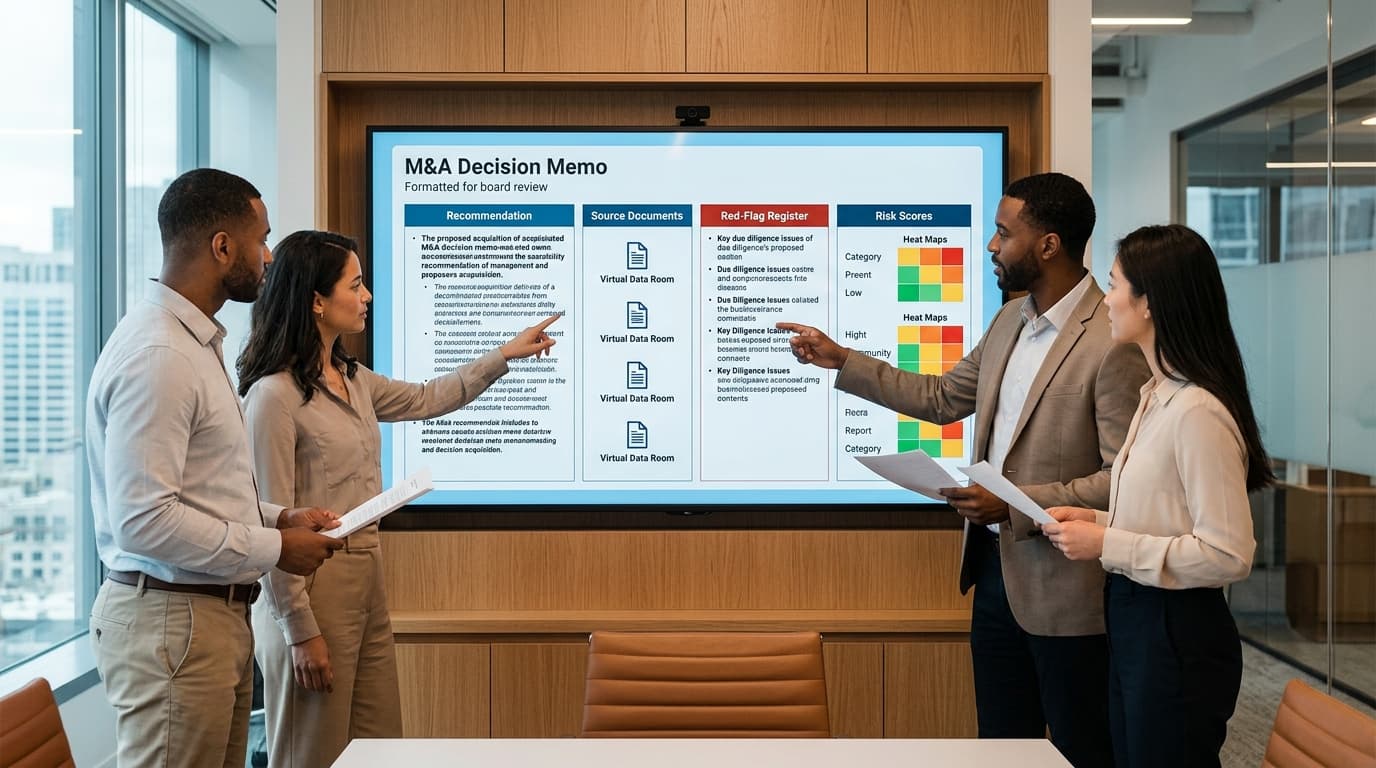
By running these workstreams in parallel rather than sequentially, team di transaziones can identify 'inter-workstream' risks. For example, a high concentrazione dei clienti risk identified in Commercial DD may be exacerbated by a change-of-control clause found in Legal DD, significantly impacting the valuation and post-close strategy.
Identificazione dei Segnali d'Allarme Operativi: La Prospettiva del Senior Advisor
Experienced deal professionals look for patterns that indicate underlying operativo rot. These segnale d'allarmes are often buried deep within the data room, requiring cross-documento reasoning to surface. A single documento might look clean, but inconsistencies between conti gestionali and bilanci certificati, or between sales contracts and revenue recognition policies, often signal deeper issues.
Common segnale d'allarmes in 2026 include:
- Hidden Debito Tecnico: Legacy systems that require significant CAPEX to maintain or integrate, often masked by high current margins.
- Key Person Dependency: Operativo knowledge concentrated in a few individuals without documentoed processes or succession plans.
- Concentrazione dei Clienti: More than 30% of revenue tied to the top three customers, particularly if contracts lack long-term renewal security.
- Regolatorio Non-Conformità: Gaps in GDPR, SOC 2, or industry-specific certifications that could lead to significant post-acquisizione liabilities.
The challenge for analysts is the sheer volume of data. A typical mid-mercato transazione involves between 500 and 2,000 documentos. Manually verifying every claim against the source material is where most timelines stall. This is where AI-native workspaces provide the most significant leverage, linking every finding directly to the specific documento, page, and paragraph for instant verification.
Compressione dei Tempi: Il Ruolo del Potenziamento Basato su AI
The most significant bottleneck in ODD is the 'analytical grunt work'—the hundreds of ore spent reading contracts, normalizing data, and formatting reports. Plausity was designed to eliminate this overhead. By automating the end-to-end DD workflow, from VDR ingestion to pronti per gli investitori report generation, team di transaziones can focus on high-level strategy rather than documento management.
A Big Four Advisory partner recently reported that using Plausity cut their commercial DD timeline from three settimane to just five giorni on a mid-mercato transazione. This speed does not come from cutting corners; it comes from the AI's ability to read and reason across thousands of documentos simultaneously. Unlike a simple chatbot, an AI-native workspace provides:
- Tracciabilità delle Fonti: Every risk score and finding is linked to the source material with a punteggio di confidenza.
- Cross-Documento Reasoning: The system detects if a management presentation claim contradicts a clause in a supplier contract.
- Simultaneous Workstreams: 9 workstreams are analyzed at once, providing a 360-degree view of the target in ore.
Crucially, this is a 'human-in-the-loop' system. The AI automates the analisi, but the human expert remains in control of the final conclusions and recommendations. This ensures that the final DD report is not just a data dump, but a strategic documento ready for the comitato di investimento.
Dalla Due Diligence al Piano dei 100 Giorni: Roadmap per la Creazione di Valore
The ultimate output of ODD should not be a static report, but a dynamic roadmap for the first 100 giorni of ownership. Effective ODD identifies the 'quick wins'—operativo improvements that can be implemented immediately to drive EBITDA growth—as well as the long-term structural changes required for a successful exit.
Plausity converts DD risultati into scored, prioritized post-acquisizione roadmaps. By quantifying the financial impact of each operativo risk and opportunity, PE funds can enter the integration phase with a clear set of KPIs and accountability structures. This transition from 'discovery' to 'execution' is where the most successful firms differentiate themselves.
- Prioritization: Focus on high-impact, low-effort operativo fixes first.
- Financial Impact Estimates: Link every operativo improvement to a specific EBITDA or cash flow outcome.
- Auditability: Maintain a clear trail from the initial DD finding to the final integration task.
Sicurezza e Conformità nell'Era dell'AI
In the M&A world, data security is non-negotiable. When leveraging AI for due diligence, team di transaziones must ensure that the piattaforma meets the highest enterprise standards. Plausity is built on a foundation of security and conformità, ensuring that sensitive deal data is never compromised or used to train public models.
Key security benchmarks for any DD piattaforma include:
- Certifications: SOC 2 Type II, ISO 27001, and ISO 42001 (AI governance).
- Data Privacy: Full GDPR and EU AI Act conformità.
- Encryption: AES-256 at rest and TLS 1.3 in transit.
- Data Isolation: Client data is never used to train AI models, ensuring that proprietary deal intelligence remains private.
By combining these security protocols with the analytical power of AI, Plausity allows PE funds and advisory firms to scale their deal throughput without increasing their risk profile.
Punti Chiave
- Operativo due diligence has shifted from a defensive risk-check to a proactive creazione di valore driver, now accounting for over 50% of IRR in successful exits.
- AI-native workspaces like Plausity can compress ODD timelines from settimane to giorni by automating documento review and providing source-traceable risultati across 9 workstreams simultaneously.
- The most effective ODD processes result in a prioritized 100 giorni plan, linking every operativo finding to a specific financial impact and post-acquisizione roadmap.
Domande Frequenti
What is the difference between financial and operativo due diligence?
Financial due diligence focuses on validating historical financial statements, quality of earnings, and tax conformità. Operativo due diligence evaluates the target's functional capabilities, such as its tech stack, supply chain, and human capital, to determine if the business can scale and meet future growth projections.
How long does operativo due diligence typically take?
In a traditional manual process, ODD for a mid-mercato transazione typically takes 4 to 8 settimane. However, using AI-powered piattaformas like Plausity, team di transaziones can compress this timeline significantly, with some firms completing comprehensive commercial and operativo DD in as little as 5 giorni.
What are the most common segnale d'allarmes in operativo due diligence?
Common segnale d'allarmes include high debito tecnico, significant concentrazione dei clienti (over 30% revenue from top 3 clients), key person dependencies, lack of documentoed processes, and non-conformità with regolatorio standards like GDPR or industry-specific certifications.
How does AI improve the due diligence process?
AI improves due diligence by automating the ingestion and classification of thousands of documentos, identifying risks through cross-documento reasoning, and providing tracciabilità delle fonti. This allows human experts to focus on high-level analisi and decision-making rather than manual documento review.