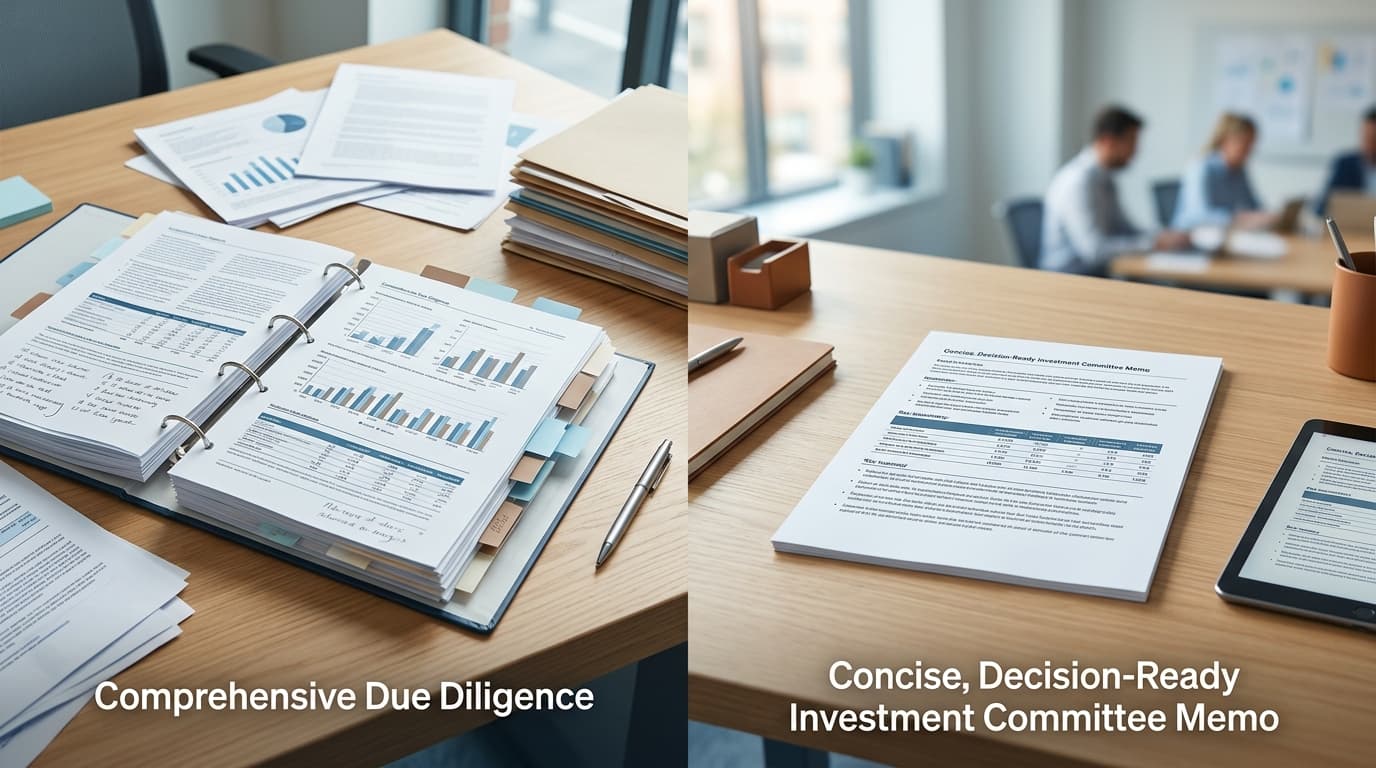
The High Stakes of IP Due Diligence in M&A
In modern mergers and acquisitions, the foundation of corporate enterprise value has experienced a structural inversion. Tangible assets such as real estate, machinery, and inventory no longer constitute the primary source of target value. According to the Ocean Tomo Intangible Asset Market Value Study, intangible assets accounted for approximately 92% of S&P 500 market capitalization by the end of 2025, compared to just 17% in 1975. For corporate M&A project leads and investment professionals, acquiring a business means acquiring its proprietary software, patent portfolio, brand equity, trade secrets, and customer data loops. When buyers evaluate high-growth targets, verifying the legal defensibility and clean ownership of these intangibles is the ultimate determinant of deal viability.
Despite the central role of intellectual property, inadequate pre-deal investigation remains a leading driver of transaction underperformance. A substantial share of acquisitions fails to achieve its anticipated strategic or financial objectives, frequently because operational, legal, and technological liabilities go unvetted and only surface after closing. Failing to perform exhaustive technical and legal diligence on a target company's core assets exposes the acquirer to immediate financial, regulatory, and competitive vulnerabilities that erode the investment thesis.
Quantifying the Financial and Legal Exposure
The financial exposure stemming from unaddressed intellectual property defects can quickly eclipse the initial value creation model of a transaction. Patent infringement claims, trade secret misappropriation actions, and copyright disputes carry severe defense costs and existential injunction risks. Drawing on the AIPLA Report of the Economic Survey, a Federal Bar Association panel paper notes that the median cost of litigating a patent case through trial ranges from about $600k when the amount at stake is less than $1M to $3.6M when more than $25M is at risk. Damages awards have also expanded, with a total of $6 billion awarded across 129 patent cases from 2021 to 2023.
| IP Risk Dimension | Core Due Diligence Failure | Potential Transaction & Operational Impact |
|---|---|---|
| Contractor & Employee IP | Missing written assignments or weak 'agrees to assign' clauses | Cloud on software copyright title, equity hold-up by former developers, re-licensing costs |
| Patent Chain of Title | Unrecorded assignments or omitted co-inventors with USPTO | Loss of standing to enforce patents, third-party validity challenges, voided exclusivity |
| Open-Source Copyleft | Undetected GPL/AGPL copyleft components in proprietary code | Mandatory public source code disclosure, loss of commercial licensing rights, valuation haircut |
| Trade Secret Hygiene | Inadequate access controls or broad NDA residuals clauses | Loss of trade secret protection, clean-team contamination of buyer R&D pipelines |
| Inbound Commercial Licenses | Unidentified anti-assignment or change-of-control provisions | Automatic termination of mission-critical SaaS or API agreements, costly renegotiations |
Conducting a thorough intellectual property audit requires a systematic methodology that spans human capital agreements, statutory registries, source code architecture, and commercial dependency contracts. Deal teams must identify gaps early during the confirmatory diligence window to adjust purchase prices, negotiate targeted indemnities, or mandate pre-closing remediation.
Closing the Contractor and Employee IP Assignment Gaps
One of the most persistent and hazardous misconceptions among corporate acquisition teams is the assumption that paying an independent contractor or third-party agency for software development automatically transfers full intellectual property ownership to the commissioning company. Under United States copyright law, ownership of copyrightable works initially vests in the author who created the work. While the statutory 'work made for hire' doctrine grants employers ownership of works prepared by employees within the scope of their employment, a work by an independent contractor qualifies as work made for hire only if it falls within one of the categories specified by statute and both parties sign a written agreement saying so, meaning contractors otherwise remain the default owners of their creations.
For example, if an early-stage startup pays an external contractor to architect and write the core algorithm or backend codebase for its flagship platform, that startup may hold merely an implied, non-exclusive license to use the code where no formal, signed assignment agreement exists. An implied license does not confer exclusive ownership, does not permit the company to prevent the contractor from licensing the same code to competitors, and severely impairs the target's ability to transfer clean title to an acquirer during a merger or asset sale.
Auditing Proprietary Information and Invention Assignment Agreements
Corporate deal leads must systematically audit the Proprietary Information and Inventions Agreement (PIIA) records for every founder, executive, key technical employee, and external contractor who contributed to the target's technology stack. This process should be integrated directly into the broader due diligence checklist used to evaluate the target organization. A comprehensive audit examines not only whether a document was signed, but also the specific legal mechanisms governing the transfer of rights.
- Verification of present assignment language: Contracts must use express present assignment phrasing ('hereby assigns' or 'does hereby assign') rather than executory promises to assign rights in the future ('agrees to assign'), a distinction the Supreme Court's decision in Stanford v. Roche made decisive for who holds title.
- Scope of invention capture: Review clauses to ensure the assignment encompasses all inventions, improvements, source code, designs, and know-how developed using company resources, during company working hours, or relating directly to current and demonstrably anticipated business lines.
- Full historical execution: Cross-reference payroll and vendor payment records against signed PIIA documentation to identify any unpapered contributors, particularly former technical co-founders or early offshore development agencies.
- Enforceability and consideration: Confirm that assignments executed post-hire comply with state-specific employment consideration requirements and statutory carve-outs for employee-developed inventions.
When diligence reveals missing or defective contractor assignments, the deal team must coordinate with qualified outside legal counsel to demand corrective action. Acquirers should require the target company to obtain retroactive assignment agreements, confirmatory assignments, and quitclaim deeds from all unassigned contributors as an explicit condition precedent to closing, backed by specific indemnification and escrow holdbacks.
Auditing the Patent Chain of Title and Inventorship
Patent assets represent substantial barriers to entry and direct valuation drivers, but their commercial and defensive value depends entirely on an unbroken, legally perfected chain of title. For applications filed before September 16, 2012, ownership initially vests in the named inventors, and under 35 U.S.C. § 261 patent rights are assignable only by an instrument in writing. For a corporate target to exercise exclusive ownership, enforce its patent claims against competitors, or monetize its portfolio, every inventor or partial assignee must have executed a valid written assignment transferring their interest to the corporate entity, since all parties holding any portion of the ownership must act together before the USPTO.
A single missing assignment in the historical chain creates severe legal complications. In the United States, each co-inventor of a patent owns an undivided interest in the entire patent and possesses the legal authority to practice the invention or grant non-exclusive licenses to third parties without the consent of, or accounting of royalties to, the other co-owners. If an unassigned co-inventor refuses to execute an assignment post-acquisition, that individual could license the technology to the acquirer's primary competitors, entirely destroying the target's market exclusivity.
USPTO Assignment Recordation and Title Verification
M&A project leads must ensure legal counsel searches the U.S. Patent and Trademark Office (USPTO) Patent Assignment Search database to examine the complete Abstract of Title for every issued patent, pending application, and Patent Cooperation Treaty (PCT) filing in the target's portfolio. This public record review validates the legal standing of the assets and uncovers any unrecorded encumbrances.
- Trace the initial leg of title: Confirm that every named inventor executed a written assignment conveying their complete rights to the original operating company at the time of filing.
- Validate corporate transfers: Audit all corporate name changes, mergers, acquisitions, and asset transfers to ensure subsequent assignments between corporate entities were formally executed and recorded.
- Enforce the three-month recordation window: Verify that all assignment instruments were recorded with the USPTO Assignment Recordation Branch within three months of execution or prior to the date of any subsequent purchase or mortgage, ensuring protection against subsequent bona fide purchasers under 35 U.S.C. § 261.
- Identify liens and security interests: Review the Abstract of Title for recorded bank liens, collateral mortgages, or credit facility security interests that must be formally released and forgiven before deal funding.
Discrepancies in the patent register provide acquirers with substantial leverage during deal negotiations. Gaps in the chain of title, unresolved inventorship disputes, or unrecorded assignments should be leveraged to restructure purchase price allocations, require seller-funded title cure periods, or expand special indemnity baskets.
Brand assets deserve the same registry discipline as patents, particularly when the investment thesis depends on geographic expansion. Corporate development teams should compile the target's full trademark schedule (registrations, pending applications, common-law usage and domain portfolio) and instruct qualified trademark counsel to run clearance searches in every jurisdiction where the buyer intends to sell after closing. Counsel typically checks that the marks are registered in the correct classes for the products actually sold, that key territories are not blocked by a prior third-party registration or a local squatter, that renewal and use filings are current, and that no coexistence agreement, consent or licence quietly restricts the field of use. Where a core mark is unregistered or unavailable in a target market, buyers should price the rebranding or coexistence-negotiation cost into the model and treat the finding as a condition to closing rather than a post-close surprise. All clearance conclusions require review by qualified IP counsel.
Trademark Clearance and Brand Rights in Target Markets
Open-Source Software (OSS) and Copyleft License Risks
Modern enterprise software products are rarely built entirely from scratch; they are assembled using extensive layers of third-party open-source components. While permissive open-source licenses such as MIT, Apache 2.0, and BSD impose minimal operational friction beyond copyright attribution, restrictive 'copyleft' licenses introduce severe operational and legal risks. The 2026 Open Source Security and Risk Analysis (OSSRA) report, based on 947 audited commercial codebases, found that two-thirds (68%) contained open source license conflicts, up from 56% the previous year. Understanding how these components interact with proprietary code is an essential component of comprehensive software moat diligence.
Copyleft licenses, most notably the GNU General Public License family (GPLv2, GPLv3), operate on principles of reciprocal sharing. If a development team statically or dynamically links proprietary code with a strong copyleft component and distributes the resulting software, the license conditions can legally obligate the company to release the complete proprietary source code to the public under the same open-source terms. For a commercial software company whose enterprise valuation rests on closed-source exclusivity, a copyleft contamination event can permanently impair core intellectual property assets.
The AGPL Threat and Software Bill of Materials (SBOM) Scanning
For cloud and Software-as-a-Service (SaaS) providers, the GNU Affero General Public License (AGPL) represents an acute risk factor. Traditional GPL licenses trigger distribution obligations only when compiled binaries are physically or digitally delivered to end users. In contrast, the AGPL was specifically designed to close this 'application service provider loophole.' Under Section 13 of the AGPLv3, making modified software available over a computer network to interact with remote users triggers the mandatory obligation to provide those users with direct access to the corresponding complete source code.
- Automated SBOM generation: Deal teams must mandate automated Software Bill of Materials (SBOM) scans across all target repositories to map every direct and transitive open-source dependency, sub-dependency, and code snippet.
- Architectural isolation review: Technical diligence specialists and IP counsel must analyze software architecture diagrams to evaluate whether copyleft components communicate via independent APIs, separate processes, or tightly coupled dynamic linking.
- License compatibility matrix: Identify cross-license incompatibilities, such as combining Apache 2.0 licensed assets with certain legacy GPL modules or incorporating Creative Commons ShareAlike (CC-SA) code snippets from developer forums.
- Remediation planning: Formulate engineering refactoring plans to replace contaminated libraries with commercially permissive alternatives or isolated microservices prior to commercial integration.
Evaluating open-source compliance requires deep collaboration between software architects and legal specialists. Where high-risk AGPL or GPL dependencies are embedded within proprietary core workflows, buyers must price the necessary remediation and engineering refactoring costs directly into the transaction model.
Protecting Trade Secrets During the Diligence Process
Trade secrets, proprietary algorithms, formulas, unpatented know-how, manufacturing techniques, and strategic customer datasets frequently constitute the most defensible assets of a target enterprise. Unlike registered patents or trademarks, trade secret protection depends entirely on maintaining rigorous, continuous secrecy. Under the Uniform Trade Secrets Act (UTSA) and the federal Defend Trade Secrets Act (DTSA), an asset qualifies for trade secret protection only if the owner takes 'reasonable measures' to keep such information secret, and the information derives independent economic value from not being generally known.
The due diligence process creates a fundamental operational paradox. Acquirers need granular visibility into the target's proprietary systems to evaluate commercial viability and technical scalability, yet disclosing sensitive trade secrets to a prospective buyer, especially a direct or adjacent competitor, introduces catastrophic risks of information leakage, trade secret invalidation, and competitive misappropriation.
Managing Clean-Team Protocols and Residuals Clauses
To navigate this diligence paradox and preserve trade secret defensibility, deal leads must establish structured disclosure protocols. Both buyer and seller must actively manage information exchange parameters to avoid R&D pipeline contamination.
- Tiered Virtual Data Room (VDR) disclosures: Restrict highly sensitive proprietary information, including raw source code, customer pricing algorithms, and proprietary chemical formulas, to late-stage confirmatory phases after regulatory clearances and primary valuation terms are established.
- Clean team implementation: Utilize segregated 'clean teams' consisting of outside consultants, independent technical auditors, or non-operational personnel who are strictly prohibited from sharing raw competitive data with the buyer's internal product and engineering teams.
- Physical and technical access controls: Audit the target's internal security hygiene, confirming role-based access limits, mandatory multi-factor authentication, remote device wiping capabilities, and signed employee non-disclosure agreements.
- Resisting broad residuals clauses: Targets must strictly resist or narrow 'residuals clauses' in non-disclosure agreements, which permit the recipient to use confidential information 'retained in unaided memory' by personnel, preventing buyers from acquiring an inadvertent, royalty-free license to practice the target's core know-how.
Maintaining rigorous diligence hygiene protects both parties. It shields the seller from losing statutory trade secret status through unconfined disclosure, while protecting the buyer from future claims that its internal R&D roadmap was contaminated by exposure to the target's proprietary designs.
Navigating Inbound Licenses and Change-of-Control Traps
A target company's technological capability is heavily dependent on inbound commercial agreements, including specialized software-as-a-service (SaaS) subscriptions, cloud infrastructure hostings, core foundational AI model APIs, and proprietary third-party data feeds. During M&A transactions, corporate development leads must verify not only the target's proprietary IP ownership, but also the durability and transferability of these critical inbound licenses following a change of ownership.
Many commercial vendor contracts contain strict anti-assignment provisions, change-of-control clauses, or non-transferability restrictions. Under standard commercial contract law, a direct asset purchase constitutes an assignment that requires explicit vendor consent. Even in reverse triangular mergers or equity acquisitions where corporate entity identity remains intact, carefully drafted change-of-control provisions can trigger immediate termination rights, fee recalculations, or punitive renegotiation windows upon a shift in voting control or corporate ownership.
Operational Dependency Audits and Consent Management
Failing to identify change-of-control triggers early in the diligence timeline can lead to post-closing operational paralysis. If a mission-critical enterprise resource planning system, payment processing gateway, or licensed dataset vendor exercises a contract termination right, the acquired business may face catastrophic service disruptions or extortionate relicensing fees.
- Map critical technology dependencies: Catalogue all inbound software licenses, cloud service agreements, proprietary algorithms, and third-party data feeds that support core product delivery.
- Analyze change-of-control definitions: Scrutinize contract clauses to identify broad triggers, including mergers, consolidations, transfers of a majority of voting equity, or reorganization events that grant the licensor termination or renegotiation rights.
- Evaluate exclusivity and restrictive covenants: Review inbound agreements for restrictive covenants, field-of-use limitations, or non-compete clauses that could inadvertently restrict the broader acquiring parent entity post-close.
- Establish a pre-closing consent roadmap: Coordinate with target management and legal counsel to draft formal consent requests, secure necessary third-party licensor approvals, and resolve commercial re-pricing demands well before closing.
Integrating inbound contract analysis into the deal schedule ensures that consent requirements do not derail closing timelines. By mapping third-party licensor dependencies early, corporate development teams preserve post-acquisition operational continuity and eliminate unbudgeted re-platforming expenses.
Accelerating IP Risk Detection with AI-Native Platforms
Corporate development teams, private equity sponsors, and M&A advisory firms face an ever-expanding volume of documentation during due diligence. Modern virtual data rooms routinely contain tens of thousands of files, ranging from complex multi-jurisdictional vendor agreements and employee PIIAs to granular SBOM exports and patent prosecution histories. Reviewing these vast repositories manually under compressed deal timelines introduces severe risks of human oversight and red-flag omission.
To overcome these operational bottlenecks, deal teams leverage AI-native due diligence platforms. Automated data-room ingestion lets acquirers rapidly process, categorize, and cross-reference thousands of disparate files within minutes. Once ingested, an analysis engine performs deep contextual reasoning across the entire document corpus, pinpointing unassigned contractor code, flagging ambiguous assignment phrasing such as 'agrees to assign,' tracing unrecorded patent transfers, and parsing complex SBOM hierarchies for restrictive copyleft licenses like GPL and AGPL.
Synthesizing Findings into Actionable Diligence Deliverables
Automated analysis transforms raw data-room information into structured, auditable intelligence. Rather than forcing deal teams to assemble fragmented spreadsheets manually, modern platforms integrate specialized intelligence and reporting modules to streamline decision-making:
- Automated risk categorization: The Risk Radar identifies and ranks potential intellectual property liabilities by materiality, financial exposure, and deal relevance, instantly surfacing high-priority defects for deal leads.
- Comprehensive evidence linking: The Findings & Risk Intelligence engine extracts critical findings and scores disclosure gaps while preserving full traceability back to original data-room contracts and file pages.
- Collaborative multi-workstream coordination: The Collaboration Hub enables investment leads, technical diligence auditors, and outside counsel to align workstreams, share findings, and assign remediation tasks in real-time.
- Investor-ready deliverable generation: The Report Builder automatically drafts, structures, and compiles comprehensive diligence memos and risk register automation deliverables with precise source citations.
While AI-native platforms provide unprecedented extraction speed, breadth, and precision, technology does not replace professional judgment. Plausity does not provide legal, tax, audit, or regulatory advice and does not guarantee deal outcomes: all AI-generated findings, and regulatory, legal, and tax items in particular, require confirmation and review by qualified professionals. In an IP workstream the division of labour is therefore explicit. The corporate development team owns scoping, completeness of the data room, dependency mapping, commercial impact and the price or structure response to each finding. Qualified outside IP counsel owns the legal conclusions: whether an assignment actually transferred title, whether the patent chain of record is perfected, whether a trademark can be cleared in a target market, and how a copyleft obligation applies to the target's architecture. Used that way, the analysis engine compresses the review cycle and gives both sides a traceable evidence base, while every IP conclusion in the final memo still carries the standard requirement of qualified IP counsel review before signing.
How Plausity accelerates this workflow
Plausity is an AI-native due diligence platform that helps M&A advisory firms, VC and PE funds, and corporate development teams structure evidence, findings and questions across a data room. It does not replace human advisers, does not guarantee deal outcomes, and does not provide legal, tax, audit or regulatory advice — all AI-generated findings, especially regulatory ones, require confirmation and advisor review by qualified professionals.
To explore the underlying capabilities, see the Plausity AI analysis engine and the findings and risk intelligence product page. For team-level workflows, see how VC and PE funds and M&A advisory firms use Plausity across live deals.